The short answer
Quartz is an engineered slab of crushed quartz and resin: consistent, non-porous and low maintenance, but manufacturers recommend trivets for hot cookware, and most indoor quartz is not rated for outdoor sun. Granite is natural stone that tolerates heat well and may need periodic sealing depending on the stone. Quartzite is a hard natural stone with a marble-like look that varies widely by slab. Porcelain slabs are thin, very resistant to heat and UV, and suited to outdoor use where the manufacturer allows it, with more care needed at edges.
Solid surface is repairable and joins with nearly invisible seams but is less heat tolerant, and butcher block is warm and renewable but needs regular oiling. HomeGuide's 2026 national figures put most of these materials between about $50 and $150 per square foot installed, with the specific slab and fabrication driving the price.
Key takeaways
- Engineered quartz and natural stone are different categories. Claims about one do not transfer to the other.
- Heat tolerance, UV stability and sealing needs come from the specific product or stone, not the category name.
- Most indoor quartz lines are not warranted outdoors; some brands sell separate outdoor-rated collections.
- Stone sold as quartzite is sometimes softer marble or dolomite. Testing a sample before buying avoids surprises.
- Seam placement and edge profile are decided at fabrication. Ask to see the layout before the slab is cut.
Quick Comparison Table
| Quartz | Granite | Quartzite | Porcelain slab | |
|---|---|---|---|---|
| What it is | Engineered: crushed quartz and resin | Natural igneous stone | Natural metamorphic stone | Fired ceramic slab |
| Heat | Trivets recommended by makers | Generally tolerant | Generally tolerant | Highly resistant |
| Stains | Non-porous | Depends on stone; may need sealing | Varies; often sealed | Non-porous surface |
| Scratches | Hard surface | Hard surface | Very hard surface | Very hard surface |
| Outdoors | Only outdoor-rated lines | Often used; color can change | Varies by stone | Where the maker allows |
| Look | Consistent patterns | Each slab unique | Each slab unique, marble-like | Printed patterns, very thin |
The table sorts the options into the choices most people make. The details below explain where each one earns its place and where it disappoints.
Quartz: Engineered and Consistent
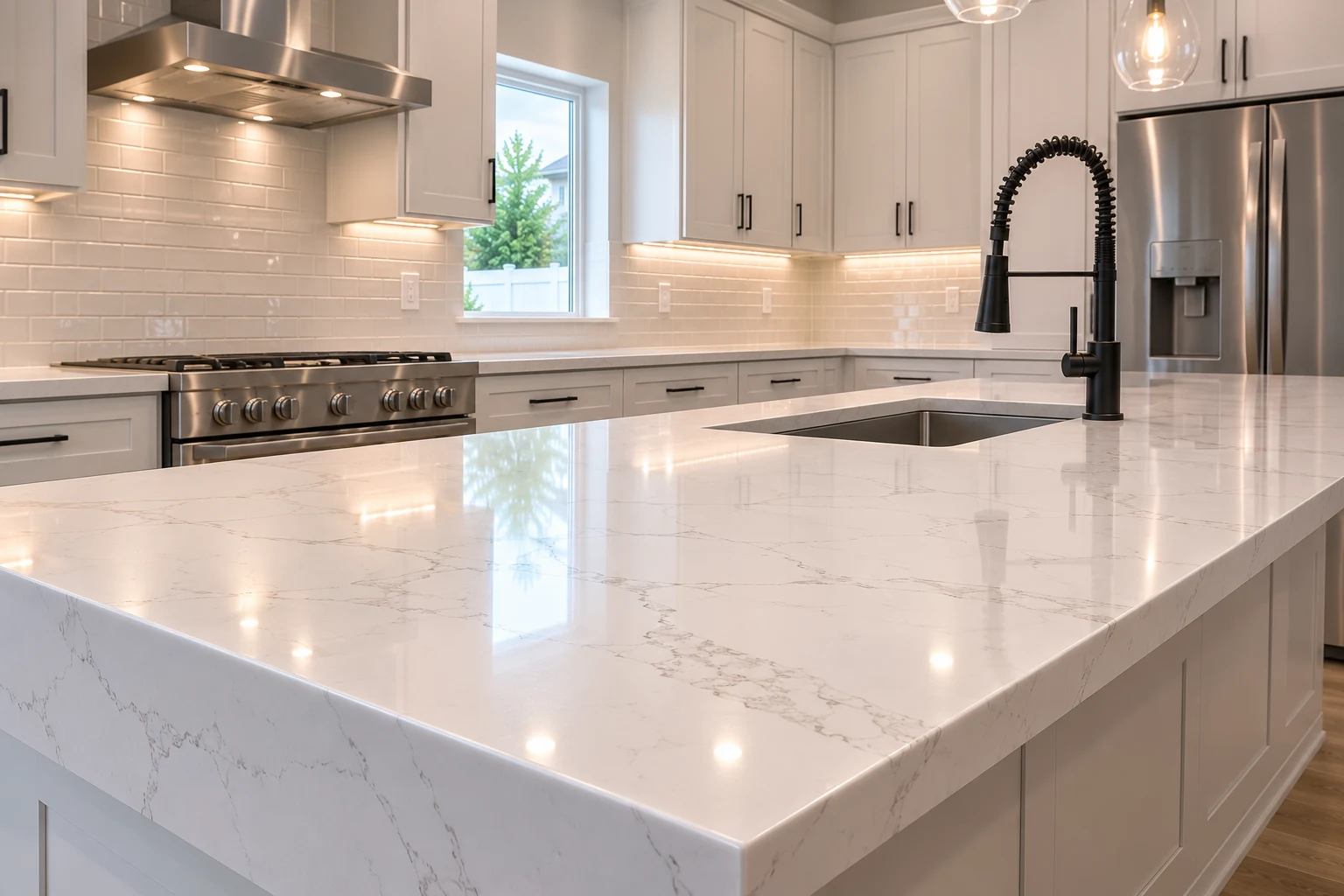
Quartz countertops are engineered slabs made mostly of crushed quartz bound with resin and pigments. Because they are manufactured, patterns and colors are consistent from slab to slab, and the surface is non-porous, so quartz does not need sealing and resists staining from coffee, wine and oil.
The resin is where quartz differs from stone. Manufacturers such as Caesarstone tell owners to always use trivets or hot pads for hot cookware, since high heat can mark or discolor the surface. Most indoor quartz is also not intended for outdoor sun; colors can fade with UV exposure. Warranties are product-specific, and some require installation by a fabricator certified by the brand.
Quartz suits kitchens where low maintenance and a consistent look matter, including the popular marble-look designs that avoid marble’s etching.
Granite: Natural and Heat Tolerant
Granite is a natural igneous stone, quarried and cut into slabs. Each slab is different, with patterns, colors and movement that cannot be repeated, which is part of its appeal. Granite generally tolerates heat well and is very hard, resisting scratches from everyday use.
Porosity varies by stone. Some granites are dense and rarely need sealing; others absorb liquids and benefit from periodic sealing. Honed and leathered finishes tend to need sealing more often than polished ones.
Sealing Requirements
Sealing is a stone-by-stone question. A simple water test, leaving a small pool of water on the surface for several minutes, shows whether it darkens the stone; if it does, the stone is absorbing and a sealer helps. Published guidance for granite ranges widely, from frequent resealing for porous stones to many years between applications for dense ones. The fabricator can recommend a schedule for the specific slab. Quartz and porcelain do not need sealing.
Quartzite: Natural Look, Quartz Hardness
Quartzite is a natural metamorphic rock formed from sandstone. Genuine quartzite is very hard, generally harder than granite, and many varieties have the flowing, light veining people associate with marble. It suits owners who want a natural marble look with better resistance to scratching and etching.
Two cautions apply. Quartzites vary in porosity, and many benefit from sealing. And some stone sold as quartzite is actually marble or dolomite, which is softer and etches with acids. Simple tests on a sample, such as trying to scratch glass with it or checking how it reacts to a mild acid like lemon juice, help confirm what is being bought. Asking the supplier for the stone’s geological classification is worthwhile.
Porcelain Slab: Thin, Large and Outdoor Ready
Porcelain slabs are large-format ceramic panels fired at high temperatures. They are made in thin gauges, often around 12 or 20 millimeters, in very large sizes, and their surfaces are printed with stone, concrete or wood patterns. The fired surface is highly resistant to heat, stains and UV, and several manufacturers market specific products for outdoor kitchens.
The trade-offs are at the edges and in fabrication. Thin slabs need careful support, edges are more prone to chipping from impact, and the printed pattern is on the surface, so edge profiles show the body color unless the slab has through-body color or a mitered edge. Porcelain requires fabricators experienced with the material.
UV and Outdoor Kitchens
For outdoor kitchens in Florida, sun resistance matters as much as heat resistance. Porcelain and sintered surfaces rated by their makers for exterior use, and granite, are common choices. Standard indoor quartz is generally not warranted outdoors, though some brands sell outdoor-specific collections with their own warranties. Any outdoor countertop should also be supported and detailed for rain, and the manufacturer’s outdoor approval should be confirmed before ordering. How countertops fit into an outdoor cooking area is covered in the guide to outdoor kitchens.
Butcher Block and Solid Surface
Butcher block is wood, usually edge-grain or end-grain strips glued together. It brings warmth and can be sanded and refinished when worn. It needs regular oiling or a sealed finish, and it does not like standing water, so it is often used on islands or baking areas rather than around the sink.
Solid surface is an acrylic or polyester material cast in sheets. It can be joined with nearly invisible seams, integrated with molded sinks, and repaired by sanding out scratches and minor burns. It is less heat tolerant and softer than stone or quartz, so trivets and cutting boards are essential.
Marble, often compared in the same conversation, is beautiful and heat tolerant but soft and reactive: acids from citrus, vinegar and wine can etch its surface. It suits owners who accept a patina.
Choosing by How the Kitchen Is Used
The material that suits one household can frustrate another. A few patterns help:
- Busy family kitchens with children and frequent cleanup tend to favor non-porous surfaces, quartz or porcelain, or a dense granite, where spills do not need immediate attention.
- Serious home cooks often value heat tolerance near the range, which points toward granite, quartzite or porcelain, with trivets as a habit on any surface.
- Kitchens with lots of sun from large windows or sliding doors raise the question of UV on resin-based surfaces, which matters most for dark or saturated quartz colors near glass.
- Rental and vacation properties benefit from surfaces that tolerate guests who do not know the care rules, which usually favors non-porous, low-maintenance materials.
- Owners who like patina can choose marble or butcher block knowing they will change with use.
Combining materials, such as a hard-wearing perimeter and a statement island, is common and works as long as the edges, thicknesses and backsplash transitions are planned together.
Heat, Stain and Scratch Resistance
A few principles cut through marketing claims:
- Heat: resin-containing surfaces, including quartz and solid surface, are the most sensitive. Stone and porcelain tolerate heat better, though sudden temperature shock can still crack stone. Trivets are good practice on any surface.
- Stains: non-porous surfaces, quartz, porcelain and solid surface, resist stains without sealing. Natural stone depends on its porosity and its sealer.
- Scratches: hardness helps. On the Mohs scale, quartz rates 7, while calcite, the main mineral in marble, rates 3. Hard surfaces resist knives better but dull them faster.
- Etching: acids etch marble and some stones sold as quartzite, leaving dull marks even when no stain remains.
Care and Maintenance by Material
Day-to-day care differs more than most showrooms suggest:
- Quartz: mild soap and water; avoid harsh chemicals and abrasive pads that can dull the surface, and use trivets for hot pans.
- Granite and quartzite: mild, pH-neutral cleaners; reseal on the schedule the stone needs; wipe up oils and acids promptly on porous stones.
- Marble: the same care, with extra attention to acids, which etch the surface regardless of sealing.
- Porcelain: very low maintenance; most household cleaners are fine, but edges should be protected from hard impacts.
- Solid surface: mild cleaners; scratches and minor marks can be sanded out.
- Butcher block: regular oiling or a sealed finish; keep standing water away and sand out cuts when needed.
The manufacturer’s or fabricator’s care guide for the specific product takes precedence, particularly where a warranty depends on it.
Sinks and Cutouts
Sink and cooktop cutouts are where countertops are weakest. Undermount sinks need proper support from below, and the cutout edges are polished and sometimes reinforced by the fabricator. Cooktop cutouts need clearance for heat and for the appliance’s installation requirements. Each cutout adds fabrication cost, and faucet, soap and air-gap holes are drilled at the shop, so fixtures should be chosen before templating.
Backsplash and Countertop Together
The backsplash is planned with the countertop. Options range from a short splash of the same material, a few inches high, to a full-height slab backsplash that continues the countertop up the wall, to tile set above a short splash or directly on the counter. Full-height slab backsplashes use more material and require careful matching of pattern at the joints; tile gives more choice and lower cost. Outlet placement on the backsplash wall, and under-cabinet lighting, should be settled before the backsplash is installed.
Silica Dust and Fabrication Safety
Cutting and grinding stone and engineered quartz releases crystalline silica dust. Engineered stone typically contains a much higher percentage of crystalline silica than granite, and the CDC has documented severe silicosis cases among workers who fabricate engineered stone countertops. OSHA has issued hazard alerts on silica exposure in countertop fabrication and installation. This is why fabrication belongs in shops with water-fed tools and dust controls, and why dry cutting of countertops inside a home should be avoided. For homeowners, the practical point is to choose fabricators that follow those controls; for the finished countertop in use, silica exposure is not a concern.
Edge Profiles and Seam Placement
Edge profiles, such as eased, beveled, bullnose, ogee or mitered, change the look and how the edge handles impact. Thicker-looking edges on thin slabs are usually made by mitering a strip to the front edge. Sharp square edges chip more easily than slightly eased ones.
Seams are unavoidable in larger kitchens and L-shapes. Their placement is decided during fabrication, and good placement keeps them away from sink and cooktop cutouts, in less visible areas, and aligned with the pattern. Asking to see the layout drawn on the slab, or a digital layout, before cutting is reasonable, especially with veined stone or quartz where pattern matching matters.
Slab Yard Selection
For natural stone, choosing the actual slab at the supplier’s yard is common and worthwhile, since no two are alike and small samples do not show the full pattern. Look at slabs in good light, note fissures and color variation, and ask the fabricator how the layout will use the slab’s features. For large islands, the slab size determines whether the top can be made without a seam. Slab size limits how long an island top can be without a seam, which is one of the numbers worked out when sizing an island and its overhangs.
Cost per Square Foot Installed
Installed prices in HomeGuide’s 2026 national guides run roughly as follows:
- Quartz: roughly $50 to $200 per square foot, depending on brand and design.
- Granite: commonly about $80 to $150, with a wider overall range.
- Quartzite: roughly $65 to $150.
- Marble: roughly $40 to $150.
- Porcelain: roughly $50 to $120.
- Solid surface: roughly $50 to $150.
- Butcher block: roughly $50 to $150.
Treat these as approximate national ranges for early budgeting. Slab selection, edge profile, cutouts, seams and local fabricator pricing decide the actual number, which can land outside them.
The ranges overlap heavily. The specific slab or product, thickness, edge profile, number of cutouts, backsplash height, seams and removal of old tops move the price within each range. Countertops are one line in a kitchen budget alongside cabinets, appliances and plumbing, and where the rest of the kitchen budget goes helps put these ranges in context.
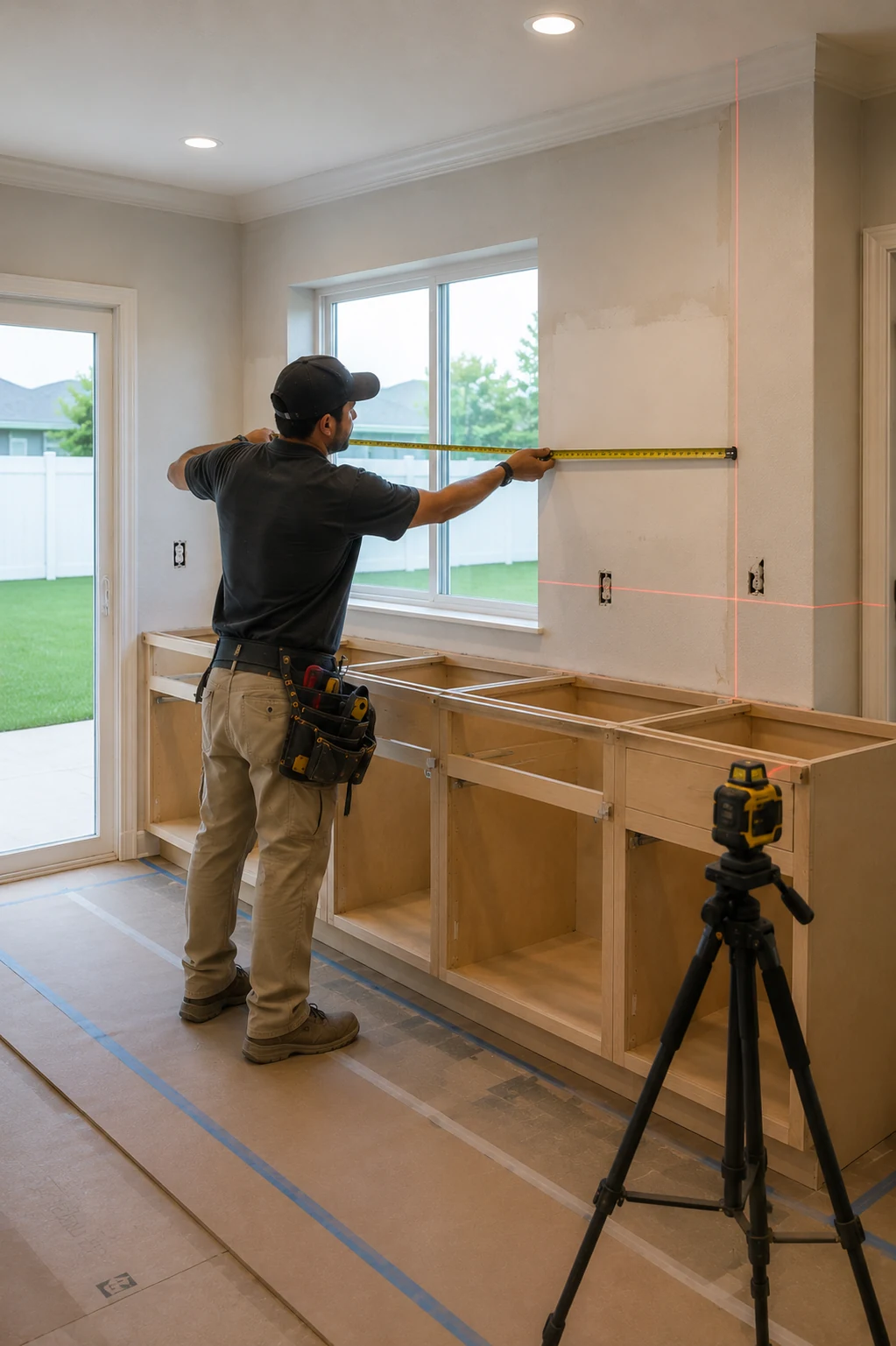
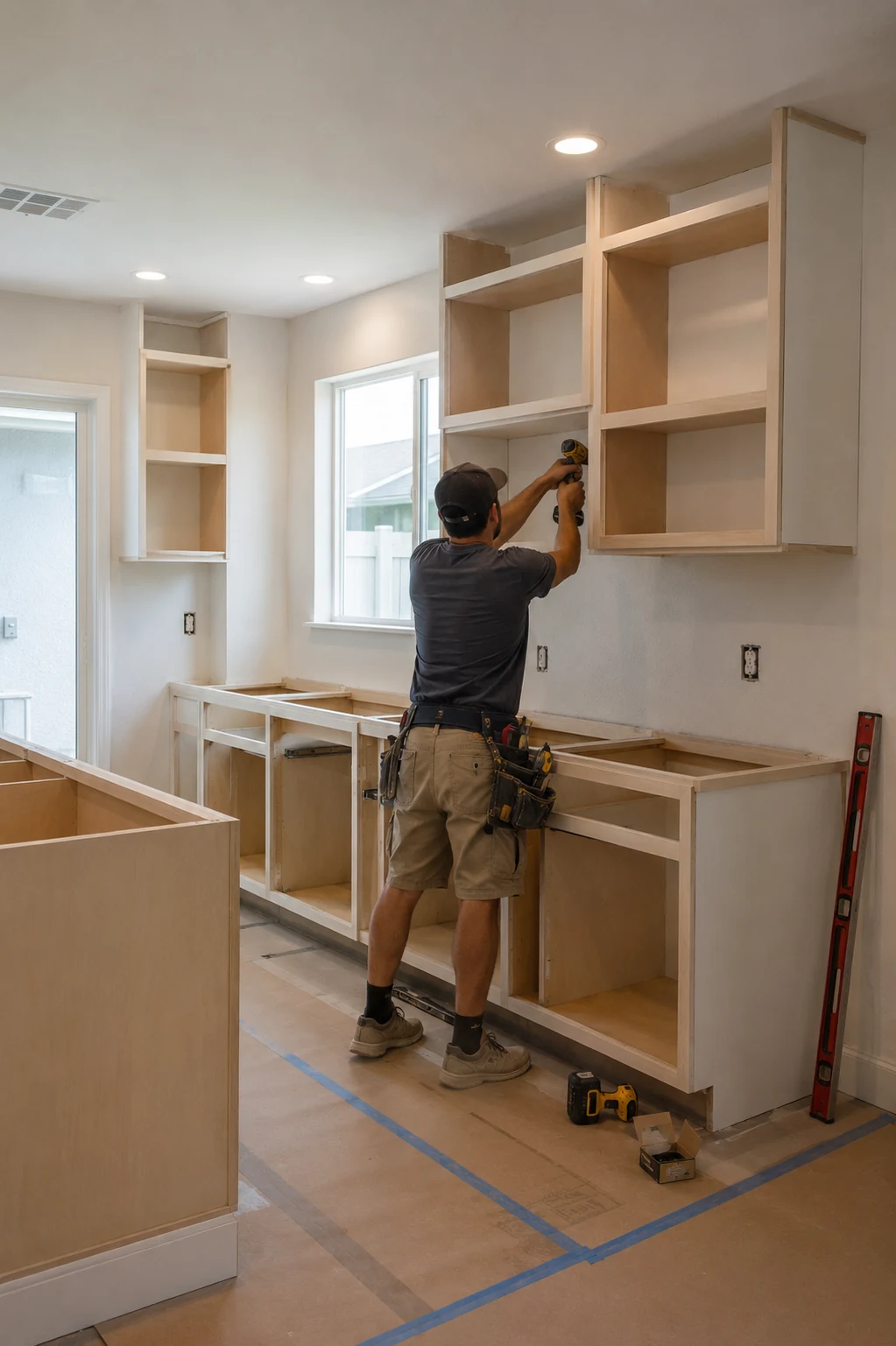
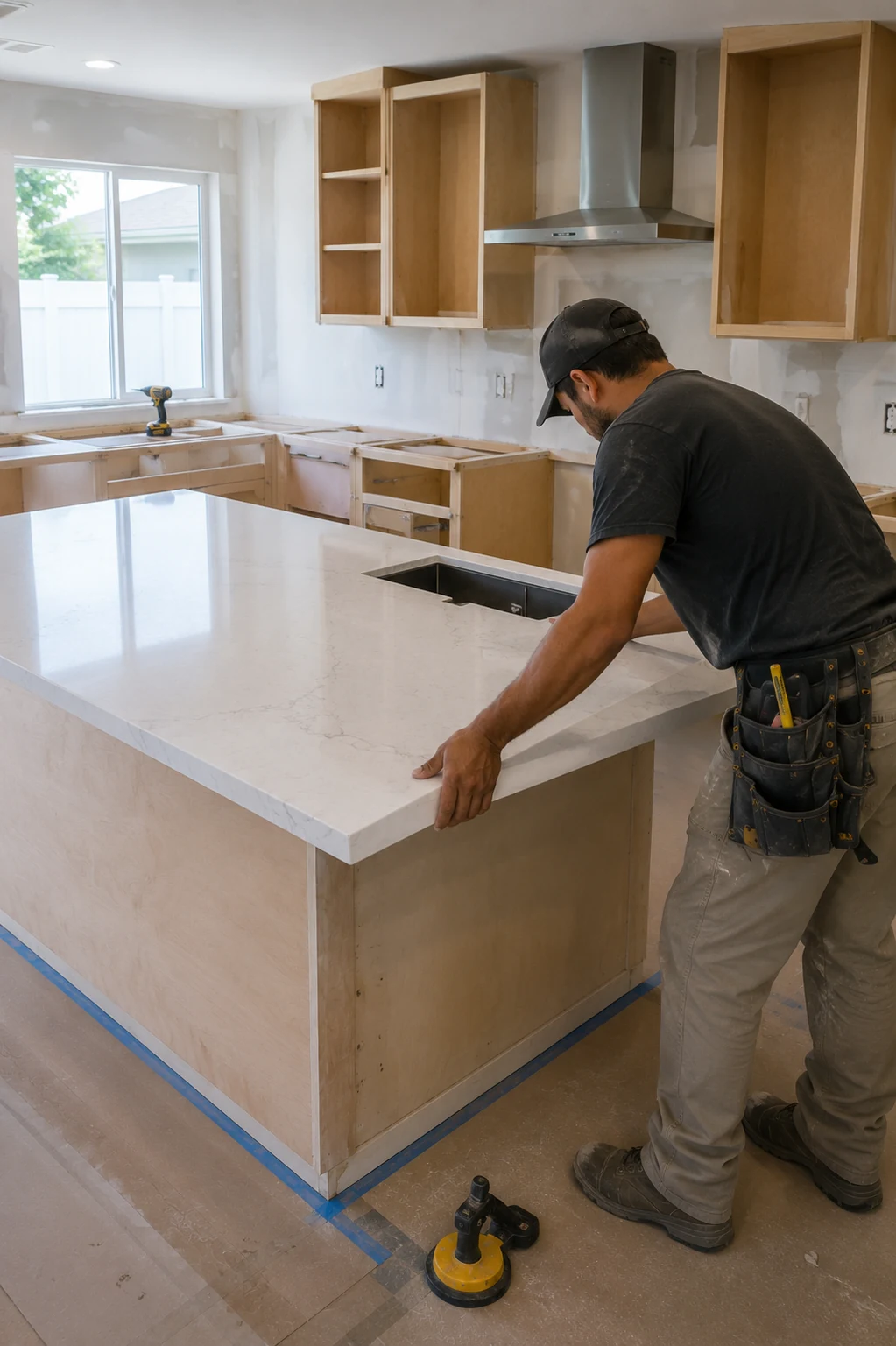
Countertop installation is part of kitchen remodeling, with the slab templated after cabinets are set and fabricated by a shop equipped to cut stone and engineered materials safely.
Share this article