The short answer
Exterior paint in Central Florida wears out faster on some walls than others: south- and west-facing walls fade and chalk first, shaded and damp walls grow mildew first, and wood trim and fascia usually need attention before stucco does. Rather than a set number of years, the signs to watch are chalking, fading, cracking or peeling paint, failed caulk and mildew that returns quickly after cleaning.
Paint lasts longest when the surface is cleaned of chalk and mildew and allowed to dry, cracks and caulk are repaired, bare or new areas are primed for their substrate, and a quality exterior coating goes on in the right conditions. Here that means working around afternoon storms and morning dew, and following the product's rules on temperature, dew point and rain.
Key takeaways
- Repaint timing depends on substrate, exposure, color, coating quality and prep. No single number applies to every house.
- Manufacturers commonly require the surface to be at least 5°F above the dew point, which rules out many early Florida mornings.
- Mildew left on the wall grows through new paint. It has to be killed and removed, then the wall allowed to dry.
- New stucco needs about 30 days to cure, or a primer rated for high alkalinity, before paint.
- Caulk at windows, doors and trim joints often fails before the paint does, and it is where water gets in.
What Florida Weather Does to Exterior Paint
An exterior coating in Central Florida works under a combination of stresses that is unusual for most of the country. Ultraviolet light from strong sun breaks down paint binders and pigments, which is why paint fades and chalks. Heavy rain, much of it from summer thunderstorms, tests every gap and joint. High humidity and warm temperatures keep damp surfaces damp for longer, and those are the conditions mildew and algae need. Daily heating and cooling makes substrates expand and contract.
None of these forces is dramatic on any single day. Their effect is cumulative. A wall that faces west into the afternoon sun, or a north wall under trees that rarely dries, ages very differently from the rest of the house. Paint rarely fails evenly; it fails on the worst-exposed surfaces first.
Realistic Repaint Timing by Surface
Paint makers and contractors quote very different lifespans because the answer depends on several variables at once. A useful way to think about it is surface by surface:
| Typical first signs | What shortens its life | What extends it | |
|---|---|---|---|
| Stucco walls | Fading, chalking, hairline cracks showing through | Unrepaired cracks, heavy sun, irrigation spray | Crack repair, quality acrylic, lighter colors |
| Wood trim and fascia | Cracking, peeling, soft spots | Water at joints, bare end grain, failed caulk | Rot repair, primer, sealed joints |
| Doors and shutters | Fading, sun-side peeling | Dark colors in full sun | Enamel finishes, shade, lighter tones |
| Metal railings and fixtures | Rust bleeding through | Scratches to bare metal | Rust-inhibiting primer |
The signs that a surface is due are consistent: a chalky residue that rubs off on a hand, noticeable fading, cracks or peeling in the film, caulk that has shrunk or split, and mildew that returns soon after cleaning. Repainting when chalking and fading first appear, before the film cracks and lets water in, usually means less preparation and lower cost than waiting until paint is peeling.
Sun-Facing Elevations
South- and west-facing walls take the most direct sun and heat, and they are usually the first to fade and chalk. Afternoon sun also heats surfaces, which affects how paint goes on. Paint manufacturers advise against applying their products in direct sun and note that coatings set up quickly at high temperatures, which can cause lap marks and poor flow. Crews working in summer typically follow the shade around the house, painting each elevation when it is out of direct sun.
Color matters too. Deeper colors absorb more heat and tend to show fading sooner. On vinyl surfaces, major paint manufacturers warn against painting darker than the original color, or below a set light reflectance value, unless using colors formulated to avoid heat buildup, because the vinyl can warp.
Sun, Rain and Mildew Load
Mildew and algae are among the most common exterior complaints in Florida. UF/IFAS Extension notes that mildew grows best in warm temperatures, roughly 77 to 86°F, the range Florida sits in for much of the year. Shaded walls, walls behind shrubs, soffits and surfaces that stay wet from irrigation or poor drainage grow it first.
Paint left over live mildew does not stop it; the growth comes back through the film, so cleaning and killing it is part of every repaint. Many exterior paints include mildewcides that slow regrowth on the film, and some carry mildew-resistance test ratings on their data sheets. They slow the problem; they do not replace cleaning or fixing the moisture source. Trimming plants back from walls and redirecting sprinklers help any coating last longer.
Pressure Washing and Soft Wash Prep
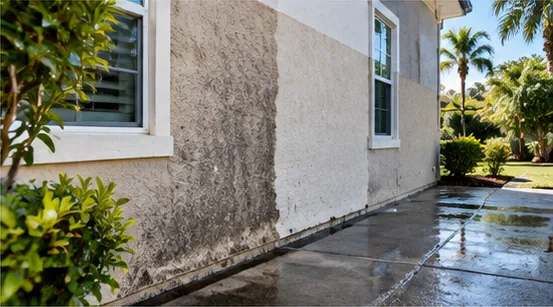
Every exterior repaint starts with cleaning: removing dirt, chalk, mildew and algae so new paint bonds to a sound surface. The method matters. High pressure can damage stucco, wood and window seals, while lower-pressure washing with cleaning solutions removes organic growth with less risk. After washing, the surface has to dry thoroughly before paint; how long depends on the substrate, sun and humidity.
The choice between methods, what each can damage and how to judge dryness are covered in the guide to washing a house before painting.
Stucco Crack Repair Before Paint
Most Central Florida homes have stucco walls, and hairline cracks are normal in them. Paint alone does not stop cracks from showing through; they need to be filled or bridged before the finish coats, and wider or moving cracks need proper repair. Hollow-sounding stucco, efflorescence and rust stains signal problems behind the surface that paint cannot fix.
Which cracks are cosmetic, how patches are textured to match, and when a flexible coating makes sense are worked through in repairing stucco before paint.
Wood Rot and Fascia Repair
Wood fascia, trim boards, window sills and door frames are the most vulnerable parts of many Florida exteriors, because water collects at joints and end grain. Soft spots, peeling concentrated in one area and paint that bubbles along a board edge often mean rot underneath. Rotted wood is cut out and replaced, or on small areas consolidated and filled with an epoxy repair product, then primed on all exposed faces before paint. Painting over rot only hides it for a season, and rot left in place spreads.
Caulking and Sealing Details
Caulk often fails before paint does. Sealant joints around windows and doors, where trim meets stucco, at penetrations for pipes, wires and lights, and between dissimilar materials take constant movement and sun. When caulk shrinks, cracks or pulls away, water gets behind trim and into walls.
Good practice before painting includes cutting out failed caulk rather than covering it, using a paintable exterior sealant suited to the joint and the materials, and tooling it so it sheds water. Not every gap should be sealed: weep holes in window frames and the gap at the base of stucco walls, where the weep screed lets water drain, are designed to stay open.
Primer Selection by Substrate
Primer is not always needed on sound, previously painted surfaces in good condition, but it matters on repairs, bare spots and specific substrates. Manufacturers’ data sheets are the guide, and common patterns include:
- New stucco and masonry: new stucco is highly alkaline. Manufacturers typically ask for about 30 days of cure before painting, or allow earlier painting with a primer designed for high-pH surfaces.
- Chalky or powdery masonry: a masonry conditioner or bonding primer after cleaning, when chalk cannot be fully removed.
- Stucco repairs and patches: primer so the repair does not flash through the finish with a different sheen or color.
- Wood: bare wood primed, and woods such as cedar and redwood primed with stain-blocking products where tannin bleed is a risk.
- Metal: bare steel cleaned and primed promptly with a rust-inhibiting primer.
- Glossy or previously enameled surfaces: cleaned, dulled and primed with a bonding primer.
Using the wrong primer, or skipping it on bare and repaired areas, is a common cause of blotchy finishes and early peeling.
Coating Quality and What It Buys
Exterior paints vary more than their labels suggest. Higher-grade products generally carry more solids, cover in fewer coats and hold color longer under UV. Their technical data sheets also list test results that matter in Florida, such as resistance to wind-driven rain and ratings for mildew resistance on the dried film. One major manufacturer’s premium exterior line, for example, reports passing a wind-driven rain test and a mildew-resistance test with no growth.
Paint grade matters most on the surfaces that fail first. Using the best product on the south and west walls, the trim and the doors, where sun and water hit hardest, often gives more value than spreading a mid-grade product evenly across the whole house. Warranties from paint makers typically apply only when their product is applied as directed over a properly prepared surface, so the preparation described above is what makes a product warranty meaningful.
What a Thorough Exterior Scope Includes
A clear written scope prevents most exterior painting disputes. A thorough one typically lists:
- Surfaces included: walls, soffits, fascia, trim, doors, garage door, shutters, railings, lanai walls and any exclusions.
- Cleaning method and how plants, screens, pools and fixtures will be protected.
- Repairs: stucco cracks, wood rot and failed caulk, with how additional damage found during prep will be priced.
- Primer for repaired, bare and chalky areas, named by product.
- Finish products, colors and sheens for each surface, and the number of coats.
- Conditions: how weather, drying time and rain delays are handled.
- Cleanup and final walkthrough.
A scope with these details lets two quotes be compared on the same work, which is where most price differences come from.
Best Time of Year to Paint Here
Exterior painting happens year-round in Central Florida, but conditions differ by season. The National Weather Service office that covers the region places the median start of the rainy season in late May and its end in mid-October. The drier months, roughly late October through early May, generally offer more reliable painting days, with lower humidity and fewer afternoon storms. Cold snaps occasionally bring temperatures below the minimums some products require.
Summer painting is common and can produce excellent results, but it needs more scheduling care: early starts, shade-following and time for walls to dry after rain.
Afternoon Thunderstorm Windows
Summer thunderstorms in Central Florida often build in the afternoon. Fresh paint needs a period without rain after application; one major manufacturer’s data sheet advises avoiding application when rain is expected within a few hours. Crews plan around this by starting early, finishing exposed elevations before storms typically arrive and watching radar. Paint that is rained on before it sets can streak or wash off and may need to be redone.
Dew Point and Morning Moisture
Early mornings often bring dew, and wet surfaces do not take paint well. Paint data sheets commonly require the surface and air temperature to be at least 5°F above the dew point during application and drying, so water does not condense on the fresh film. High humidity and cool temperatures also lengthen drying and recoat times, as manufacturers note. In practice, painters start on elevations that dry first and avoid late-day application on surfaces that will be wet with dew by evening.
Keeping a New Paint Job Looking Good
A few habits extend the life of an exterior finish. Keep sprinklers from hitting walls, since constant wetting feeds mildew and stains the base of stucco. Trim shrubs and trees back so walls get air and light. Rinse off pollen, dust and early mildew with a gentle wash once or twice a year, and clean gutters so they do not overflow onto walls. Walk around the house once a year to look for failed caulk, cracks and peeling, and deal with small areas before water gets behind them. Keeping a record of the products and colors used makes touch-ups and future repaints far simpler.
Cost per Square Foot
For stucco homes, HomeGuide’s national figures land at about $2,400 to $8,100 for an average house. Figures like these are a starting point, not a quote, because the main cost drivers are specific to each house: As a planning reference the national range is only a frame; the house’s size and height, how much stucco repair is needed and the coating chosen decide where a real bid falls.
- Preparation and repair, including stucco cracks, wood rot and failed caulk.
- Height and access, with two-story walls and gables requiring more equipment.
- Number of colors and amount of trim, which adds cutting-in time.
- Coating system, such as a standard acrylic or a thicker elastomeric.
- Number of coats, usually two for a color change or weathered surface.
How quotes are assembled, and why two bids for the same house can differ so much, is explained in what drives a house painting quote.
In neighborhoods with associations, color approval usually comes before scheduling, and the HOA submission process can take longer than the painting itself.
Planning an exterior repaint starts with an inspection of the surfaces, so the scope of washing, repairs and primer is clear before the first coat.
Share this article