The short answer
A painting quote is driven by four things, and the paint itself is the smallest of them: the amount of surface preparation the walls need, the number of coats the colour change requires, how difficult the surfaces are to reach, and the quality of the coating specified. Two quotes for the same house can differ enormously because one includes repairing and priming the surface and the other assumes it is ready to paint.
That is why the useful question is not "how much per square foot" but "what preparation is included, and what happens if the surface needs more". On exterior work in Central Florida that question matters more than anywhere else, because sun and humidity attack the surface long before they attack the colour.
Key takeaways
- Preparation, not paint, is the largest and most variable part of a painting quote — and the part a cheap bid removes first.
- A colour change from dark to light, or bare drywall, needs primer plus two coats. The number of coats is a scope question, not a preference.
- Pricing by room hides doors, trim, ceilings and closets. Pricing by surface area exposes them. Ask which one a quote uses.
- Exterior painting in Florida is a protection system against sun and moisture, so coating quality changes how long the work lasts, not just how it looks.
- Height, access and substrate — stucco, siding, brick — move an exterior quote more than the square footage does.
Average Cost for Interior House Painting
Interior painting looks like the most predictable trade in remodeling — a measurable surface, a known product, a repeatable process. It is also the trade where quotes for identical work vary most, and understanding why is worth more than any average figure.
The reason is that the visible part of the job is the smallest part of it. Rolling paint onto a prepared wall is fast. Getting the wall to the point where paint can go onto it is where the hours are, and that is the part each contractor is estimating differently.
What is inside an interior quote
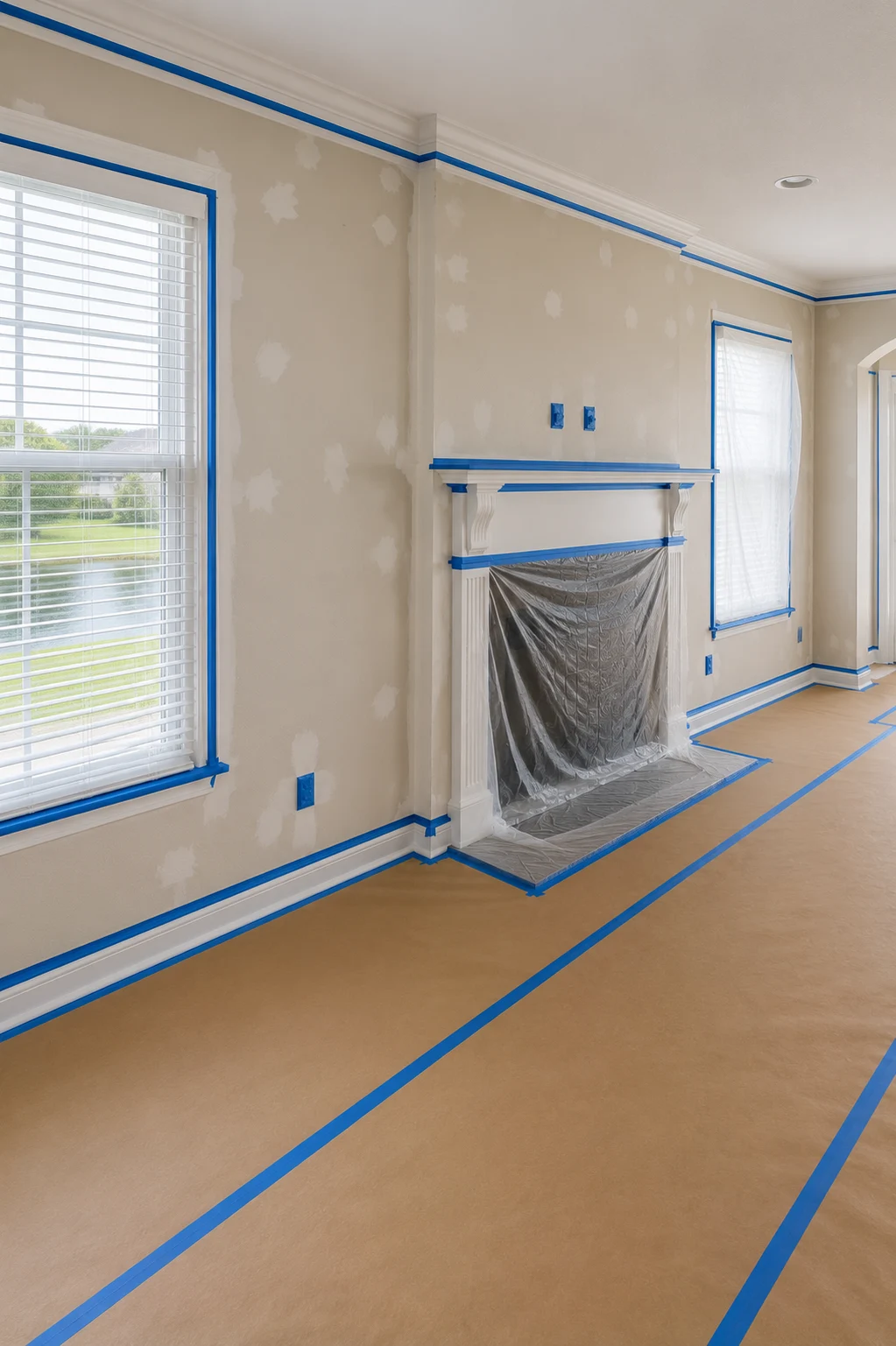
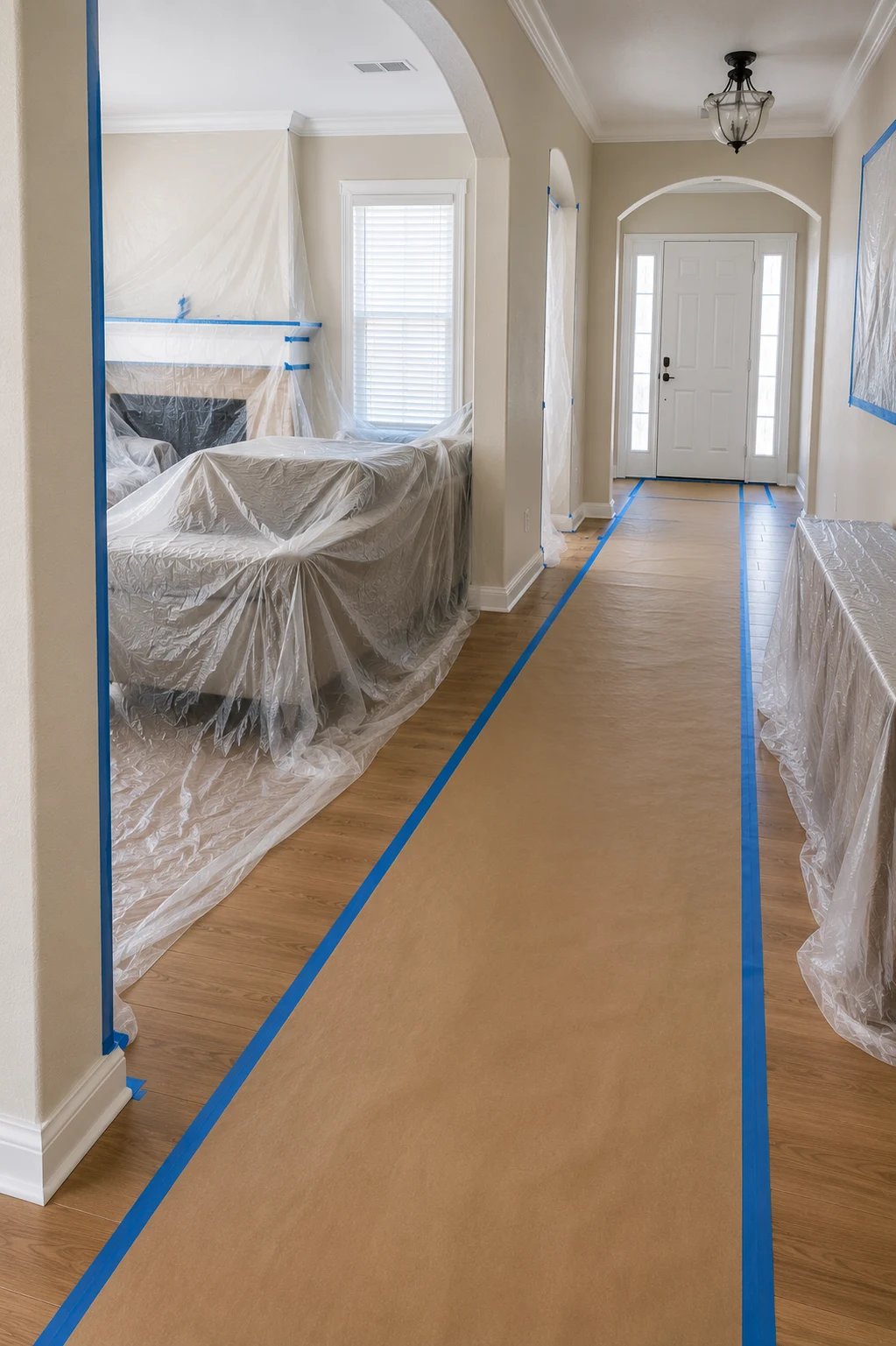
An interior painting estimate covers protection and masking, surface repair, priming where needed, cutting in edges by hand, rolling the field coats, and cleanup. Only two of those six are the part most people picture.
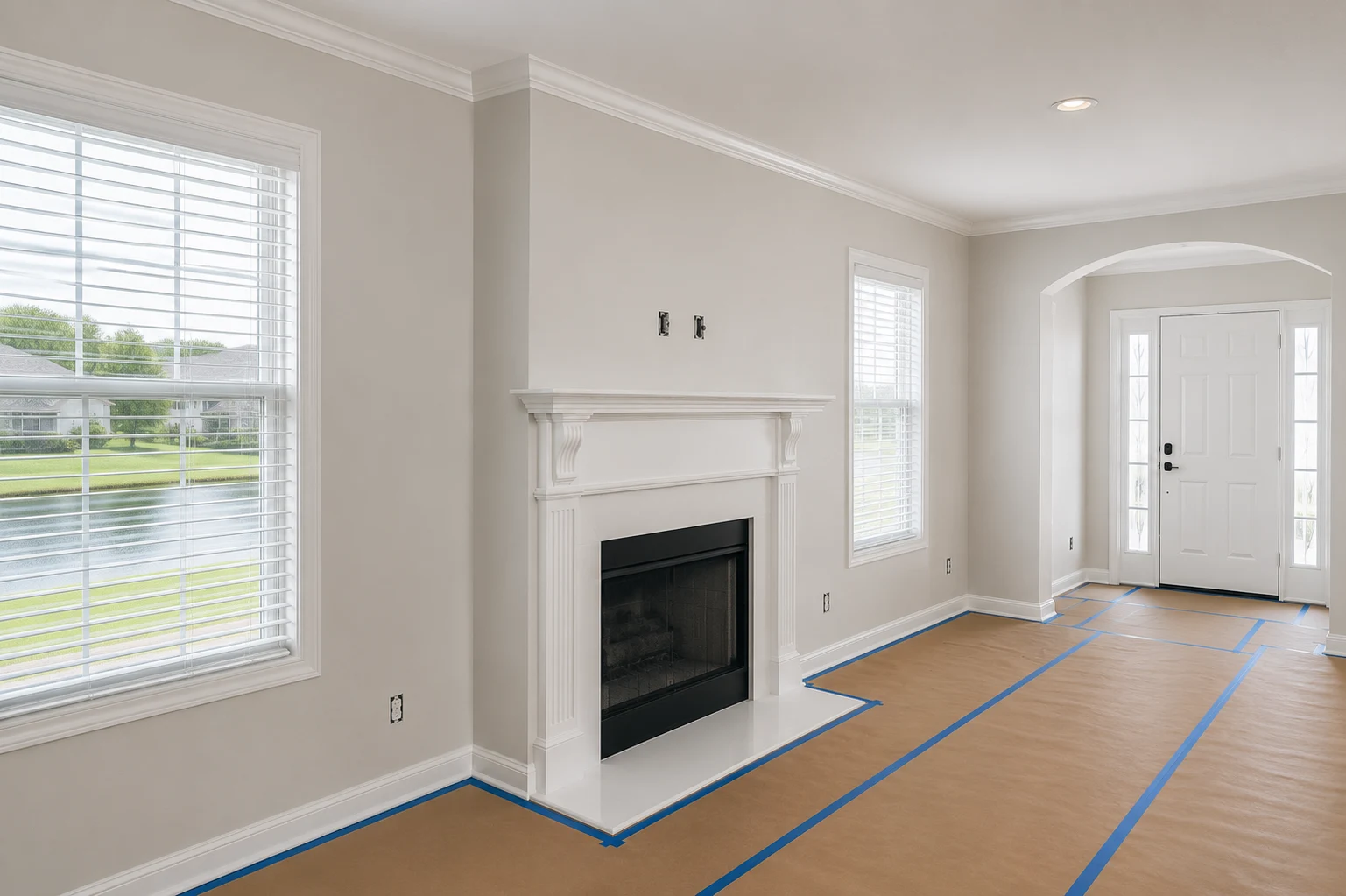
Protection alone is real work: covering floors, moving and sheeting furniture, masking trim, removing switch plates and sealing doorways so dust does not travel through the house. On an occupied home it is repeated in every room, and it is the part of a painting project that homeowners comparing bids almost never see itemised.
The variables that move the interior number
Four things change an interior price more than the size of the room:
- The condition of the walls. Nail holes, drywall damage, previous repairs that were never sanded flat, and texture that does not match all take time to correct before any colour goes on.
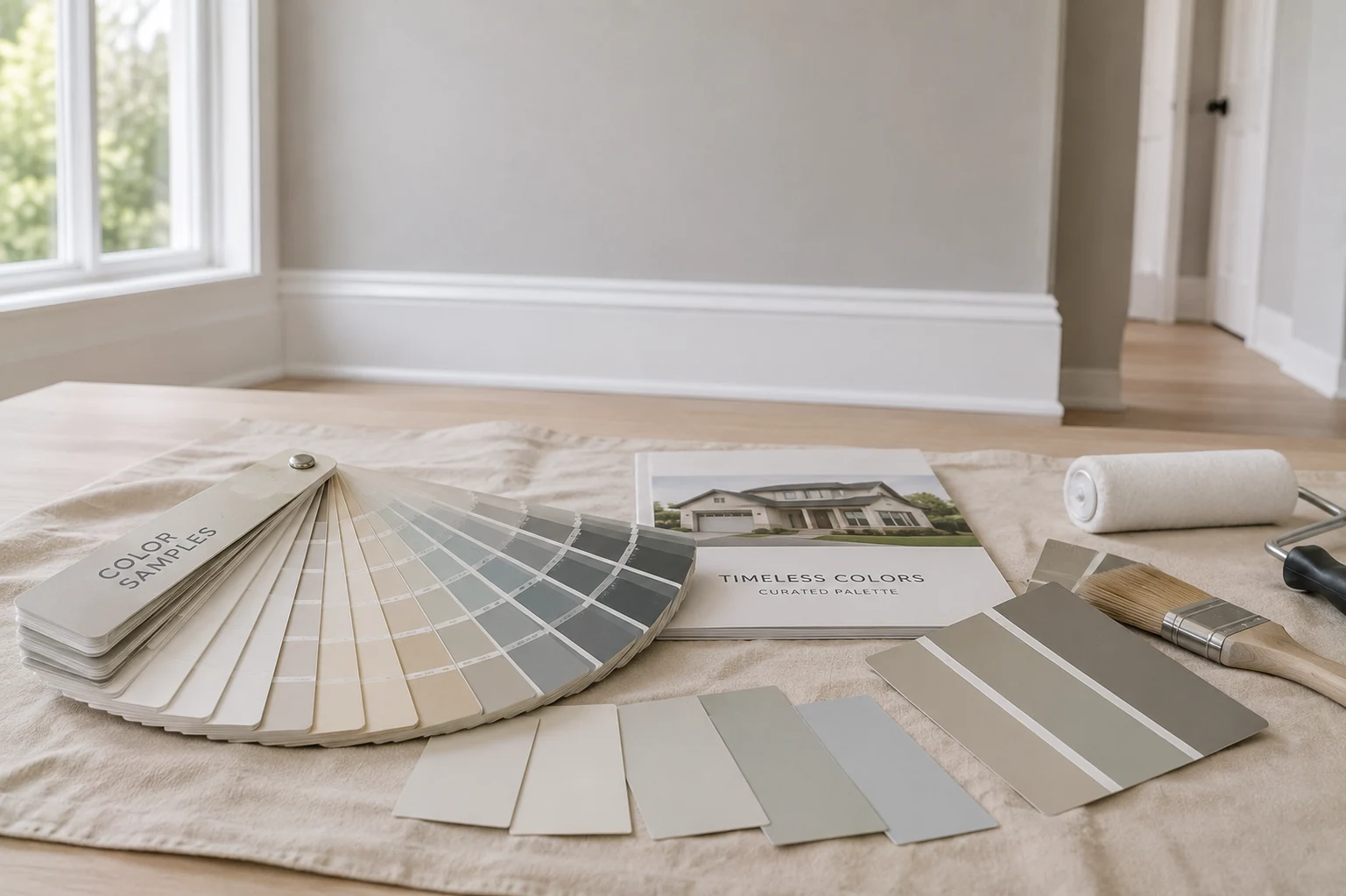
- The colour change. Going lighter over a strong colour, or covering new drywall, requires primer and two coats rather than one.
- How much is being painted in each room. Walls only is a different job from walls, ceiling, trim, doors and closet interiors.
- The finish specified. Higher sheens are less forgiving and show every imperfection in the surface underneath, so they require better preparation to look right; choosing a sheen for each surface covers the trade-off.
Average Cost for Exterior House Painting
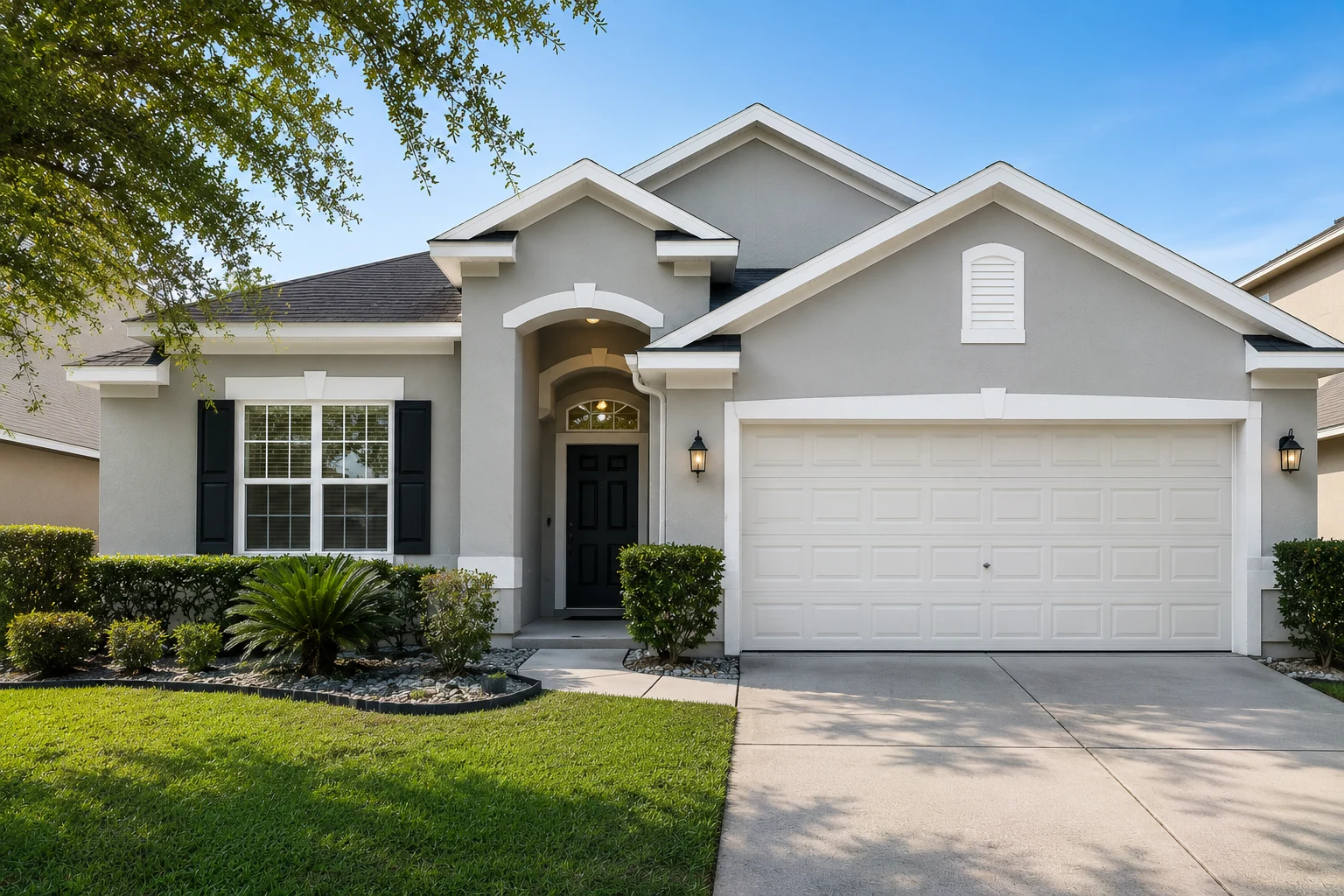
Exterior painting is priced on a different logic, and treating it as interior painting done outdoors is the fastest way to misread a quote. Outside, the coating is not decoration. It is the layer protecting the building from sun, rain and humidity.
Why the substrate decides the price
What the exterior is made of matters more than its area. Stucco is porous and textured, which means it absorbs more coating and takes longer to cover than a smooth surface. Siding has joints, laps and edges that all have to be cut in. Brick and masonry have their own absorption behaviour and their own preparation requirements.
Each of those substrates changes both the amount of material consumed and the hours needed to apply it — which is why an exterior quote should name the substrate rather than quote a flat rate for the house.
Access is a real line item
A single-storey house with clear ground around it is straightforward. The same square footage two storeys up, above a screened enclosure, over a sloped lot or behind mature landscaping is a different job. Ladders, staging and working at height are slower and require more people, and none of that is visible in a square-footage figure.
This is also the honest argument for professional exterior work rather than a weekend attempt: the risk and the equipment scale with height in a way the surface area does not.
What Central Florida does to an exterior
Our climate attacks an exterior coating from several directions at once. Direct UV exposure fades pigment and breaks down binders. Humidity and wind-driven rain look for any gap in the film. Daily temperature swings move the substrate underneath. Organic growth appears quickly on surfaces that stay damp and shaded. How those forces shape the timing of a repaint is covered in how long exterior paint lasts in Florida.
The practical consequences for a quote are specific: the surface must be clean and completely dry before coating, existing failures need to be addressed rather than painted over, joints and penetrations need proper sealing, and the coating specified should be one intended for this exposure. A bid that skips the washing and drying stage is not a cheaper version of the same job — it is a different, shorter-lived job. Homes across Dr. Phillips and the surrounding communities with mature tree cover show this most clearly, where shaded elevations behave very differently from the sun-facing ones.
Cost per Square Foot vs. Cost per Room
This is where most confusion about painting prices comes from, and clearing it up makes every quote you receive easier to compare.
The two bases measure different things
A per-room price is a package. It is convenient, it is easy to quote over the phone, and it conceals exactly the information you need — because “a bedroom” can mean four walls, or it can mean four walls plus a ceiling, a door, a closet interior, baseboards and window casings.
A per-square-foot price of painted surface is closer to how the work is actually estimated, because it counts the surface rather than the space. Its weakness is the opposite one: it says nothing about how difficult that surface is to paint.
Neither number is comparable on its own
The useful move is to make the two quotes describe the same scope rather than to prefer one basis over the other. Ask each contractor, for every space: are walls included, are ceilings included, is trim included, are doors included, are closet interiors included, how many coats, and what preparation is assumed.
Once those answers exist, a room price and a square-foot price become directly comparable — and the differences that remain are real differences in the work rather than in the format of the quote.
Where the whole-house question comes in
Painting the whole interior at once is usually more efficient per unit of surface than doing it room by room, for the same reason as most trades: setup, protection, masking and cleanup are paid once instead of repeatedly, and colours are mixed from the same batch.
It is also the moment when painting stops being a standalone job. Interior painting is the natural finishing stage of nearly every larger project, which is why it appears at the end of most whole home renovations rather than as a separate visit months later.
Factors That Affect Your Painting Estimate (Prep Work, Paint Quality)
If you read only one section before comparing quotes, this is the one. Preparation and coating quality are where the difference between two prices lives, and they are the two things a low bid quietly reduces.
Preparation is the job
Preparation is everything that happens before colour: washing and drying the surface, scraping and sanding failing material, filling holes and cracks, repairing damaged drywall or stucco, caulking joints, spot priming repairs so they do not flash through the finish, and masking everything that is not being painted.
Paint does not fix a surface. It records it. A wall with unsanded filler, a stucco crack that was painted over, or an exterior washed but not allowed to dry will all look acceptable on the final day and will show the shortcut within the first year or two.
Coating quality changes the arithmetic
Coatings differ in the proportion of solids they contain, in how well they resist UV and moisture, and in how many coats they need to cover. A better coating can cover in fewer coats, which partly offsets its own price through labour, and it holds up longer under exposure. Elastomeric coatings are a separate category, useful on some stucco and a poor choice on other walls, as explained in when elastomeric coating fits.
The trade-off worth understanding is that labour dominates a painting project. Choosing a cheaper coating saves a small fraction of the total and shortens the interval before all of that labour has to be paid again.
Repairs that are priced separately
Most painting quotes price repair work as its own line, because nobody can see its full extent until the surface is washed and scraped. Three items account for most of it in Central Florida. Stucco cracks and failed patches are opened, filled and textured to match before any coating goes on, and that work is described in repairing stucco before painting. Rotted wood at fascia, trim, door frames and window sills is cut out and replaced by the linear foot or by the piece, often at a unit price stated in the quote so it can be counted once the rot is exposed. And interior drywall damage beyond ordinary filling is priced by the repair.
The useful thing to ask for is the unit price for each type of repair, written into the contract, so the number that appears after scraping can be checked rather than negotiated. In houses old enough to have lead-based paint under the current coats, the preparation method itself changes, which is covered in painting older homes safely.
The questions that make a quote comparable
Ask each contractor the same five things, and ask for the answers in writing:
- What preparation is included, and what happens to the price if more is needed?
- How many coats, and is primer included where the colour change requires it?
- Which product line and finish are specified for each surface?
- What exactly is included in each space — walls, ceilings, trim, doors, closets?
- Who moves and protects furniture, and how is the site left each day?
A contractor who answers all five without hesitation has estimated your house. One who cannot has estimated an average house, and yours will differ from it.
Where painting sits in a bigger plan
Painting is frequently the last visible step of work that began elsewhere. Drywall repair, trim replacement and door work all end in paint, which is why they are often bundled with general repairs rather than treated as separate projects. Cabinet finishes follow the same logic inside a kitchen project, where refinishing is decided alongside the rest of the scope rather than after it.
Knowing that in advance changes the sequence, and the sequence is what keeps you from paying to protect and mask the same room twice.
Share this article