The short answer
Interior painting is one of the few remodeling tasks a careful homeowner can complete to a genuinely professional standard. The materials are forgiving, the surfaces are reachable, mistakes are correctable, and the main input is patience rather than skill. If a budget is tight, this is the right place to spend your own labour.
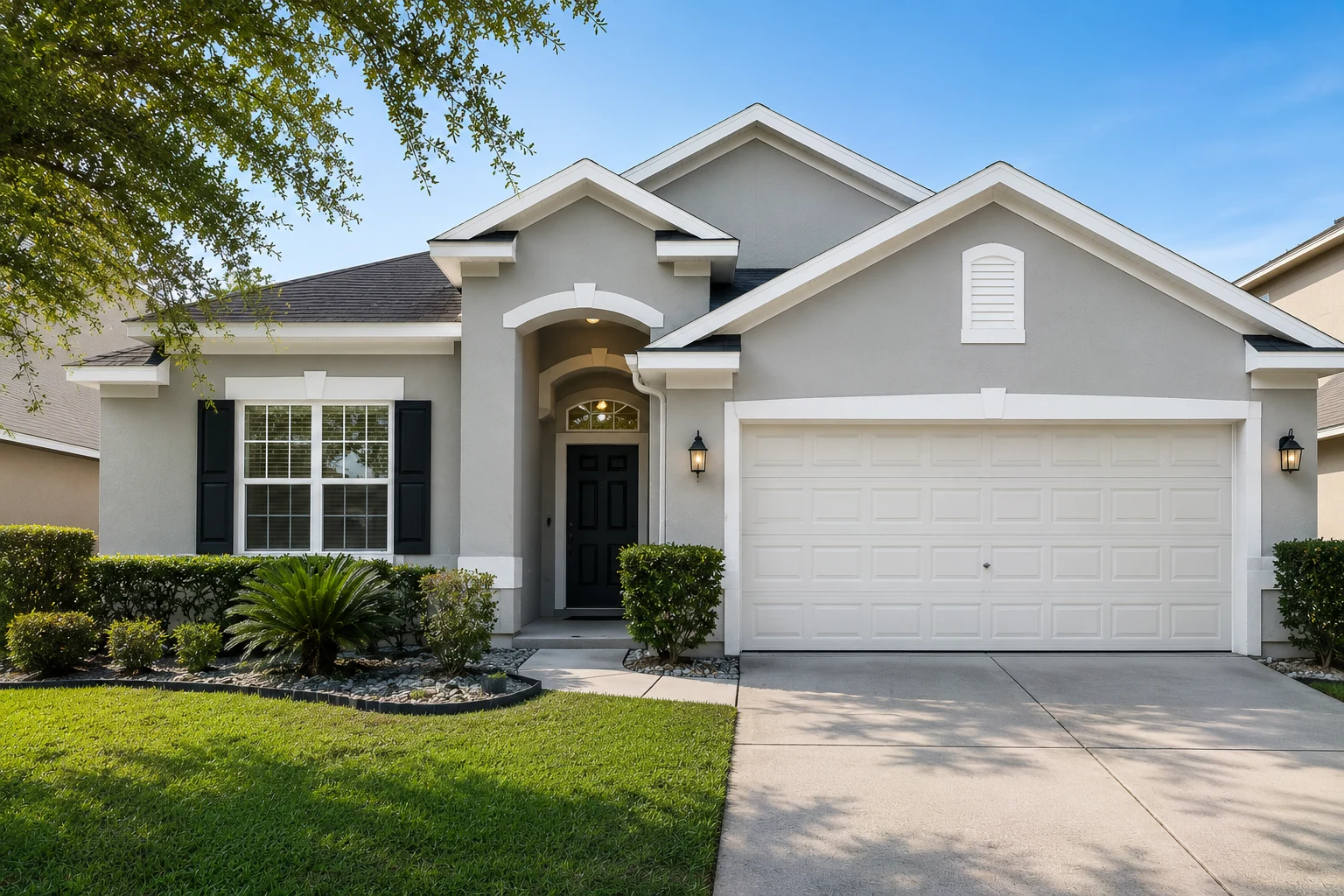
Exterior painting in Central Florida is a different proposition, and the reasons are practical rather than snobbish: working height and staging, preparation that has to happen on sun-heated surfaces, recoat and cure windows that shift with humidity and afternoon storms, and the fact that a failed exterior is expensive to correct because the correction starts with removing what is there.
The cost of a bad paint job is not the paint. It is the labour to strip or sand back a coating that did not adhere, which frequently exceeds what the professional job would have cost in the first place — and that risk sits almost entirely on the exterior side of the line.
Key takeaways
- Interior painting is the best-value homeowner contribution to any remodel: it sits at the end of the sequence and blocks no other trade.
- The line is not DIY against professional. It is ground-floor interior against anything involving ladders, stucco or two storeys.
- Preparation is the whole job on an exterior, and it is the part that gets skipped when the person doing it is tired and it is thirty-two degrees.
- Pressure washing is where most DIY exteriors go wrong — too much pressure drives water into the wall and still leaves chalk behind.
- Recoat and cure times in Florida humidity run longer than the label suggests, and painting into an afternoon storm undoes the day.
- A failed coating is corrected by removing it first, which is why a bad exterior costs more to fix than it would have cost to hire out.
Can You Paint the House Yourself?
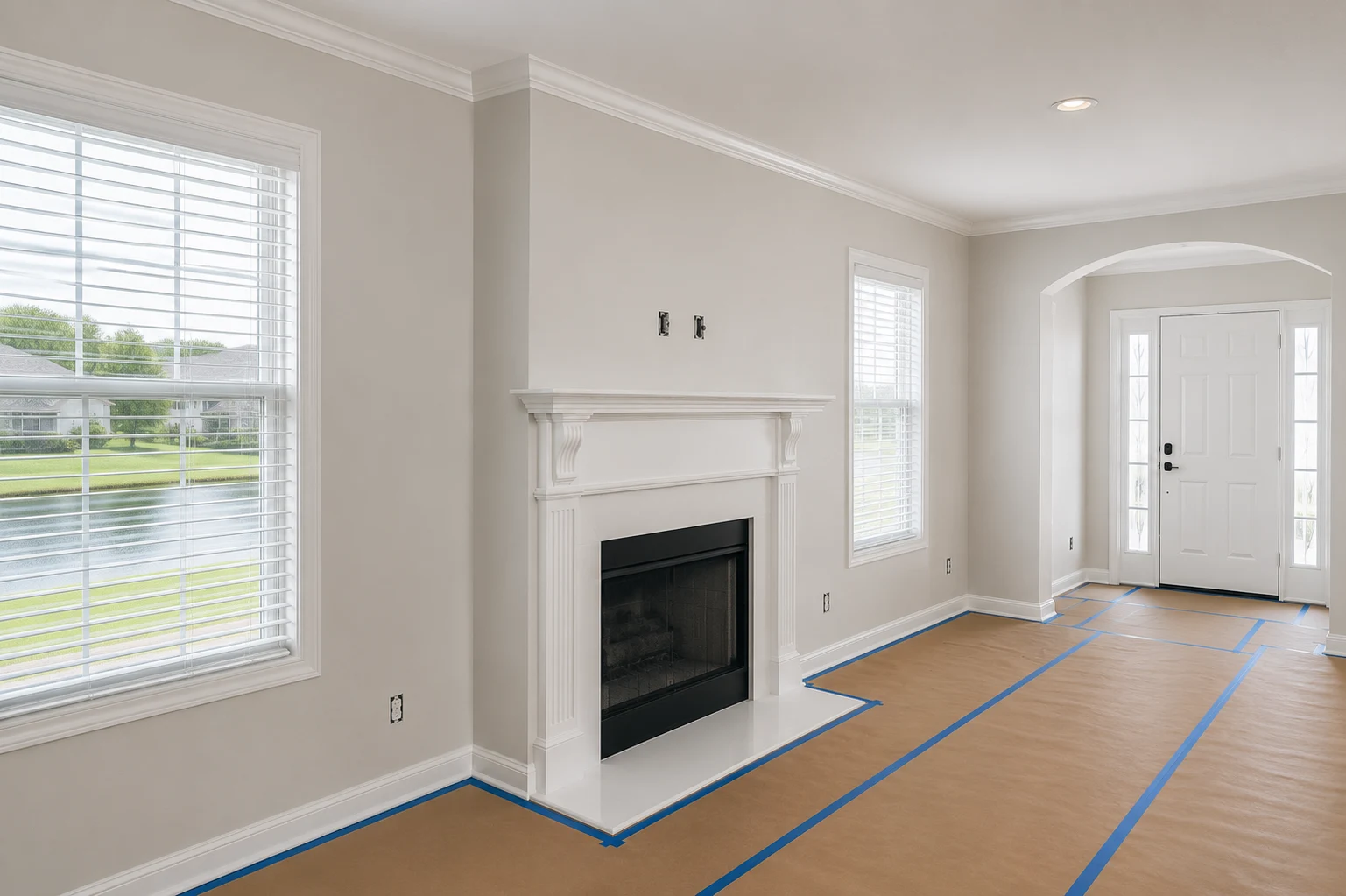
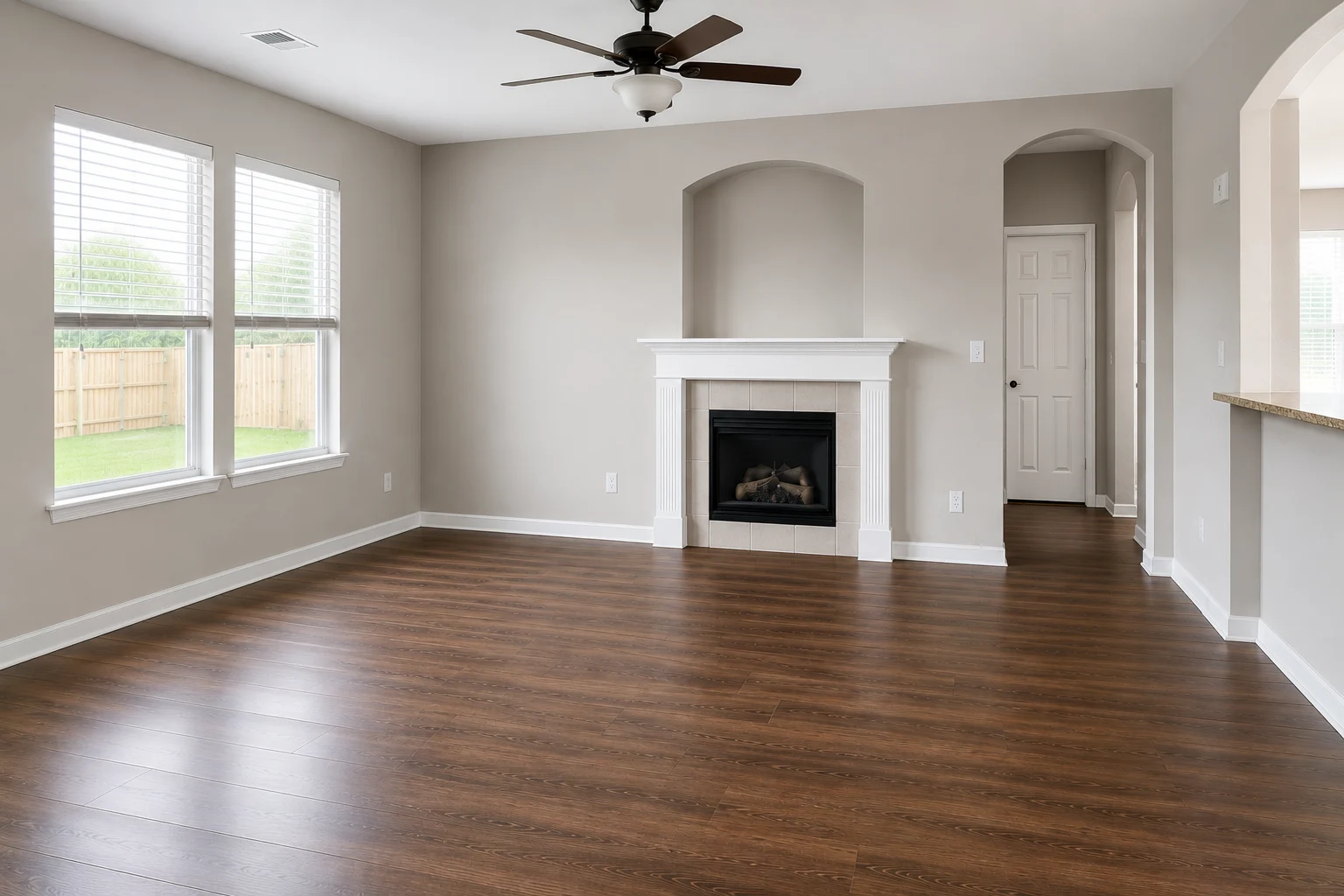
Inside, yes — and this is not a grudging concession. Interior painting is one of the few tasks in a remodel where a careful homeowner produces a result that is genuinely hard to distinguish from professional work.
Why interiors are the honest exception
Four things make interior painting the right place for homeowner labour.
The surfaces are reachable. Almost everything is within arm’s length from the floor or a short step ladder, which removes the equipment, the staging and the risk in one go.
The conditions are controlled. The temperature is stable, there is no sun heating the surface, no wind, and no chance of rain landing on a wet coat.
Mistakes are correctable. A drip, a missed spot, an uneven edge — all of it is fixed by sanding lightly and applying another coat. Nothing is permanent and nothing is buried.
And it blocks nothing. Painting sits at the end of the sequence, so a homeowner taking three weekends over it does not hold up any other trade — which is exactly why it is the classic contribution in a split-scope project, as set out in our guide to DIY versus hiring a kitchen contractor.
What a good interior job actually requires
Not skill so much as refusal to skip steps.
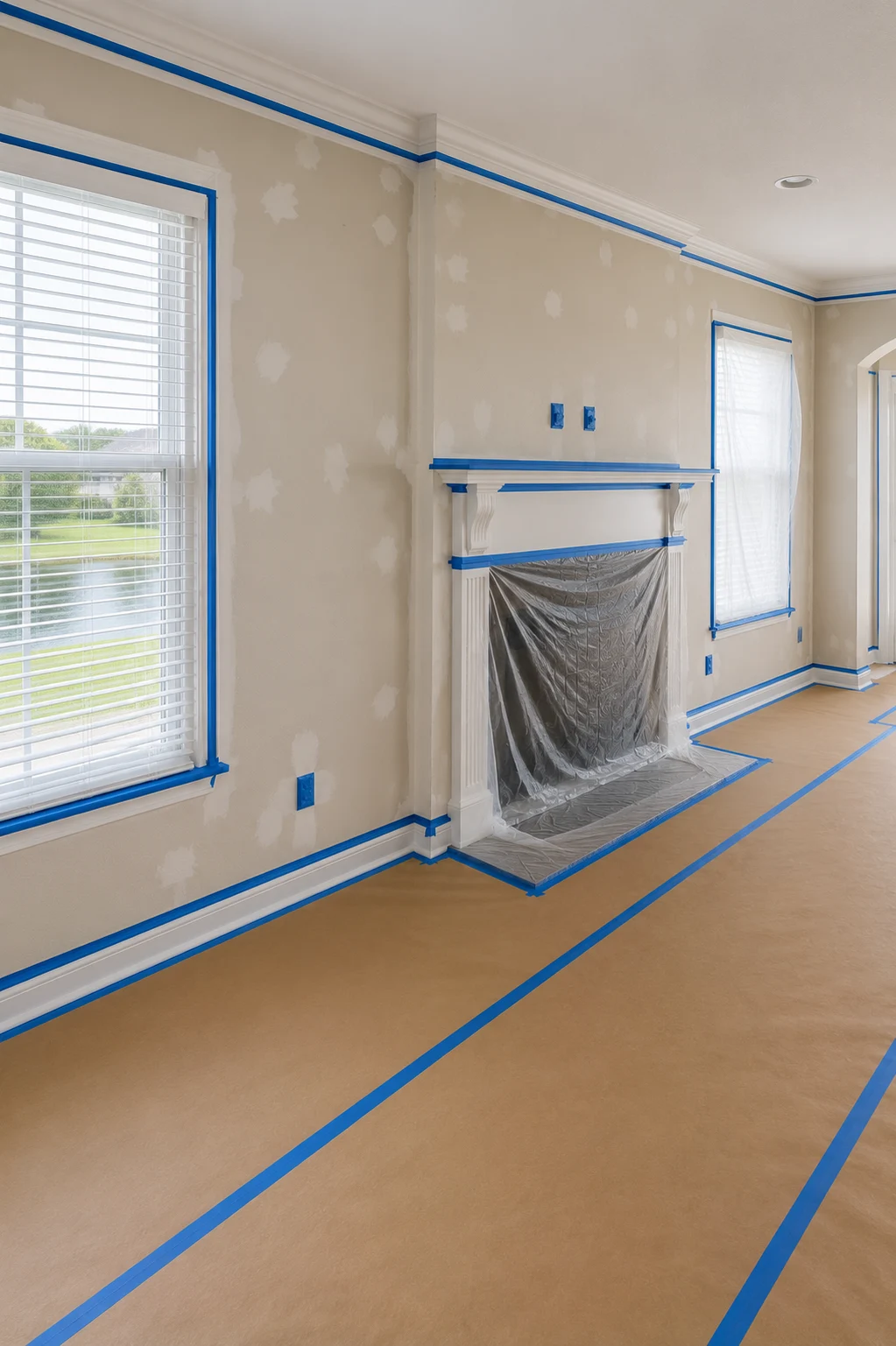
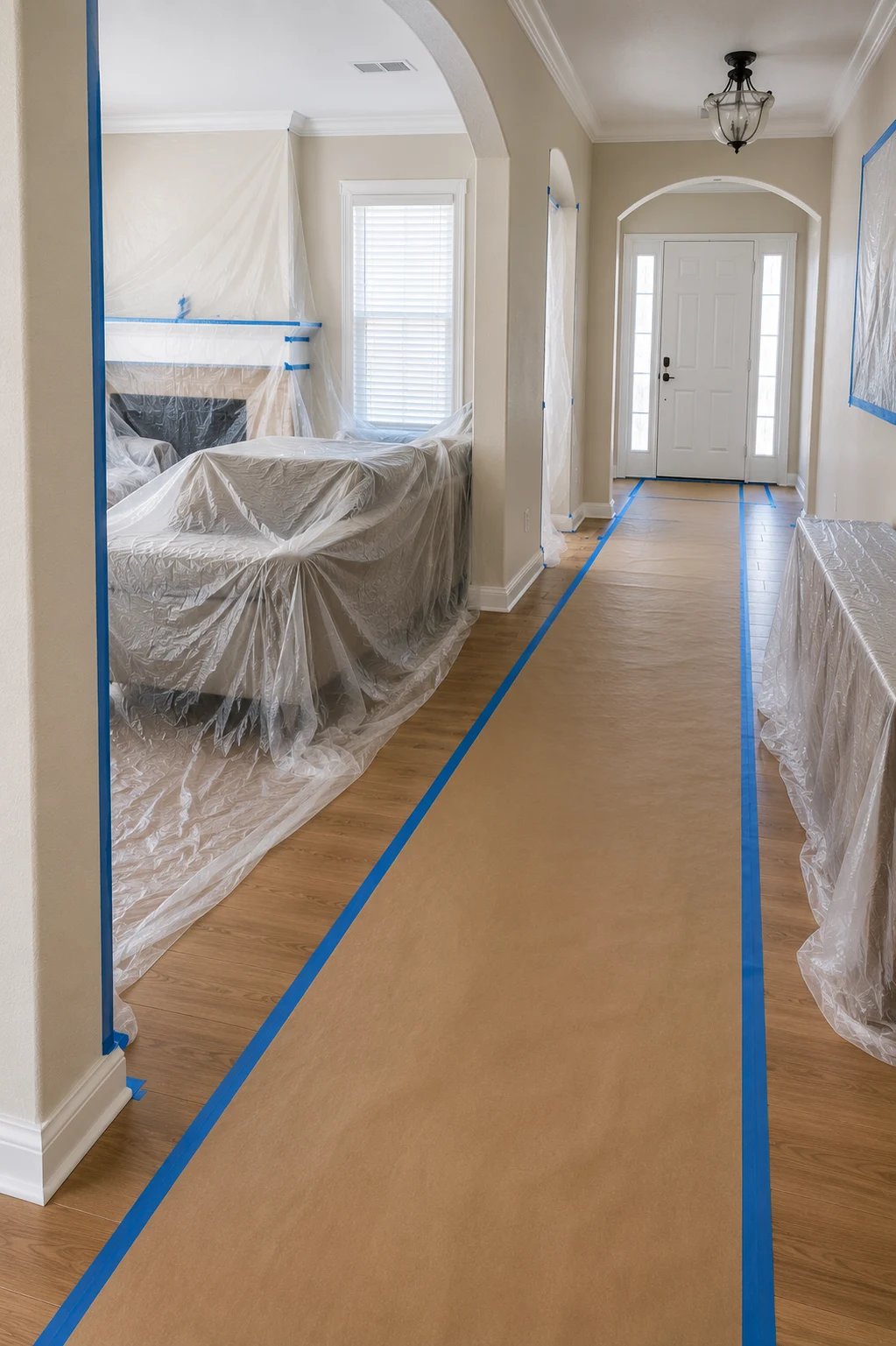
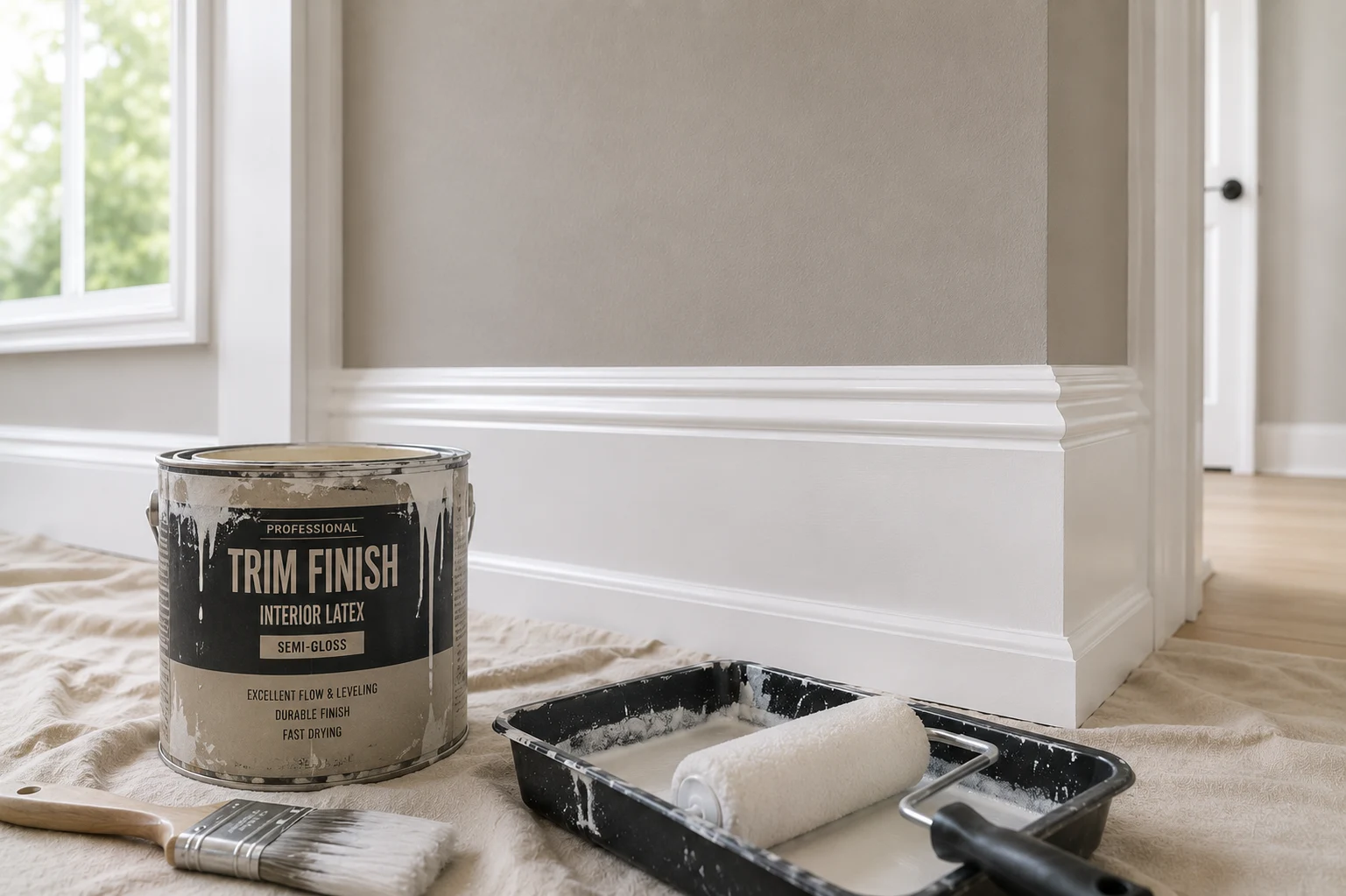
Move everything out or to the middle and cover it properly. Remove switch plates and hardware rather than cutting around them. Fill nail holes and dents, then sand them flush and feel them with your hand rather than judging by eye. Caulk the gaps where trim meets wall — this single step is the largest visual difference between amateur and professional interiors. Prime patches and any drastic colour change. Cut in the edges with a good brush, and keep a wet edge as you roll.
Then wait the stated time between coats, which in a humid house is usually longer than the label suggests.
Where an interior stops being a weekend job
Three situations move an interior out of comfortable DIY territory: a stairwell or vaulted ceiling that requires working at height over a drop, extensive drywall damage that needs real repair rather than filling, and any surface where the existing finish is failing rather than merely dated. A house built before 1978 is a fourth, because lead-based paint may sit under later coats and sanding or scraping can release its dust; lead paint in older Florida homes explains how to find out first.
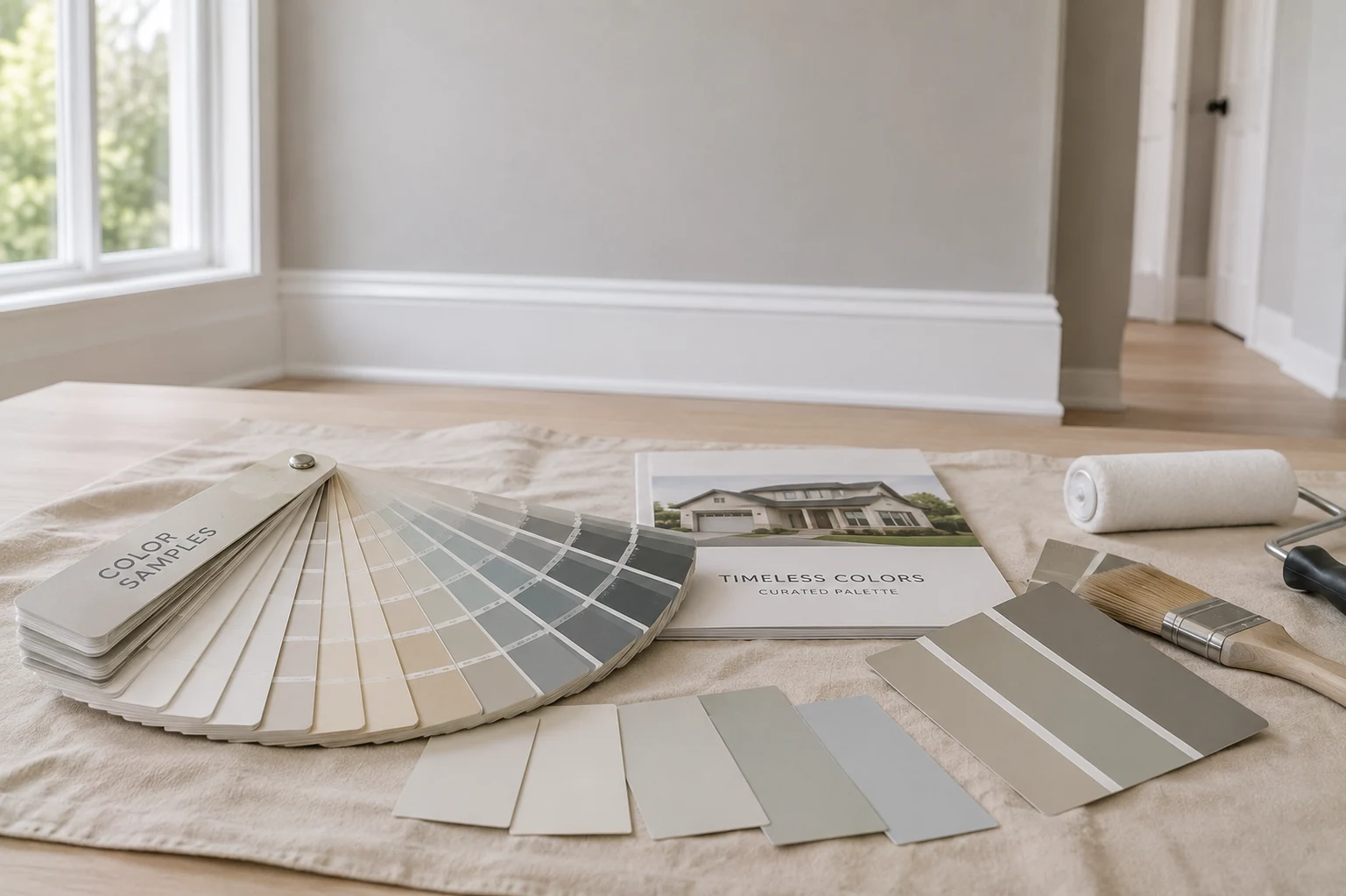
Choosing colour is the other part worth taking seriously before starting, because a repaint is the most tedious way to discover you dislike a colour. The method for testing properly is in our guide to choosing house painting colours.
Why Exterior Painting is Best Left to the Pros
The argument here is not about skill either. It is that a Florida exterior introduces five variables that an interior does not have, and each of them is objective.
Height and staging
A two-storey elevation is not a ladder job. It is a staging job, done from equipment that is set up, moved and re-set repeatedly, often on ground that is not level. That is where the physical risk sits, and it is also why a professional quote includes equipment that a homeowner would have to hire and learn.
This matters more in some neighbourhoods than others. Around Dr. Phillips and in the larger houses out towards Minneola, gable ends and two-storey entries put substantial surface area well beyond safe ladder reach.
Preparation on a hot wall
Exterior preparation is more demanding than interior preparation and it happens in worse conditions. Chalk has to be removed, loose material scraped back to sound substrate, stucco cracks repaired, failed caulk cut out and replaced, and bare areas primed — all in direct sun, on surfaces that can be genuinely hot to touch, in Florida summer humidity.
The problem is not that a homeowner cannot do this. It is that preparation is where fatigue turns into shortcuts, and on an exterior the shortcuts are exactly what causes the coating to fail.
The weather window
Central Florida gives you a working day that frequently ends with an afternoon storm, and paint that has not had time to set does not survive it. Recoat and cure times also run longer here than the label implies, because they assume conditions drier than a summer afternoon in this climate.
A professional crew works around this by starting early, sequencing elevations by sun position and stopping before the weather arrives. A homeowner painting on weekends has far fewer usable hours and much less flexibility to move. How the weather and the substrate set the life of an exterior finish is covered in the Florida exterior painting guide.
Product and application
Exteriors need coatings specified for the substrate and the exposure, applied at the right film thickness. Spray application, where used, is faster and more uniform than rolling a large elevation but requires masking discipline and equipment control that is genuinely hard to acquire on your own house.
The warranty
This is the one that gets forgotten. A workmanship guarantee from a painting company covers the labour of putting it right if the coating fails. There is no equivalent when you painted it yourself, and exterior failures are exactly the kind that appear in year two or three rather than immediately.
The three routes, compared
| Interior DIY | Exterior DIY | Professional | |
|---|---|---|---|
| Realistic quality ceiling | Genuinely high | Highly variable | High and repeatable |
| Working at height | Minimal | Substantial and the main risk | Equipped for it |
| Weather dependency | None | High; storms and humidity | Managed by sequencing |
| Consequence of a mistake | Sand and recoat | Strip and start again | Covered by the guarantee |
| Realistic duration | Several weekends | Weeks of weekends | Days |
| Best suited to | Any single-storey interior in sound condition | A small, low, sound outbuilding at most | Any exterior, and interiors at height |
Reading it by scenario: paint your own interior if the walls are sound and you have the weekends. Hire out anything above one storey, anything on stucco that is showing its age, and any exterior where the existing coating is already failing. The middle case — a small, low, sound outbuilding or a shed — is the only exterior most homeowners should take on.
The True Cost of DIY Painting Mistakes
The reason to be careful is not the wasted paint. It is that correcting a failed coating starts with removing it.
Why a bad paint job costs more than a good one
New paint over a sound surface is straightforward. New paint over a failed coating is not, because the failure has to come off first — by scraping, sanding or, in bad cases, mechanical removal across a whole elevation.
That removal is labour, and it is slower and more unpleasant than painting. It is why a professional quote to fix a failed DIY exterior frequently exceeds what the original professional job would have cost. You are not buying the same work twice; you are buying the original work plus the removal of what replaced it.
The five failures that actually happen
Adhesion failure from inadequate preparation. Paint applied over chalk, dirt or a glossy surface bonds to that layer instead of the substrate, then lifts in sheets. This is the most common and most expensive DIY exterior outcome.
Blistering from painting a hot or damp surface. Moisture or solvent trapped under the film pushes it off. On a Florida exterior in summer this is easy to cause and impossible to patch invisibly.
Lap marks and roller texture from letting an edge dry before the next pass, or changing technique partway along a wall. Correctable, but only by recoating the whole surface.
Peeling caulk and open joints because the old caulk was painted over rather than cut out and replaced. It reopens within a season and lets water behind the finish.
Colour or sheen mismatch between batches or between the original job and a later touch-up, which becomes permanent once it is on the wall.
What it is genuinely reasonable to attempt outside
A single-storey shed, a fence, a small detached structure with sound surfaces you can reach standing on the ground. Front door and shutters, which are small, replaceable and rewarding. Touch-up of a small area where you have the original product and it is still in date.
What is not worth attempting: any two-storey elevation, any stucco surface showing cracking or chalking, and any exterior where the existing paint is already lifting.
How to decide, honestly
Ask three questions before starting anything outside.
Can I reach every part of this surface safely, standing on the ground or on a step ladder on level ground? If not, stop there.
Is the existing surface sound — no peeling, no chalk on your hand when you rub it, no open cracks? If not, the job is a preparation job rather than a painting job, and preparation is where DIY exteriors fail.
Do I have enough consecutive usable days, allowing for weather and cure times? If the honest answer is that this will run across several months of weekends, the exterior will be weathering at one end while you are still painting at the other.
If any answer is no, the comparison stops being DIY against professional and becomes what a professional job actually costs — which is set out honestly, without invented figures, in our guide to house painting costs. And when you do bring quotes in, the questions that separate a durable job from a cheap one are the same ones in our guide to hiring a painting contractor: what preparation is included, named step by step, and whether you can inspect it before the first coat goes on.
Painting your own interior remains one of the best decisions available to a homeowner on a budget. Painting your own two-storey Florida exterior is the one that most reliably turns into a larger home services problem than the one it was meant to solve.
Share this article