The short answer
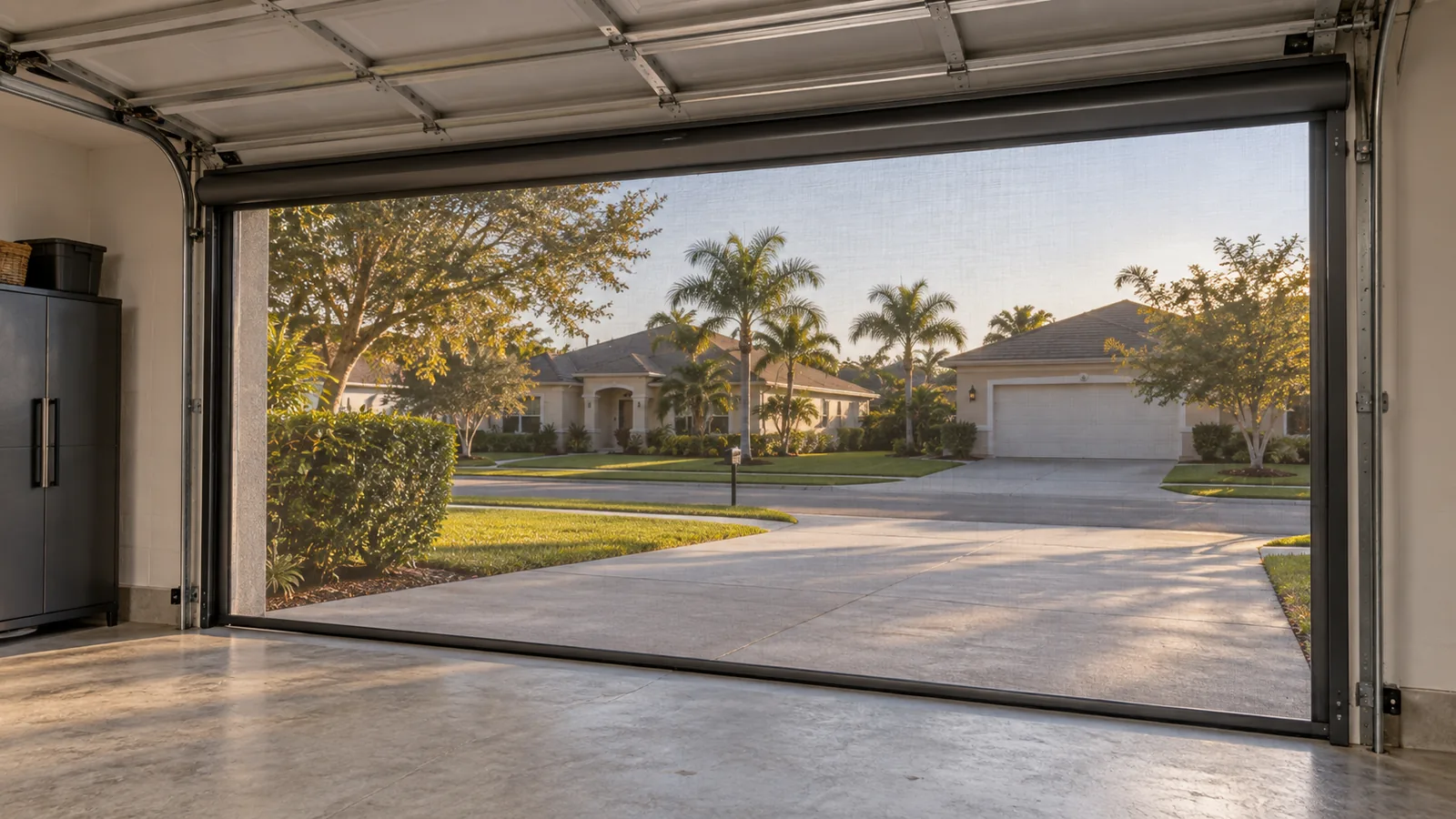
A garage screen covers the opening when the garage door is up, letting air through while keeping out insects, leaves and some sun. Motorized retractable screens roll into a housing above the opening at the touch of a button; fixed and sliding screens cost less but stay in the way or need to be moved by hand. Zipper-style side tracks keep the mesh in place and seal the edges against insects.
Screens are not storm protection. They should be retracted before strong wind, and many motorized systems offer wind sensors that do it automatically. The screen and the garage door opener must be set up so neither can close on the other. HomeGuide's 2026 national data puts motorized garage screens at about $2,000 to $4,000 or more installed.
Key takeaways
- Motorized retractable screens disappear when not needed, which suits garages that still park cars.
- Mesh choice sets the balance between insect protection, airflow, visibility and durability.
- Side retention, usually a zipper edge in a track, is what keeps bugs out and the mesh in place in a breeze.
- A screen is not rated opening protection. Retract it for storms and close the garage door.
- Safe integration with the garage door opener needs interlocks or clear procedures so the two never collide.
Why Florida Homeowners Add Garage Screens
In much of Central Florida, the garage doubles as a workshop, a place for kids to play out of the rain, a spot to sit on a breezy evening, or a staging area for pool and yard projects. Opening the garage door for air also opens it to mosquitoes, no-see-ums, flies, lizards, leaves and blowing debris.
A garage screen covers the open doorway so the space gets light and moving air without the bugs. It also cuts some sun and glare, adds a measure of privacy from the street, and keeps pets and small children inside while the door is up. On spring and fall days, it can turn the garage into an extra room without the cost or permits of a conversion.
Motorized Retractable vs Fixed Panels
There are three broad types:
Motorized retractable screens roll up into a housing mounted at the top of the opening, usually on the inside of the garage. A motor raises and lowers them with a remote, wall switch or app. When retracted, they are out of the way for parking.
Manual retractable screens work the same way but are raised and lowered by hand, often with spring assistance. They cost less and need no power, but large double-door screens can be awkward to operate.
Fixed and sliding screen systems use framed panels or sliding curtain-style screens across the opening, sometimes with a walk-through door. They are the least expensive, but they have to be moved or removed to drive in, which makes them better suited to garages that no longer park cars.
For a garage that still holds cars, a motorized retractable screen is usually the most convenient option.
Bug Protection and Airflow
The mesh is the part of a screen you look through and breathe through, and mesh choice is a trade-off. Denser meshes block more insects and more sun but reduce airflow and visibility. More open meshes breathe better but let in smaller insects.
Screen makers typically offer several options: standard insect mesh; finer meshes against tiny biting insects; solar or privacy meshes that block more sun and view; and heavier pet-resistant meshes. Colors matter too. Darker mesh is usually easier to see through from inside.
Airflow also depends on having somewhere for air to go. A screen on one garage door with no other openings lets some air in; pairing it with a ceiling fan, or an open window or door on the opposite side, moves much more air through the space.
Screens and air conditioning suit different days. On the hottest and most humid afternoons, a screened opening lets in the same heat and moisture as an open door, and a mini-split with the door closed is the tool for those conditions. The two can work together: the screen in the cooler months and evenings, the cooling when the door has to stay shut.
No-See-Um Mesh
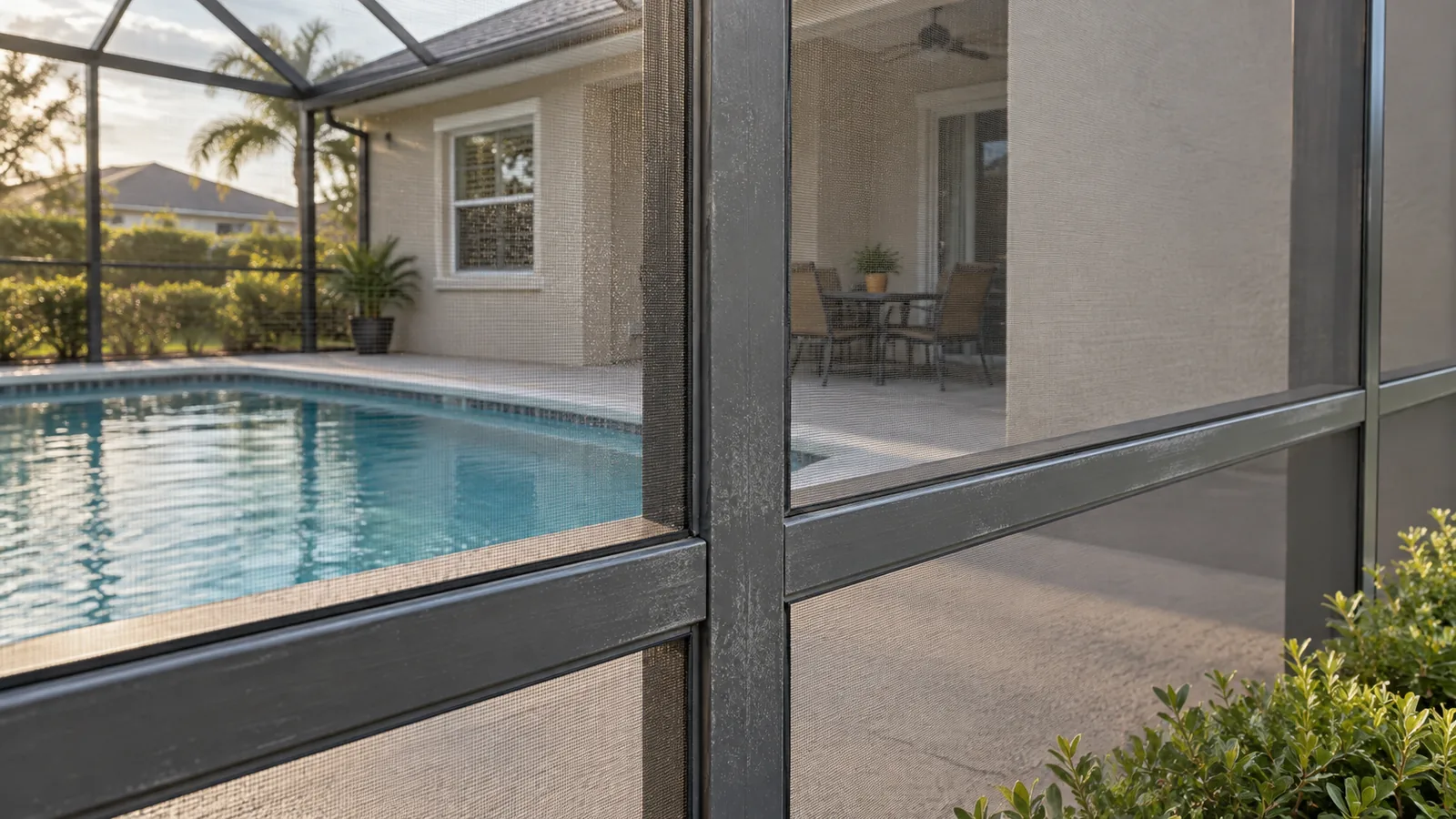
No-see-ums, the tiny biting midges common near Florida wetlands, ponds and the coast, pass through standard insect screen. No-see-um mesh has a tighter weave to stop them. The trade-off is somewhat less airflow and visibility than standard mesh. For garages near water or retention ponds, where no-see-ums are active at dawn and dusk, the finer mesh is usually worth it. The same mesh options appear in pool enclosures, and the mesh choices for pool cages are a useful reference when comparing them.
Wind Ratings and Storm Behavior
A garage screen is a lightweight fabric barrier. It resists a breeze, not a storm. Motorized screen systems with zipper-edge retention in side tracks hold up to noticeably stronger winds than loose screens, and manufacturers publish their own wind ratings for specific products and sizes. Those ratings describe the screen’s own performance; they are not the same as a garage door’s design pressure rating and they do not count as opening protection.
Before strong wind, the screen should be retracted and the garage door closed. Many motorized systems offer wind sensors that retract the screen automatically when wind exceeds a set level, which protects the screen when nobody is home. In hurricane season, retracting the screen and securing the door are part of storm preparation.
Track and Side Retention
The side tracks are what separate a good garage screen from a flapping curtain. Most quality motorized screens use a zipper-like edge welded to the mesh that runs inside the side tracks. It holds the fabric taut, keeps it in the track in gusts and closes the gap along the edges where insects would otherwise enter.
The bottom of the screen usually has a weighted bar with a seal that sits against the floor. On sloped garage floors, which are common so water drains out the door, the bottom seal needs to follow the slope or be adjusted to avoid gaps.
Integration With the Existing Garage Door
A screen shares the opening with the garage door, which raises practical and safety questions:
- Mounting location. The housing usually mounts inside the opening above or behind the door header, and must not interfere with the door, its tracks, springs or opener.
- Clearance. Low headroom garages may limit where the housing can go.
- Collision risk. A garage door closing onto a lowered screen, or a screen lowering onto a car or person, can cause damage or injury.
Screen systems address collisions with obstacle detection, such as a safety edge on the bottom bar, and with interlocks or integration with the garage door opener so that one cannot move while the other is in the way. Following the manufacturer’s installation and safety instructions matters here, and it is worth confirming how the system prevents conflict before choosing one.
Power, Remote and Smart Control
Motorized screens need power, typically from a standard outlet near the housing, often the same area where the garage door opener is plugged in. Some systems offer battery or solar-powered motors that avoid wiring.
Control options include handheld remotes, a wall switch, and integration with smart home systems or apps. Automated options include schedules, sun sensors that lower the screen for shade, and wind sensors that retract it. Where new outlets or wiring are needed, a licensed electrician should do the work.
Pet Resistance
Dogs and cats push, scratch and claw at screens, and standard insect mesh tears easily. Pet-resistant meshes use heavier, vinyl-coated polyester that holds up much better, at the cost of airflow and visibility. For households with pets that will be in the garage, pet-resistant mesh at least in the lower section, where available, reduces repairs.
Maintenance and Screen Replacement
Garage screens need modest, regular care in Florida’s climate:
- Rinse the mesh with a hose to remove dust, pollen and cobwebs, and let it dry before retracting it.
- Clean the side tracks of debris, sand and insects that can make the screen bind.
- Check the bottom seal and weight bar for wear.
- Follow the maker’s guidance on lubricating moving parts and on service intervals for motors.
Sun and humidity eventually degrade mesh. On well-built systems, the mesh can often be replaced without replacing the housing, motor or tracks, which keeps the cost of renewing a worn screen down.
Questions to Ask a Screen Installer
Garage screens are sold by specialists and by general screen companies, and systems vary. Useful questions before choosing one:
- What wind rating does the manufacturer publish for this product at my opening size?
- Can I see and handle samples of each mesh, including no-see-um and pet-resistant options?
- How does the system prevent the screen and the garage door from closing on each other?
- What do the motor and fabric warranties cover, and for how long?
- Who services the system, and how quickly are replacement parts and mesh available?
- What does a mesh replacement cost once the original wears out?
Clear answers to the safety and service questions matter more than small differences in price.
Cost Installed
HomeGuide’s 2026 cost data puts motorized retractable garage screens at about $2,000 to $4,000 or more with installation, depending on the size of the opening, the mesh, the motor and features such as wind sensors. Manual retractable screens cost less, and fixed or sliding panel systems cost the least. That is a national reference rather than a local quote, and opening width, wind rating and motor options can move a real bid above or below it.
Factors that push the price up include double-wide openings, premium or specialty mesh, smart controls and sensors, custom housing colors, and installation challenges like low headroom or uneven openings. Adding an outlet near the header, if none exists, adds electrical cost.
A garage screen fits naturally with other decisions about how the garage is used. Floor, lighting, storage and cooling are part of the garage remodeling plan, and the screen is typically supplied and installed by a screen specialist working to the manufacturer’s instructions.
For homeowners thinking about screened space more broadly, the garage screen is one piece; screened lanais, patios and pool enclosures are part of outdoor living design, where many of the same choices about mesh, airflow and sun apply.
Share this article