The short answer
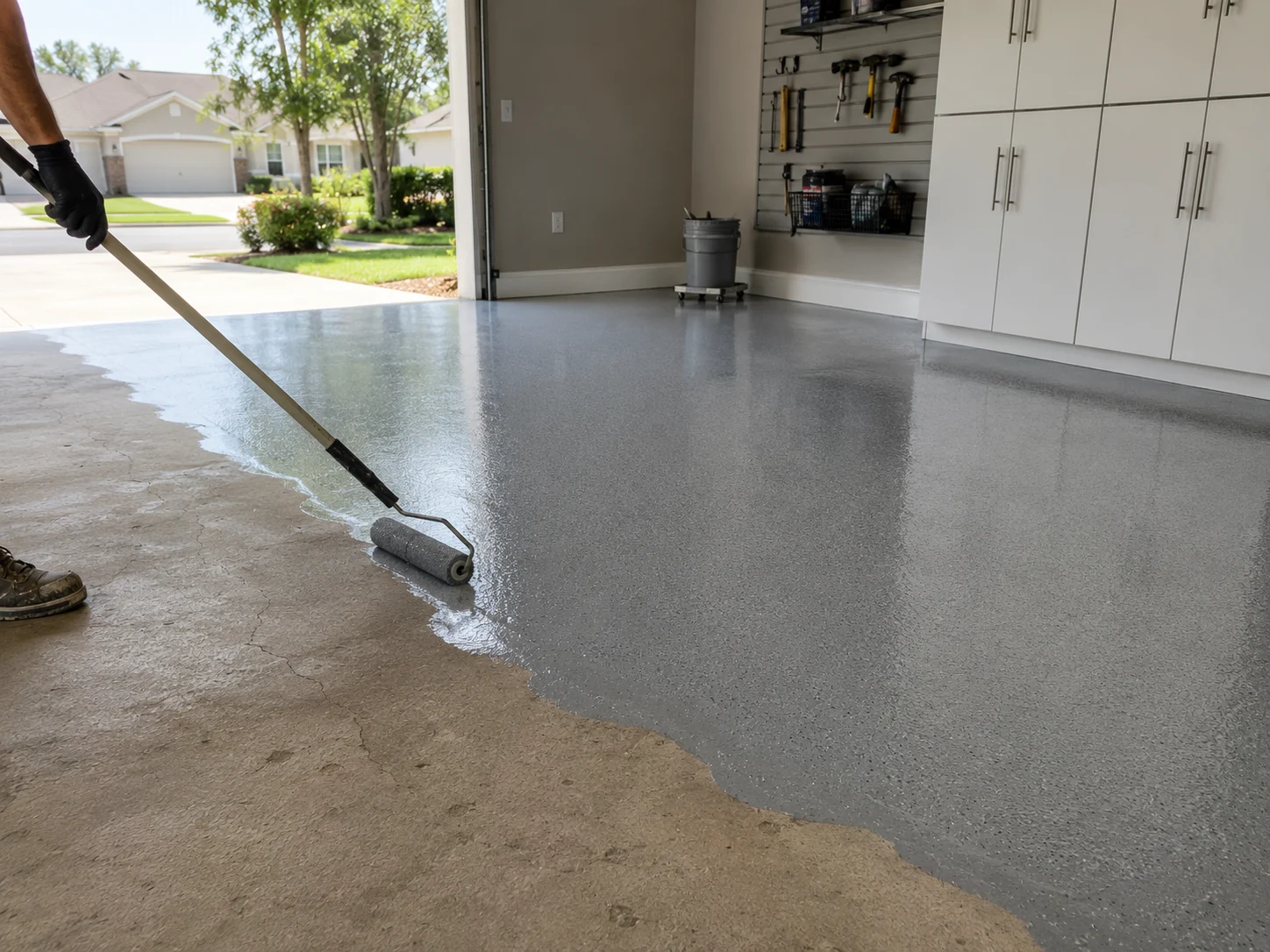
Polyaspartic cures in hours rather than days, stays clear in sunlight and resists abrasion well, which is why it can deliver a floor that is walkable the same day. Epoxy costs less, gives the installer more working time and builds thickness easily, but standard epoxy yellows where sun reaches it.
Many garage systems use both: an epoxy base for adhesion and body, and a polyaspartic topcoat for UV and wear. HomeGuide's 2026 national data puts polyaspartic floors around $5 to $12 per square foot against about $4 to $10 for epoxy. In either case, preparation of the slab matters more than the chemistry on top.
Key takeaways
- A "one-day floor" means one day to apply, not one day to full chemical cure. Ask when cars can park.
- Polyaspartic is aliphatic and stays color-stable in sun; standard epoxy is aromatic and yellows.
- Fast cure shortens working time, so polyaspartic rewards experienced crews and punishes rushed ones.
- A hybrid system often costs less than full polyaspartic while fixing epoxy's UV problem at the door line.
- Warranties differ in what they exclude. Moisture from below is the exclusion to look for first.
The One-Day Floor Claim Explained
“One-day garage floor” is the headline most polyaspartic installers lead with, and it is partly true. Polyaspartic resins react much faster than epoxy, so a crew can grind, repair, lay a base coat, broadcast flake and apply a topcoat within a single working day on a straightforward floor.
What the claim does not always spell out is that “done in a day” refers to application. The floor is walkable within hours, but vehicle traffic and full chemical resistance usually come later, often a day or more depending on the product and the weather. Some installers also describe systems as one-day when only the topcoat is polyaspartic and the base is a fast-cure polyurea.
None of this makes the claim misleading. It means the useful question is not “is it a one-day floor” but “when can I walk on it, when can I park on it, and what is the base coat.”
Cure Time and Return to Service
Cure speed is where the two chemistries differ most.
Epoxy typically needs overnight or longer between coats, allows light foot traffic after about a day, and asks owners to keep vehicles off for several days. Reaching final hardness and chemical resistance can take most of a week.
Polyaspartic can be recoated within hours, often allows foot traffic the same day, and typically allows vehicles after about a day, sometimes sooner. Exact times vary by product, film thickness, temperature and humidity.
For many households the difference is practical rather than technical: a garage that is out of use for one or two days rather than most of a week. That matters for homeowners who park inside, work out of the garage, or live with a single garage and no other covered parking.
UV Stability Compared
Standard epoxy is an aromatic resin, and aromatic resins break down under ultraviolet light. They yellow, especially clear and light-colored coats, and slowly lose gloss. In a garage, the damage concentrates where sunlight falls: the first few feet inside the door and anywhere the door stays open on summer afternoons.
Polyaspartic is aliphatic, which means it does not yellow in sunlight. It holds color and gloss far better where the door is open often. That is the main reason it is so common as a topcoat in Florida, where the afternoon sun is strong for most of the year.
UV-stabilized epoxies exist and slow the yellowing, but they are not equivalent to an aliphatic topcoat. If the garage door is open for long stretches, or the finish is clear or light, UV stability is worth paying for.
Abrasion and Chemical Resistance
Both chemistries, applied correctly, give a garage floor far better resistance to oil, gasoline, brake fluid and pool chemicals than bare concrete. The differences show at the margins.
Polyaspartic topcoats generally resist abrasion and scratching better than a standard epoxy topcoat, and they are more flexible, which helps with impact and thermal movement. Epoxy is harder and builds thicker films, which helps it bridge minor imperfections in the slab and resist heavy point loads.
Chemical resistance varies more by specific product than by category. Some epoxies are formulated for strong chemical resistance, and some polyaspartics are softer. The manufacturer’s chemical resistance chart for the exact product is more useful than any general claim. Pool chemicals, lawn fertilizers and battery acid are the ones to ask about in a Florida garage.
Temperature Sensitivity During Install
Both coatings react to heat and humidity, but they react differently.
Epoxy cures more slowly in cool conditions and can blush, forming a greasy film on the surface, when applied in high humidity or when the slab is near the dew point. Warm conditions speed it up and shorten its working time.
Polyaspartic reacts even faster in heat. On a hot, humid Florida day, its working time can shrink to minutes, which leaves little room to correct roller marks, lap lines or uneven flake coverage. Humidity also affects how fast it reacts and can cause bubbling in some products.
Good installers watch slab temperature, air temperature, humidity and dew point, and adjust mixing batch sizes and timing. In summer, that can mean starting early in the morning and working in smaller sections.
Pot Life and Installer Skill
Pot life is how long a mixed batch stays workable. For epoxy, that is typically tens of minutes; for many polyaspartics, it is far shorter, especially in heat. A crew applying polyaspartic has to mix small batches, spread quickly, and keep a wet edge without stopping.
That is why the same polyaspartic product can produce an excellent floor or an uneven one depending on who applies it. Epoxy is more forgiving, which is part of why retail kits use it. When comparing installers, ask how much polyaspartic work they have done and how they manage batch size in summer.
Cost Difference and Why
HomeGuide’s 2026 figures put installed polyaspartic garage floors at about $5 to $12 per square foot, around $2,000 to $6,900 for a two-car garage, compared with about $4 to $10 per square foot for epoxy. The gap comes from three places: the material itself costs more, it demands more experienced labor, and full polyaspartic systems often use more product in the topcoat. Both ranges are national planning figures; slab preparation, moisture results and the number of coats specified decide what an actual garage costs.
The difference is smaller than it looks in practice because preparation, repair and flake are shared costs. Grinding, crack repair and moisture work cost roughly the same regardless of what goes on top. On a floor that needs significant repair, the coating chemistry is a smaller share of the total.
Speed also has a value that does not appear on the quote. A garage back in use a few days sooner matters more for some owners than others.
Film Thickness and What Mils Mean
Coating thickness is measured in mils, thousandths of an inch. Two quotes can name the same chemistry and still describe very different floors, because one applies a thin single coat and the other builds several coats to a much thicker total film.
Thickness matters for durability. A thicker system has more material to wear through, bridges small surface irregularities, and holds flake more securely. It also affects cost, since resin is sold by volume. Fast-curing polyaspartic is sometimes applied in thin coats because thick coats are harder to place before the product sets, which is one reason some one-day systems use a separate base.
The product data sheet lists a recommended thickness or spread rate for each coat, usually as square feet per gallon. Asking an installer how many gallons they plan to use for the floor, and for which coats, is a simple way to compare what two quotes actually include.
Hybrid Systems: Epoxy Base, Polyaspartic Top
A common professional system in Florida garages combines both chemistries:
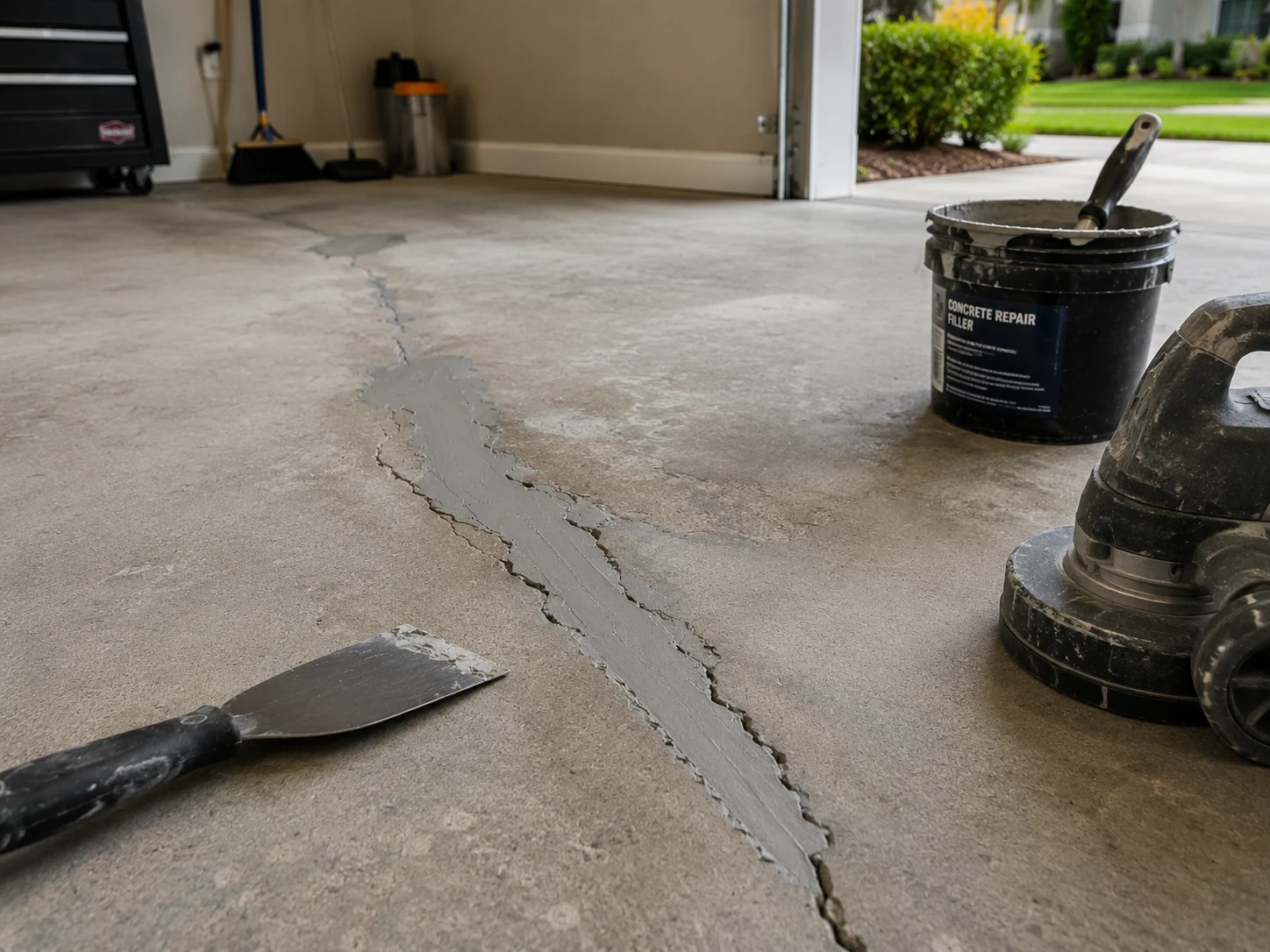
- Diamond grinding and repairs.
- An epoxy base coat, which penetrates and bonds well and builds thickness.
- Full or partial flake broadcast into the wet base.
- A clear polyaspartic topcoat, which adds UV stability and abrasion resistance.
This approach uses each material where it performs best. The epoxy base provides the bond and body; the polyaspartic top handles sun and wear. It usually costs less than a full polyaspartic system and more than an all-epoxy floor. It is not a one-day floor, because the epoxy base needs time before the topcoat goes on, typically making it a two-day job.
The steps underneath the base coat are the same for any system. Grinding, surface profile and moisture testing are explained step by step in how an epoxy floor is built.
Flake Broadcast and Topcoat
In flake systems, the flake is broadcast into the wet base coat, allowed to set, then scraped and vacuumed before the topcoat. Full broadcast, where flake covers the whole surface, hides more of the slab and adds texture; partial broadcast shows more of the base color.
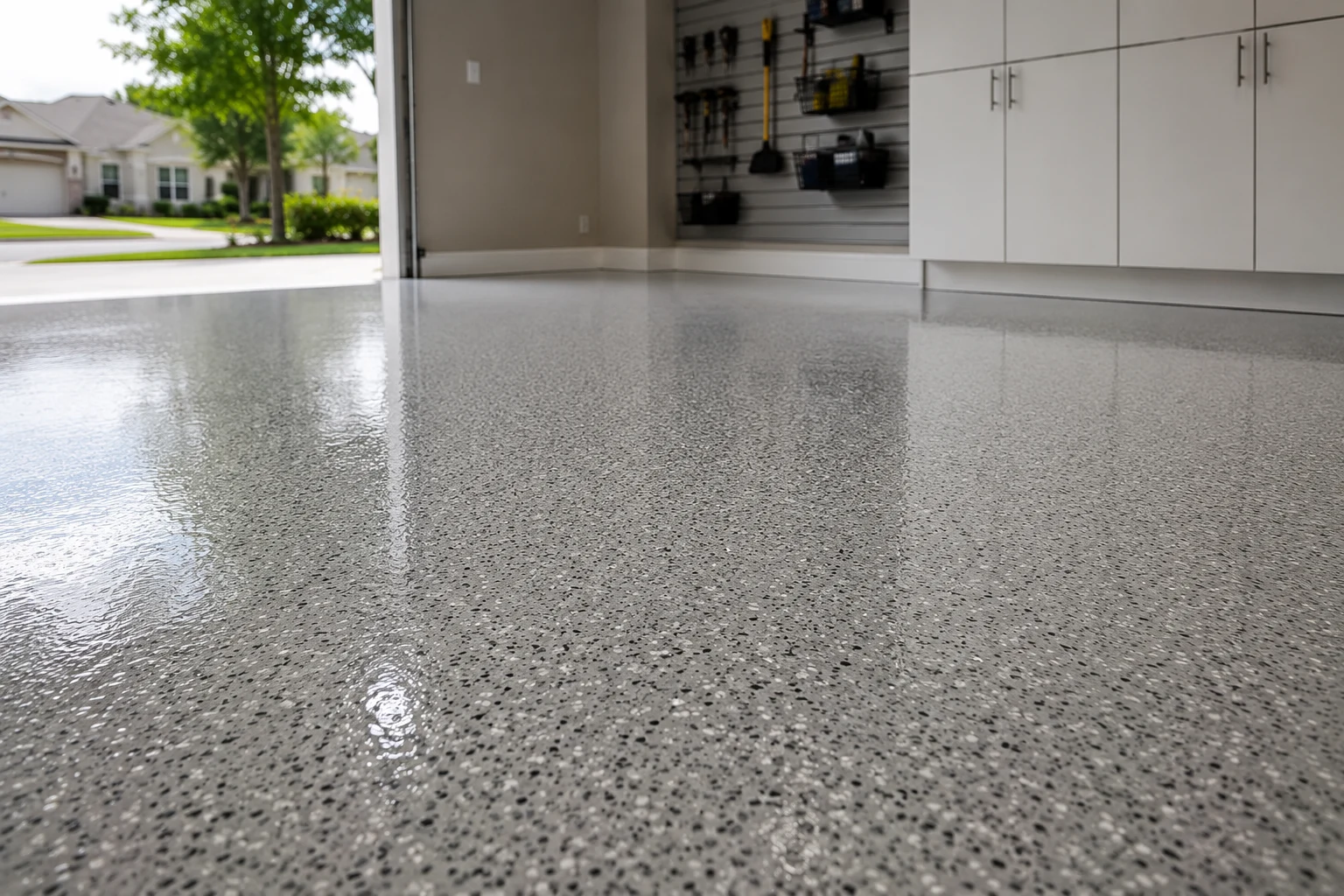
The topcoat seals the flake, and its thickness affects how smooth or textured the floor feels. A thin topcoat leaves more texture and grip; a thicker one is smoother and easier to clean. Polyaspartic topcoats are popular here because they stay clear and do not yellow the flake over time.
Which Makes Sense in Central Florida
For most attached garages in the Orlando area, a hybrid system or a full polyaspartic system is the more durable choice where sunlight reaches the floor, because it prevents yellowing at the door. A well-installed epoxy floor with a UV-stable topcoat is a solid option for owners who want to manage cost, and all-epoxy can be reasonable in a garage where the door rarely stays open and the finish is a darker solid or flake.
More important than the chemistry:
- Preparation. Ground, profiled, repaired concrete is the foundation of either system.
- Moisture. A slab with high vapor emissions needs mitigation before any coating.
- Installer experience. Especially with fast-curing products in summer.
- Use. A garage that doubles as a gym, workshop or hangout space may need extra grip or impact resistance.
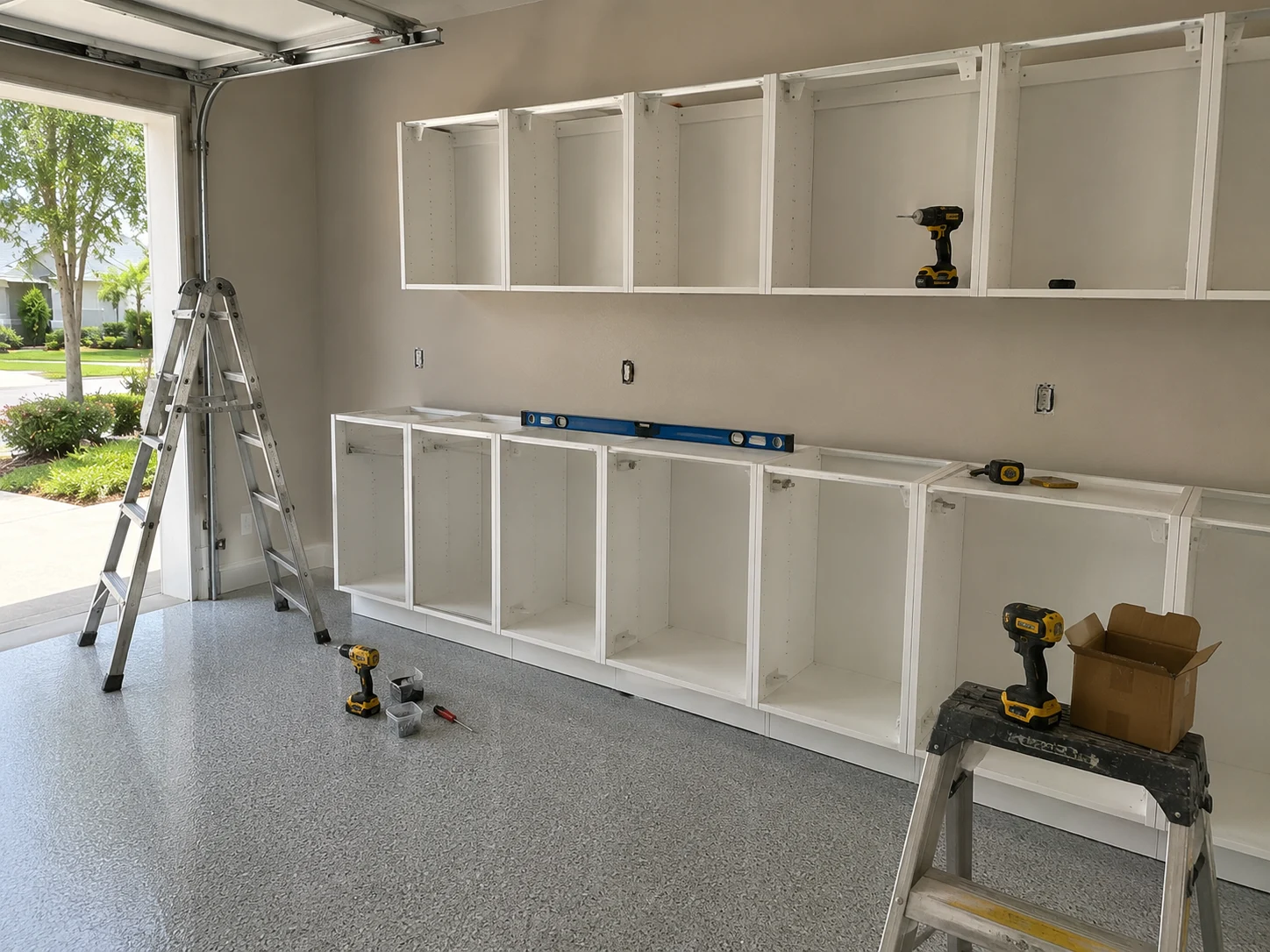
A coating should fit into the rest of the garage remodeling project, including cabinets, lighting and outlets, and the floor usually goes down before cabinets are set on it.
Warranty Terms
Garage floor warranties vary widely, and the headline number of years says less than the exclusions. Read for:
- What is covered. Peeling and delamination, yellowing, hot tire pickup, or all three.
- Moisture exclusions. Many warranties exclude failure caused by vapor from below, which is one reason testing matters.
- Who stands behind it. The installer, the manufacturer, or both, and whether it transfers to a new owner.
- Maintenance conditions. Required cleaning products, or damage from specific chemicals.
A long warranty with broad exclusions can protect less than a shorter one with clear coverage. Ask for the warranty in writing before signing, not after installation.
Recoating and Repairs Later On
Both chemistries can be refreshed. When the topcoat dulls or scratches in the traffic lanes, a well-bonded floor can be cleaned, degreased, lightly abraded and given a new clear coat. Polyaspartic is a common choice for that recoat, even over an older epoxy system, because it adds UV stability at the same time.
Local damage, such as a gouge from a dropped tool, can usually be patched by abrading around the area and building it back up with compatible products, though flake patterns and gloss may not match perfectly. What cannot be fixed with a recoat is a coating that is lifting from the concrete. Delamination means the bond failed, and the only lasting repair is removal back to sound concrete.
Share this article