The short answer
Polybutylene is a flexible plastic supply pipe, usually gray and often stamped PB2110, that was installed in US homes from 1978 until the mid-1990s. Oxidants in treated water can make the pipe and its fittings brittle from the inside, so leaks can start without visible warning. Replacing it means a repipe: new supply lines, usually PEX or CPVC, run through walls and ceilings, followed by drywall repair.
In Florida, polybutylene is also an insurance question. Four-point inspections record it, and Citizens generally treats homes more than 20 years old with polybutylene as ineligible for new coverage. Other insurers set their own rules. A repipe is licensed plumbing work under a permit, and it is cheapest and least disruptive when combined with a remodel that already opens walls.
Key takeaways
- The class action over polybutylene covered pipe installed from January 1978 to July 1995. That window is the best guide to which homes may have it.
- Visible pipe at the water heater or under sinks is a clue, not proof. Fittings may have been changed while polybutylene stays in the walls.
- Degradation happens inside the pipe and fittings, so a system that has not leaked yet is not necessarily sound.
- Insurance rules vary by company. Ask your insurer or agent what they require before planning around assumptions.
- Pairing a repipe with a remodel means walls are opened once and patched once, before new finishes go in.
Why Polybutylene Still Matters in Florida Homes
Polybutylene is a gray, flexible plastic pipe that was cheap to buy and quick to install, which made it popular with builders for water supply lines from the late 1970s into the 1990s. Many Central Florida neighborhoods were built during those years, so a large number of homes here are candidates.
The problem is how it ages. Water utilities disinfect water with chlorine or chloramine, and research on polybutylene has shown that these oxidants attack the pipe and its acetal plastic fittings over time, consuming the stabilizers in the plastic and leaving it brittle. Cracks form from the inside, so a pipe can look fine from the outside and still be close to failure. Leaks often start at fittings and joints.
Failures led to a major class action, Cox v. Shell Oil, settled in 1995 with a fund of over a billion dollars for repairs and replacements. That program has long since closed. What remains is a large number of homes that may still have the pipe, and in Florida, an insurance market that pays close attention to it.
Homes Built From 1978 to the Mid-1990s
The settlement covered polybutylene systems installed from January 1978 through July 1995, and that range is the most reliable guide to which houses may have it. Homes built in that period are candidates. Homes built earlier may also have it if they were replumbed during those years. Homes built after the mid-1990s are unlikely to have original polybutylene, though stock may occasionally have been used after that.
Not every house from those years has it. Many were plumbed with copper or CPVC, and many have been repiped since. The construction year tells you whether to look, not what you will find.
How to Spot It, and What a Quick Look Cannot Tell You
There are a few places where supply pipe is commonly visible:
- At the water heater, where lines connect to the top of the tank.
- Under kitchen and bathroom sinks, coming out of the wall to the shutoff valves.
- At the main shutoff valve and where the supply enters the house.
- In the attic, in homes where supply lines run overhead.
- Near the water meter, for the service line outside.
Polybutylene is usually gray, and often marked PB2110 along its length. It is flexible, typically between half an inch and one inch in diameter, and is joined with plastic or metal fittings held by crimp rings of copper or aluminum.
Gray, Blue and Black Pipe
Color is a clue but not an identifier. Polybutylene was made in gray most often, but also in other colors, including blue, black, white and silver. Blue polybutylene was used mainly outdoors, for the service line from the meter. On the other hand, black or white pipe may be polyethylene or PVC, and some modern PEX is gray. Reading the printed marking on the pipe is more reliable than judging by color.
The larger limitation is what you cannot see. A plumber may have replaced the visible section at the water heater or under a sink with copper, while polybutylene remains inside the walls and ceilings. Seeing copper at the fixtures does not prove the house is free of it. A licensed plumber or a home inspector can check more thoroughly, sometimes through access panels or by opening small areas, and a four-point inspection for insurance will record what the inspector can see.
Why Insurers Ask About It
In Florida, a four-point inspection, covering roof, electrical, plumbing and heating and air conditioning, is commonly required to insure older homes. The plumbing section of the inspection form asks specifically about polybutylene.
Citizens Property Insurance, the state’s insurer of last resort, requires a four-point inspection for homes more than 20 years old and states that homes 20 years old or newer with polybutylene piping may be eligible if there are no signs of leaks, water damage, disrepair or hazards. For older homes with polybutylene, new applications are generally not eligible. Private insurers set their own underwriting rules, which may include declining coverage, requiring replacement within a set period, or adjusting terms.
Because those rules vary and change, the reliable step is to ask your current insurer, or an agent when shopping, what they require for a home with polybutylene, and to plan the repipe timing around the answer. A home purchase is a common trigger: the buyer’s insurer may require a repipe before binding coverage or soon after closing.
Repipe Options: PEX vs CPVC vs Copper
Three materials dominate residential repipes today:
| PEX | CPVC | Copper | |
|---|---|---|---|
| Flexibility | Flexible, fewer fittings | Rigid, more fittings | Rigid, more fittings |
| Joining method | Crimp or expansion fittings | Solvent cement | Soldered or press fittings |
| Main caution | Must be protected from sunlight | Can become brittle with age and handling | Can pit in aggressive water |
| Relative cost | Usually lowest installed | Moderate | Usually highest |
PEX (cross-linked polyethylene) is the most common choice for whole-house repipes because it is flexible, which means fewer fittings and easier routing through existing walls. Manufacturers require it to be protected from sunlight and UV exposure, so it should not be left exposed outdoors or in sunlit areas.
CPVC is a rigid plastic joined with solvent cement. It has a long history in Florida homes and is resistant to chlorinated water, but it becomes less flexible with age, and older CPVC should be handled carefully during later work.
Copper is durable and heat-tolerant and is often preferred for exposed runs. It costs more and takes longer to install, and in some water conditions it can develop pinhole leaks over time.
Getting a Reliable Answer
When the visible clues are uncertain, there are better sources than guesswork. The permit history for the address may show a past repipe. A four-point inspection records what the inspector can see at the water heater, fixtures and main line. A licensed plumber can check at several points in the system, sometimes by opening an access panel or a small section of drywall where lines are likely to run. For a buyer, asking the seller directly, and asking for any repipe invoice or permit, often settles the question quickly.
Manifold vs Trunk and Branch
With PEX, there are two main layouts. A manifold, or home-run, system brings each fixture its own line from a central manifold with individual shutoffs, which makes pressure more even and repairs more isolated. Trunk and branch uses a main line with branches to fixtures, like traditional rigid systems, using less pipe. Many repipes combine the two. The plumber chooses based on the house layout and fixture count.
What a Whole-House Repipe Involves
A repipe replaces all the water supply lines in the house, from the main shutoff to each fixture. The usual sequence is:
- Planning and permit. A licensed plumbing contractor maps the new routes and pulls a plumbing permit.
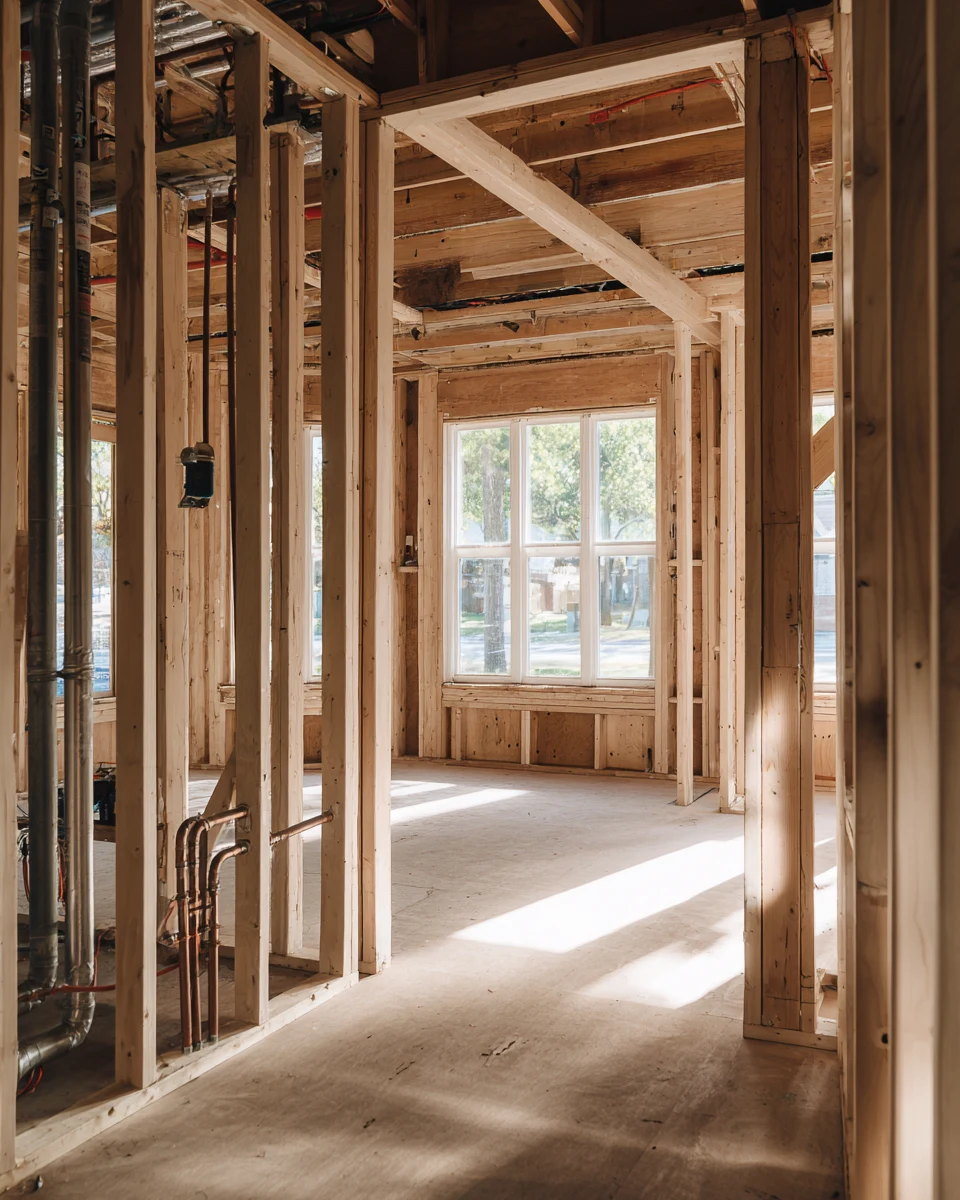
- Access. Small openings are cut in drywall at fixtures and along routes to run new pipe.
- New pipe installed alongside the old system, which often stays in service until changeover.
- Changeover. Water is shut off, fixtures are connected to the new lines, and the system is pressure-tested.
- Inspection. The building department inspects before walls are closed.
- Old pipe is disconnected and abandoned in place or removed where accessible.
- Drywall repair and painting close the openings.
The plumbing work itself is usually measured in days rather than weeks, depending on the size of the house and the routing, with inspection and drywall repair adding time afterwards.
Slab vs Overhead Routing
Most Central Florida homes are built on concrete slabs. Original supply lines in some homes run under or within the slab; in others they run overhead through the attic and drop down through walls. In slab homes, a repipe usually goes overhead, running new lines through the attic and down to fixtures, rather than breaking up the slab. Attic routing needs insulation around pipes where required, and attention to heat in Florida attics. In two-story homes, routing between floors takes more planning and more openings.
Drywall Damage and Restoration
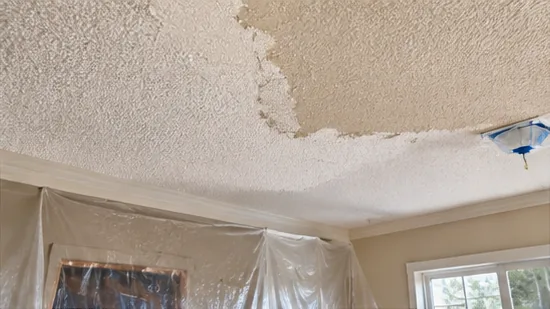
A repipe is not only a plumbing job. The openings needed to run new lines, and sometimes damage found from past leaks, have to be repaired, textured to match and painted. On a whole-house repipe, that can mean openings in most rooms.
Drywall repair after a repipe is ordinary work, but matching wall and ceiling texture across many small patches takes care. This is also where coordinating with a remodel pays off: if walls are being opened, retextured or repainted anyway, the repipe openings disappear into work that was already planned.
What a Repipe Costs
Angi’s 2026 cost guide puts whole-house repipes nationally at roughly $1,500 to $15,000, with a typical project around $7,500, and notes that labor is the larger share of the cost. Those are national figures, not a local quote. The main factors are:
- Size of the house and number of bathrooms and fixtures.
- Material, with PEX usually the least expensive installed and copper the most.
- Access, including attic space, two-story routing and finished ceilings.
- Drywall repair and painting, which some quotes include and others do not.
- Permit and inspection fees.
- Additional work such as replacing shutoff valves, the water heater connections or the main line.
When comparing quotes, check whether drywall repair, texture matching and painting are included, since that difference can be significant. A repipe is usually one of several system lines in an older-home budget, alongside the panel and air conditioning, and budgeting a whole-house project with those lines separated makes the finish choices easier to weigh.
Buying a Home With Polybutylene
Polybutylene often comes up during a home purchase, when the inspection report or the insurer’s four-point form lists it. It is worth dealing with before closing rather than after:
- Get insurance quotes early, during the inspection period, so you know whether coverage is available and on what conditions.
- Price the repipe with a licensed plumbing contractor, including drywall repair and paint, so the number is real rather than estimated.
- Negotiate with the facts in hand. Buyers commonly ask for a price reduction or a credit, and some sellers complete the repipe before closing.
- Schedule it before moving in where possible. A repipe in an empty house is faster and simpler, and drywall repair and painting are easier with no furniture in place.
The purchase contract and the inspection period set what is possible, so a real estate agent or attorney is the right person to guide the negotiation itself.
Preparing the House for a Repipe
A little preparation makes the work faster and protects the house. Clear access to sinks, the water heater, the laundry connections and the attic hatch. Move furniture away from walls where lines will run, and cover or remove belongings in closets that back onto wet walls. Plan for water to be off for parts of the day, with a final changeover when the new system is connected. Pets are safer away from open walls and busy doorways. After changeover, running each faucet briefly clears air and debris from the new lines.
Doing It During a Remodel vs Emergency
A repipe can happen on your schedule or on a leak’s schedule. Planned, it can be timed with a remodel, paired with drywall and paint work, and scheduled around the household. As an emergency, it follows water damage, often with drying, mold concerns, insurance claims and finish repairs before the plumbing work can even be planned.
When a whole-house remodel is planned in a home with polybutylene, replacing the supply lines early, before new drywall, cabinets and flooring, is almost always the sensible sequence. Work that crosses the whole house belongs at the front of a plan, which is one of the main arguments in weighing a phased remodel against a single project.
The repipe carries its own plumbing permit and inspection, separate from any building permit for the remodel. Which office issues it depends on whether the home is in a city or unincorporated county land, as explained in how remodel permits work across Central Florida.
Kitchen and bathroom remodels are natural moments too, since those rooms hold most of the fixtures. Even when only one room is being remodeled, it is worth asking whether the rest of the supply lines should be replaced at the same time rather than connecting new fixtures to old pipe.
A repipe is licensed plumbing work, performed by a licensed plumbing contractor under a permit. When it is part of remodeling the whole house, it is scheduled with the rest of the project so walls are opened once, inspected and closed before the new finishes go on.
Share this article