The short answer
Travertine is a natural limestone-family stone that is popular around Florida pools because light-colored, textured travertine is generally more comfortable underfoot in sun than dark pavers or plain concrete, and it holds traction when wet. It is porous and made of calcium carbonate, so it needs a penetrating sealer, attention in saltwater pools and protection from acid spills.
Most pool decks use travertine pavers about 1 1/4 inches thick, set on a compacted base or bonded to an existing concrete slab, with matching coping at the pool edge. HomeGuide's 2026 national figures put travertine pavers at about $13 to $45 per square foot installed, above most concrete pavers.
Key takeaways
- Color does most of the cooling. A light ivory travertine and a dark walnut one will not feel the same at 3 p.m.
- Unfilled, tumbled travertine has more texture and hides wear; filled, honed stone is smoother and more formal.
- Travertine reacts to acid. Muriatic acid and other pool chemicals should never be mixed or spilled on the deck.
- In saltwater pools, sealing and rinsing matter more, because salt crystallizing in the pores can damage the surface.
- Grades are not standardized between suppliers. Judge the stone from samples of the actual lot, not the label.
Why Travertine Often Feels Cooler
The claim that travertine “stays cool” is repeated so often that it is worth saying exactly what is true. No deck surface stays cool in full July sun. What differs is how hot surfaces become and how quickly they release that heat, and travertine does well on the factors that matter.
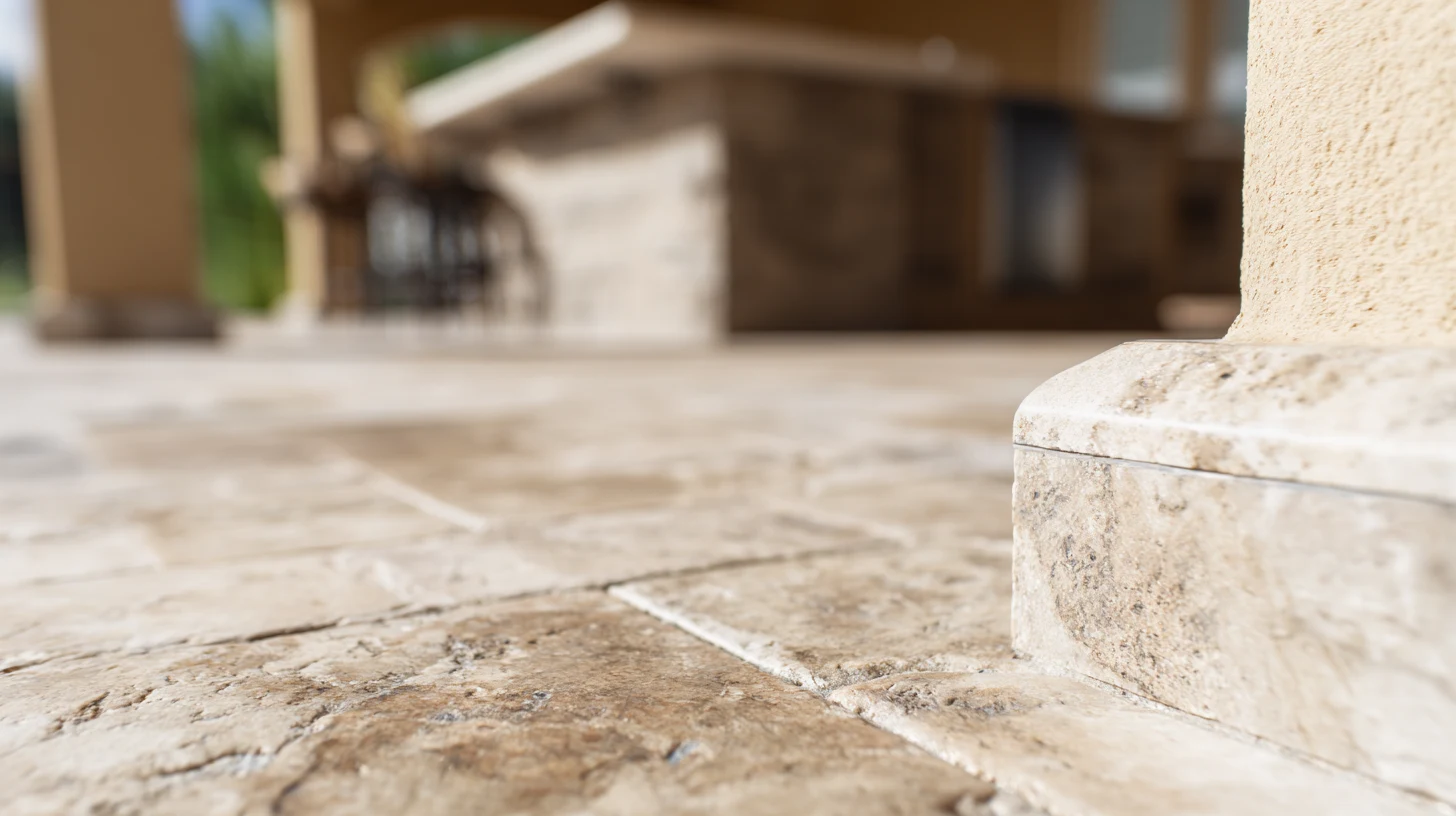
Color is the largest. Light ivory and cream travertine reflects more of the sun’s energy than dark pavers or gray concrete, so less of it becomes heat in the surface. Texture helps: tumbled travertine has a porous, uneven face, and a thin layer of water sitting in those pores after a swim or a rain shower evaporates and cools the surface. Thickness plays a role too, since a thicker stone takes longer to heat through.
The practical result is that light travertine is generally among the more comfortable surfaces for bare feet around a pool, but a dark travertine in full afternoon sun can still be uncomfortable. Choose the color with that in mind, and remember that shade from a cover or umbrella changes the experience more than any material.
Grades, Finishes and Edge Profiles
Travertine is sold in grades such as premium, standard or commercial, but there is no universal grading standard; each supplier defines its own. Grade usually reflects color consistency, the number and size of natural holes, and dimensional accuracy. Look at the actual stone, preferably several pieces from the lot you will receive, rather than relying on the label.
Filled vs Unfilled
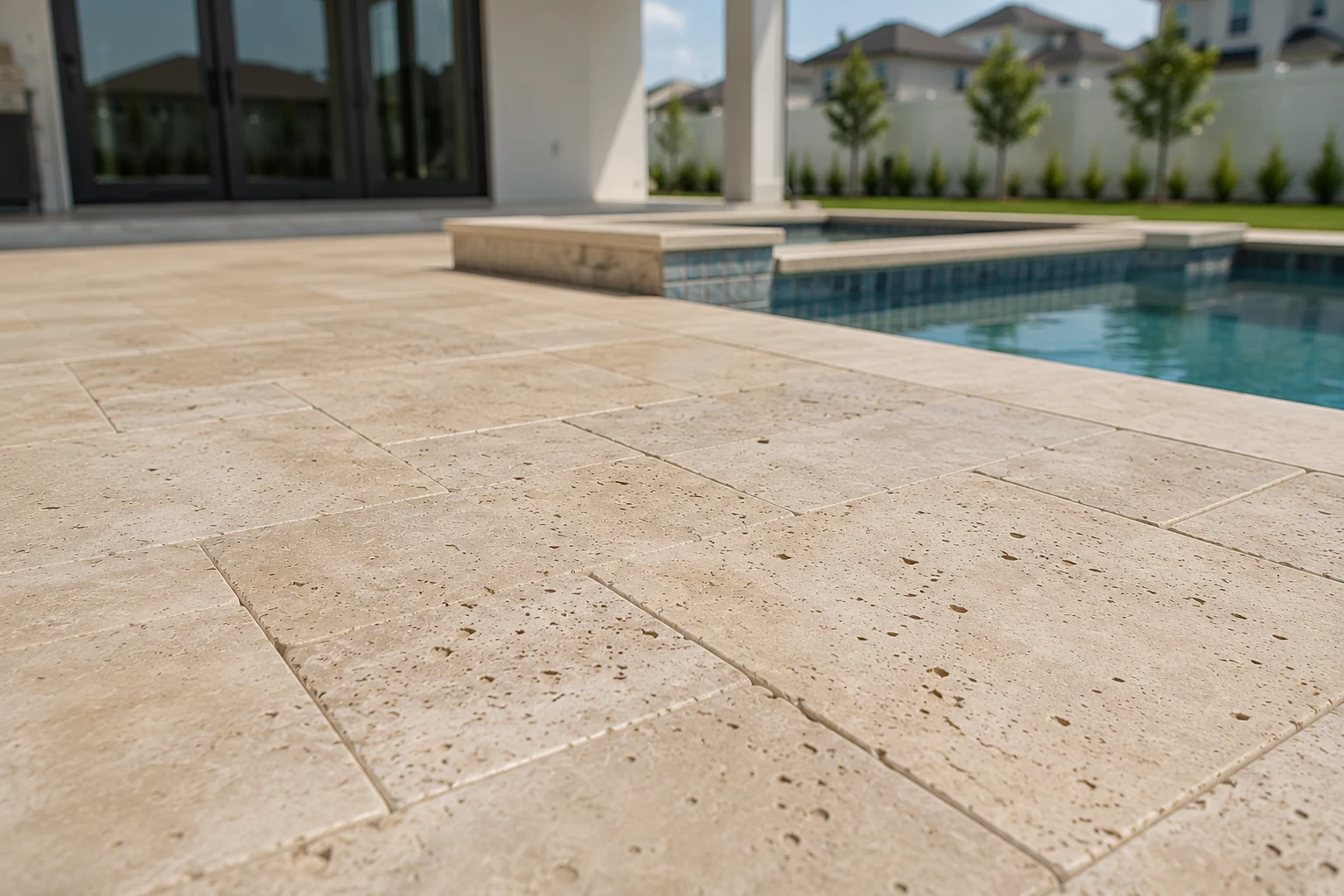
Travertine forms with natural voids. Filled travertine has these holes filled at the factory with a cement or resin fill, giving a smoother, more uniform surface. Unfilled travertine leaves them open, which adds texture and traction and lets the stone show its natural character. Around pools, unfilled or partially filled stone is common because it does not show wear where fill might pop out over time.
Tumbled vs Honed
Tumbled travertine is processed to round the edges and soften the surface, giving an aged, textured look that hides scuffs and offers good grip. Honed travertine is ground flat to a smooth, matte finish, which looks more contemporary but can be slicker when wet. Polished travertine is not suitable for pool decks.
Edge profiles apply mainly to coping and steps: straight, eased, bullnose (rounded) or a thicker rebated edge that makes the stone look more substantial at the water line.
Coping Options Around the Pool
Coping is the stone that caps the edge of the pool shell. Travertine coping is usually thicker than the deck pavers and is set in mortar on the pool’s bond beam, with a flexible joint separating it from the deck so the two can move independently.
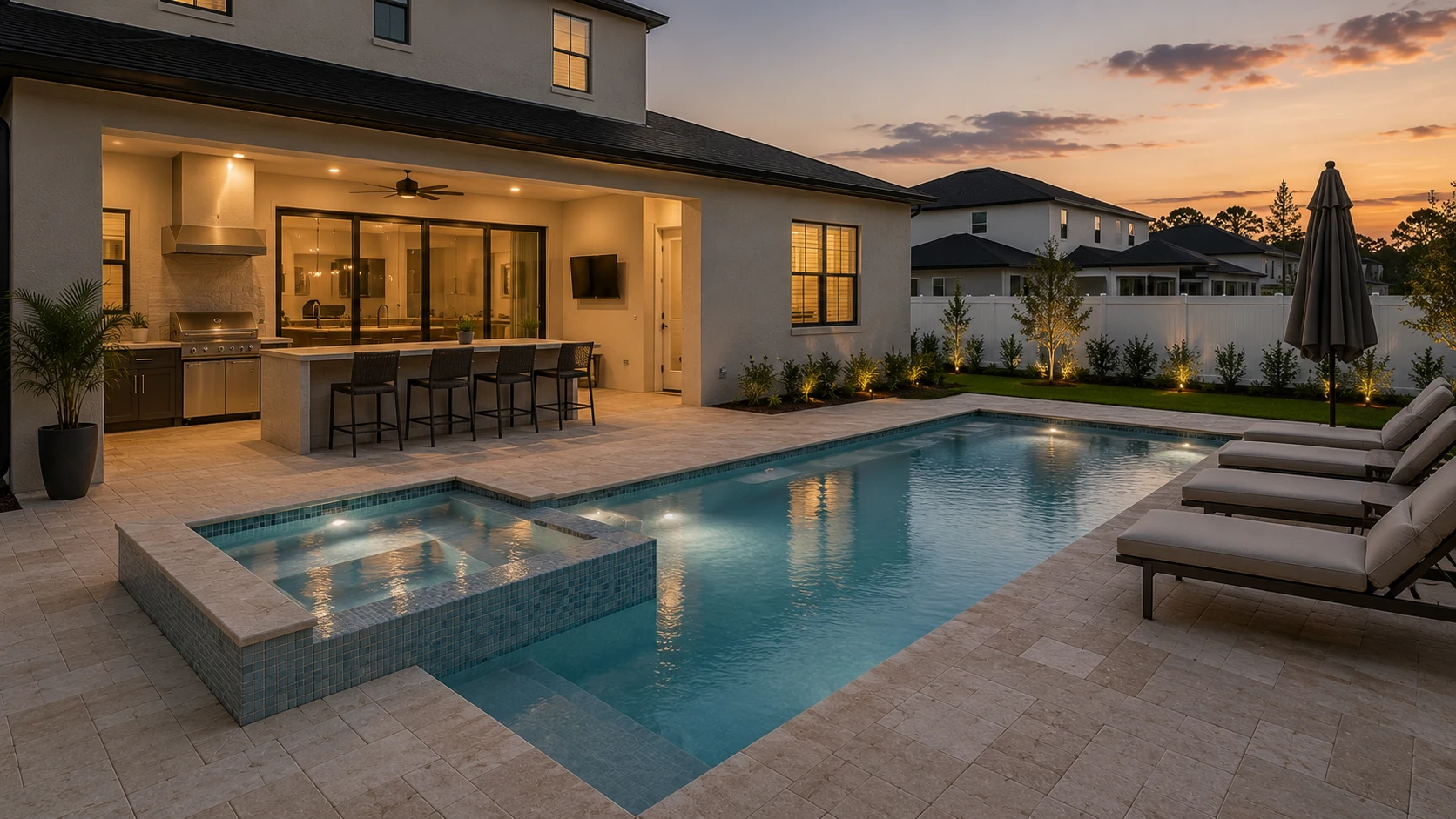
The profile changes both look and function. A bullnose edge is comfortable to sit on and to grab from the water. A square or rebated drop-face edge looks more architectural. Matching coping and deck makes the pool edge read as one surface; a contrasting coping color outlines the pool instead. If you are renewing an existing deck rather than building new, the broader decision of whether stone is the right material at all is covered in pool deck resurfacing options.
Sealing and Stain Resistance
Travertine is porous, which is part of its comfort and also its weakness: oil from sunscreen, leaves, rust from furniture and grill grease can soak in and stain. A penetrating, or impregnating, sealer made for natural stone fills the pores below the surface without leaving a film, reducing absorption while keeping the stone’s texture and traction.
Topical sealers that leave a glossy film are generally a poor choice on pool decks. They can make the surface slippery, trap moisture and peel in the sun.
Slip Resistance When Wet
Tumbled and unfilled travertine offers good traction when wet because of its texture. Honed stone is smoother, and a film-forming or glossy sealer reduces grip on any finish. Around pools, choose the texture first and the sealer second, and keep drains and pitch working so water does not sit on the deck.
Salt Water and Chemical Exposure
Two things in pool environments deserve respect with travertine.
The first is acid. Travertine is made of calcium carbonate, the same material that fizzes when it meets acid. Muriatic acid, some pool chemicals and acidic cleaners etch the surface on contact, leaving dull, rough spots. Store and dilute pool chemicals away from the deck, rinse any splash immediately, and use cleaners labeled safe for natural stone.
The second is salt. In saltwater pools, water splashed on the deck evaporates and leaves salt in the pores of the stone. As salt crystals form and grow, they can gradually break down the surface. Sealing with a penetrating sealer, rinsing the deck with fresh water periodically, and choosing a dense stone reduce the risk. This is not a reason to avoid travertine with a salt system, but it is a reason to maintain it properly.
Installation Over Existing Concrete
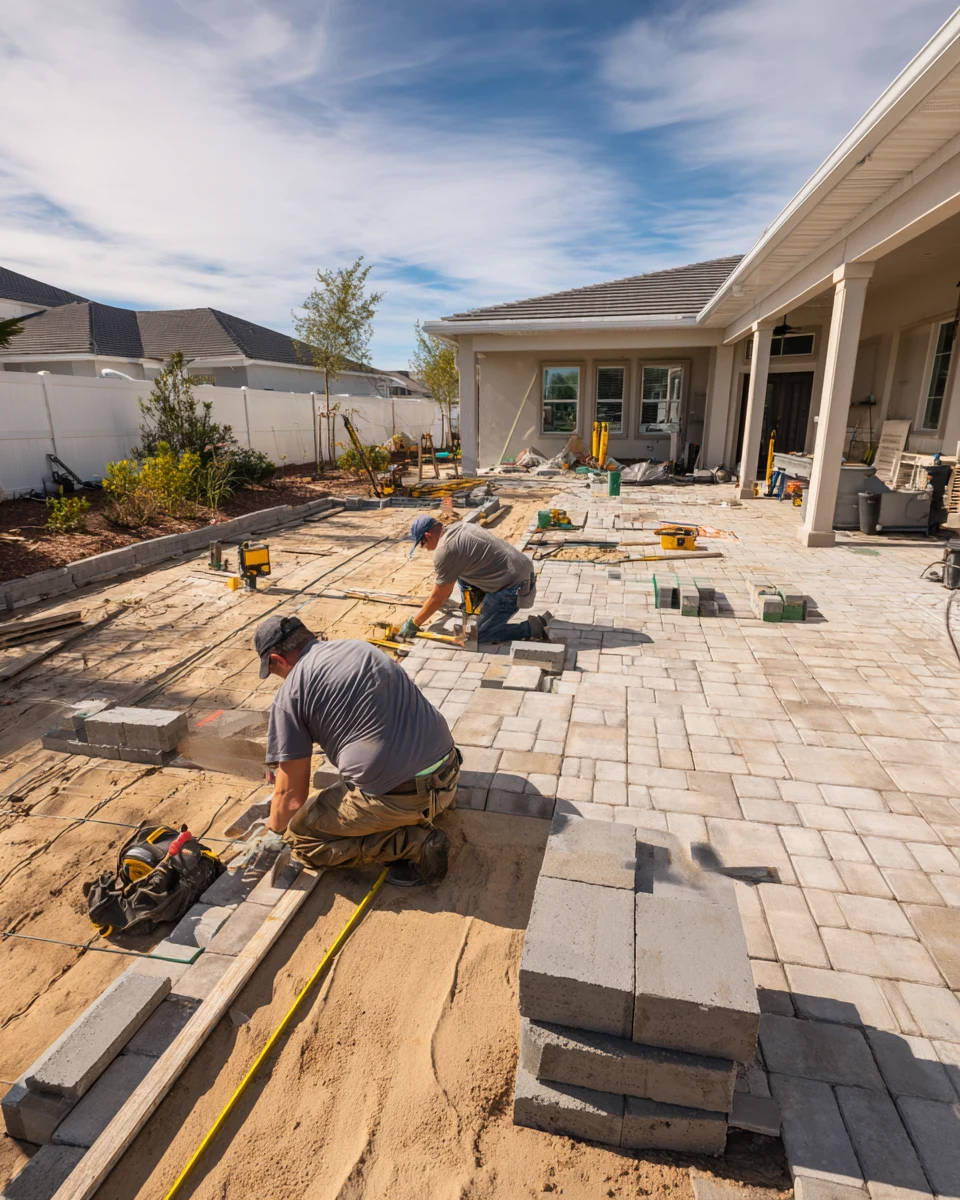
Travertine pavers can be laid two ways. Sand-set installation puts them on a compacted aggregate base and bedding sand, like concrete pavers, with an edge restraint. Mortar-set installation bonds them to a sound concrete slab, which suits overlays on existing pool decks.
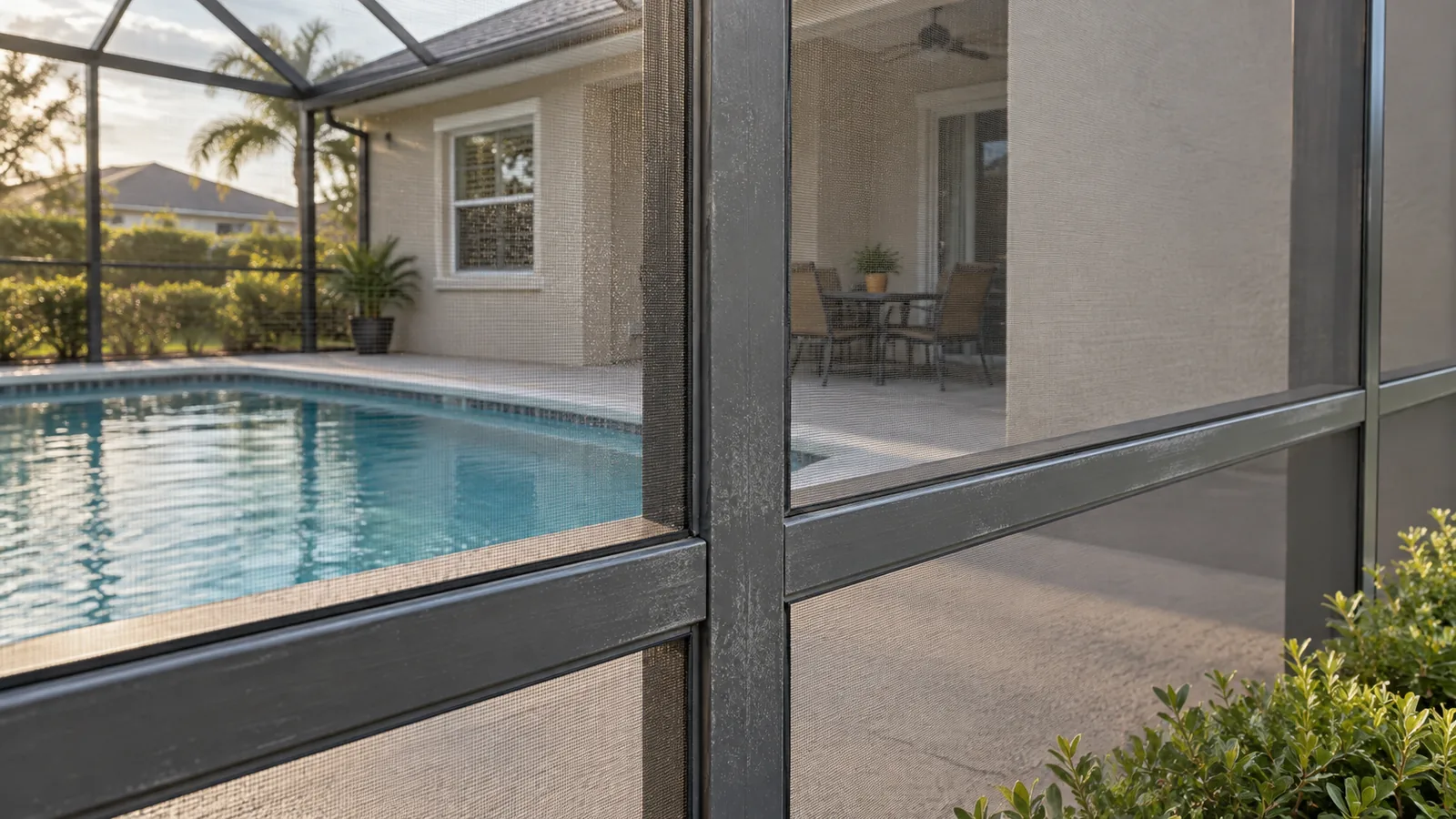
Overlaying an existing deck raises its height by the thickness of the stone and the setting bed, typically enough to affect door thresholds, drains, the coping and the screen enclosure’s kick plates. The slab must be stable, and its control joints must be carried through the new surface; bonding stone rigidly across a moving joint invites cracks. Sand-set travertine follows the same rules as any paver installation, and how a patio base is built to stay level applies to stone just as it does to concrete pavers.
Thickness matters for both methods. Pool deck travertine is commonly about 1 1/4 inches thick when sand-set, while thinner tile-weight pieces are only suitable when fully bonded to a sound slab. Joints between pavers are typically filled with sand or polymeric sand for sand-set decks, and with grout or mortar for bonded ones.
Maintenance and Re-Sealing Cycle
Day to day, travertine needs sweeping, rinsing and prompt cleanup of spills. Joints in sand-set decks need topping up over time, and mortar joints need occasional repair.
Resealing depends on the sealer, sun exposure and wear. A simple check tells you when: if water darkens the stone quickly instead of beading, the sealer is wearing out. Clean the deck thoroughly and let it dry before resealing, and follow the product’s instructions.
Cost Compared to Pavers and Concrete
Natural stone costs more than manufactured paving. HomeGuide’s 2026 figures put travertine pavers at about $13 to $45 per square foot installed, with material alone about $5 to $30, while its figures for most concrete paver patios fall around $10 to $25 per square foot. Plain poured concrete, with or without a textured coating, is generally the least expensive surface. They are national planning figures; the tile grade, the base under it and the pool coping details decide where a Central Florida quote lands.
Within travertine, price rises with grade, thickness, filled versus unfilled, color consistency and the amount of cutting a layout needs. Coping pieces cost more than field pavers. Over the life of the deck, add periodic sealing to the comparison.
Owners who like the look of stone but not its maintenance sometimes compare travertine with porcelain pavers made to resemble it. Porcelain absorbs very little water, is not sensitive to acid and needs no sealing, but it does not have travertine’s natural variation or its porous, textured feel, and its surface heat depends on color like any other paver. Seeing both side by side, wet and dry, usually settles the question.
Choosing a deck surface is one decision within the larger design of the pool area, and on a new build it is made alongside the pool itself as part of a custom pool plan.
For a deck around an existing pool or patio, our outdoor living team can compare travertine against pavers and coatings for your specific slab, sun exposure and pool chemistry.
Share this article