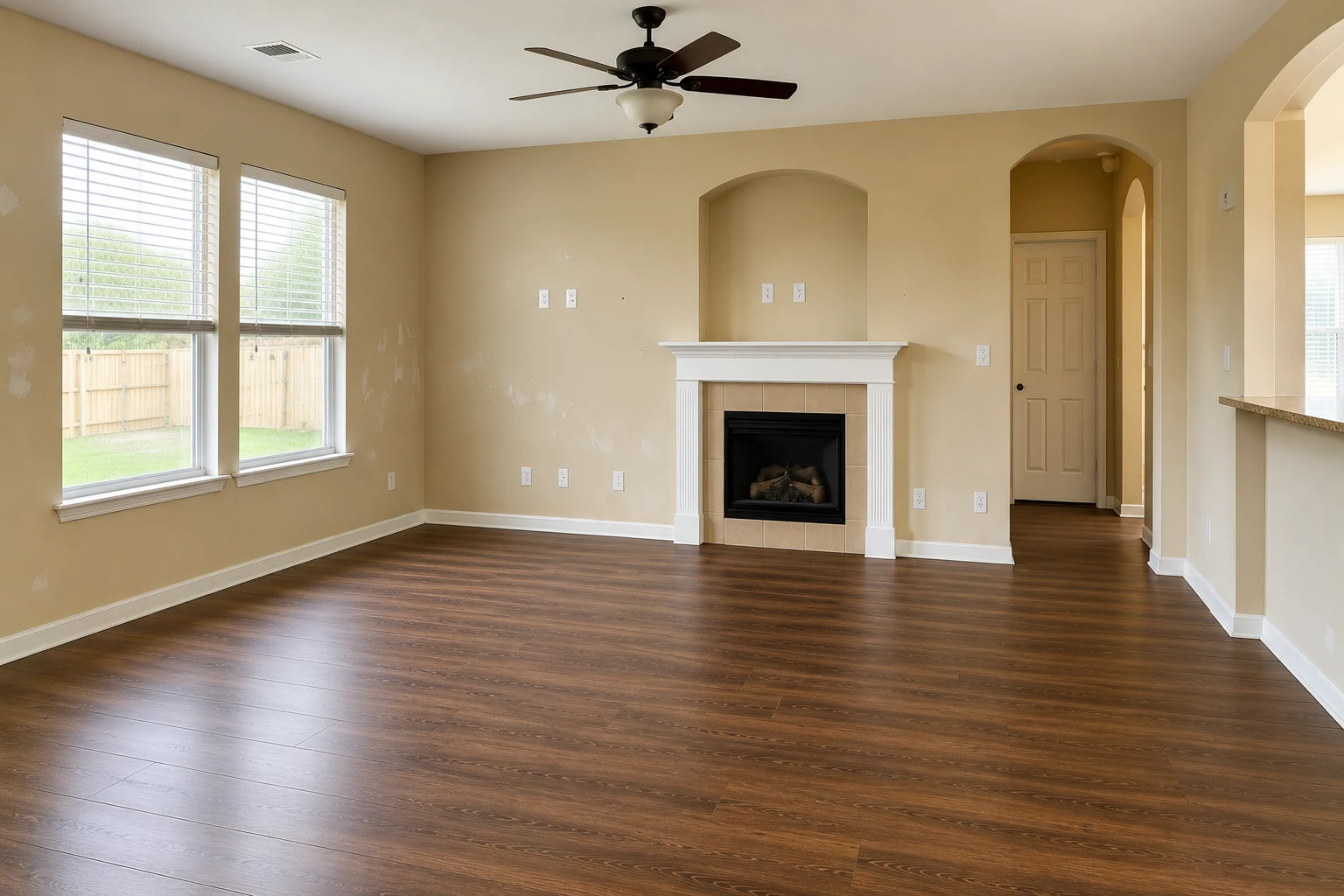
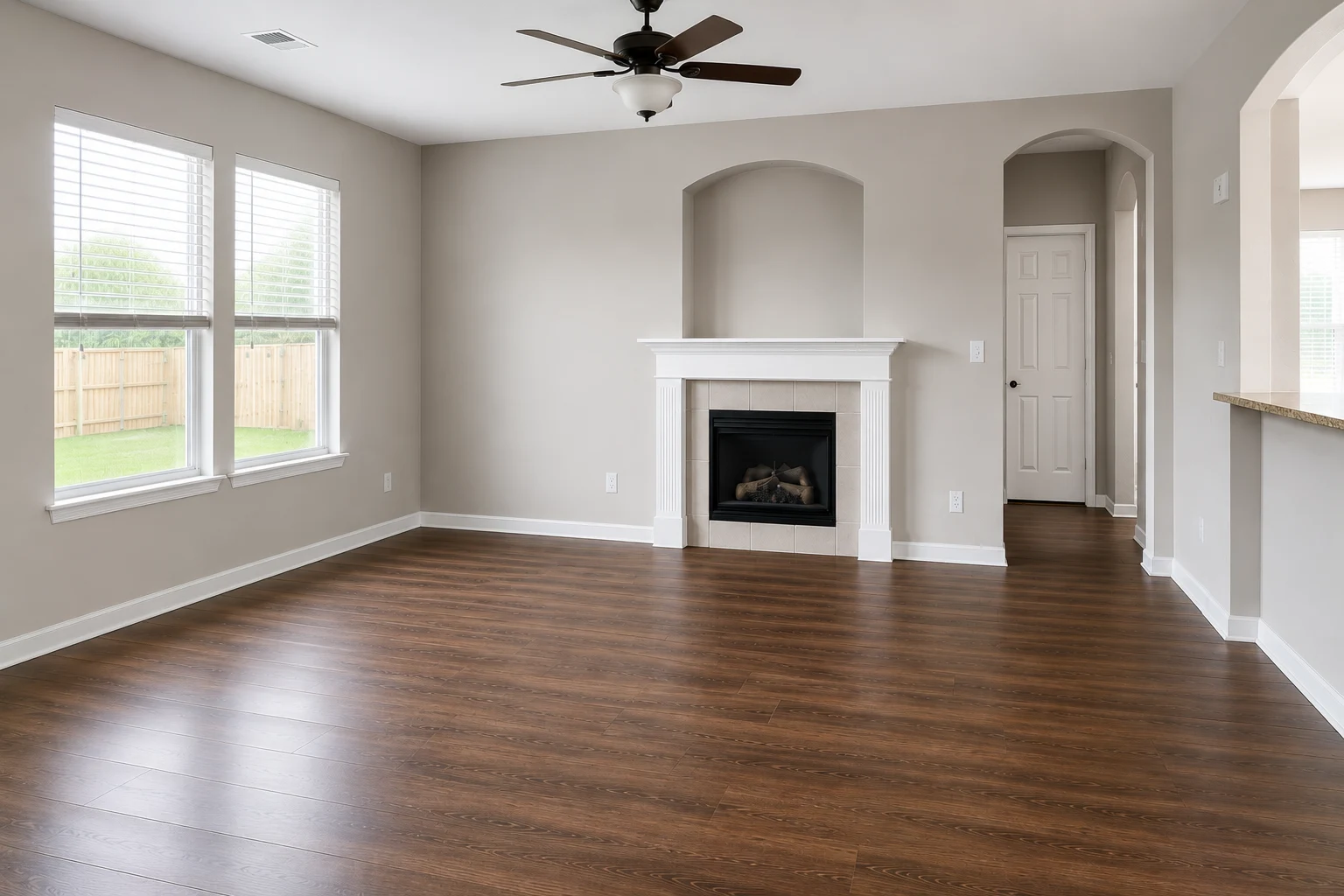
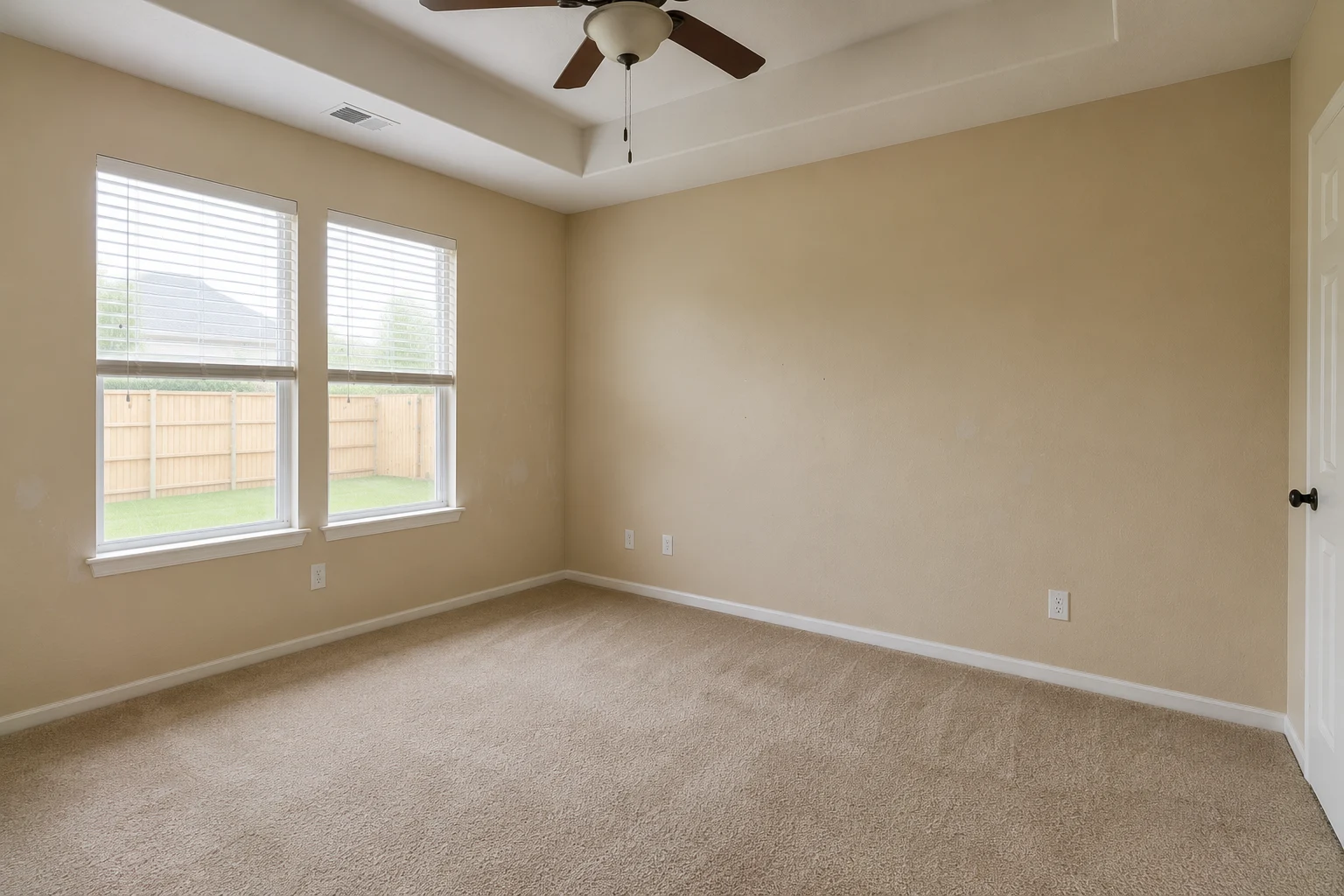
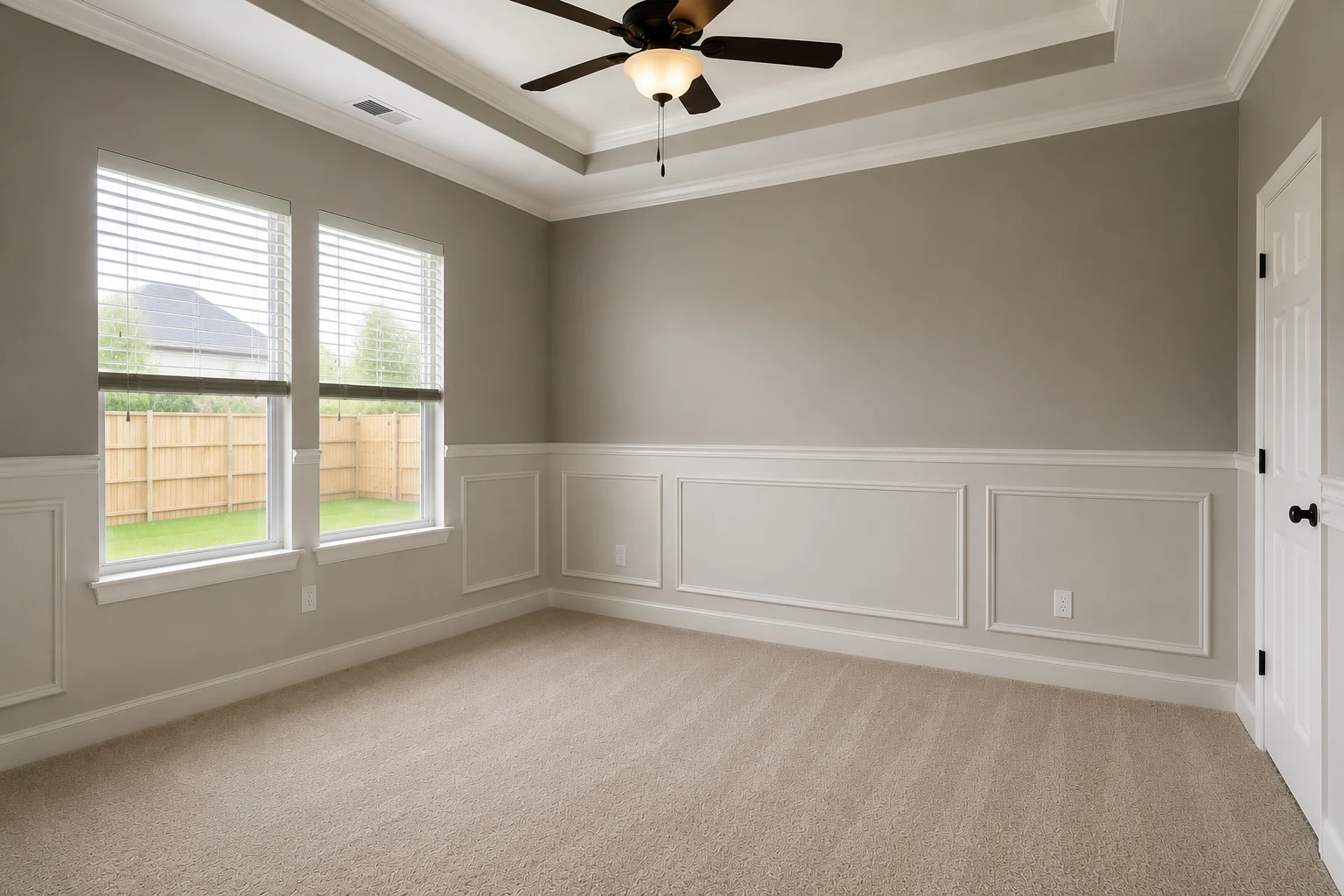
 Current Service
Painting
Refresh interior and exterior surfaces with professional, detail-oriented painting.
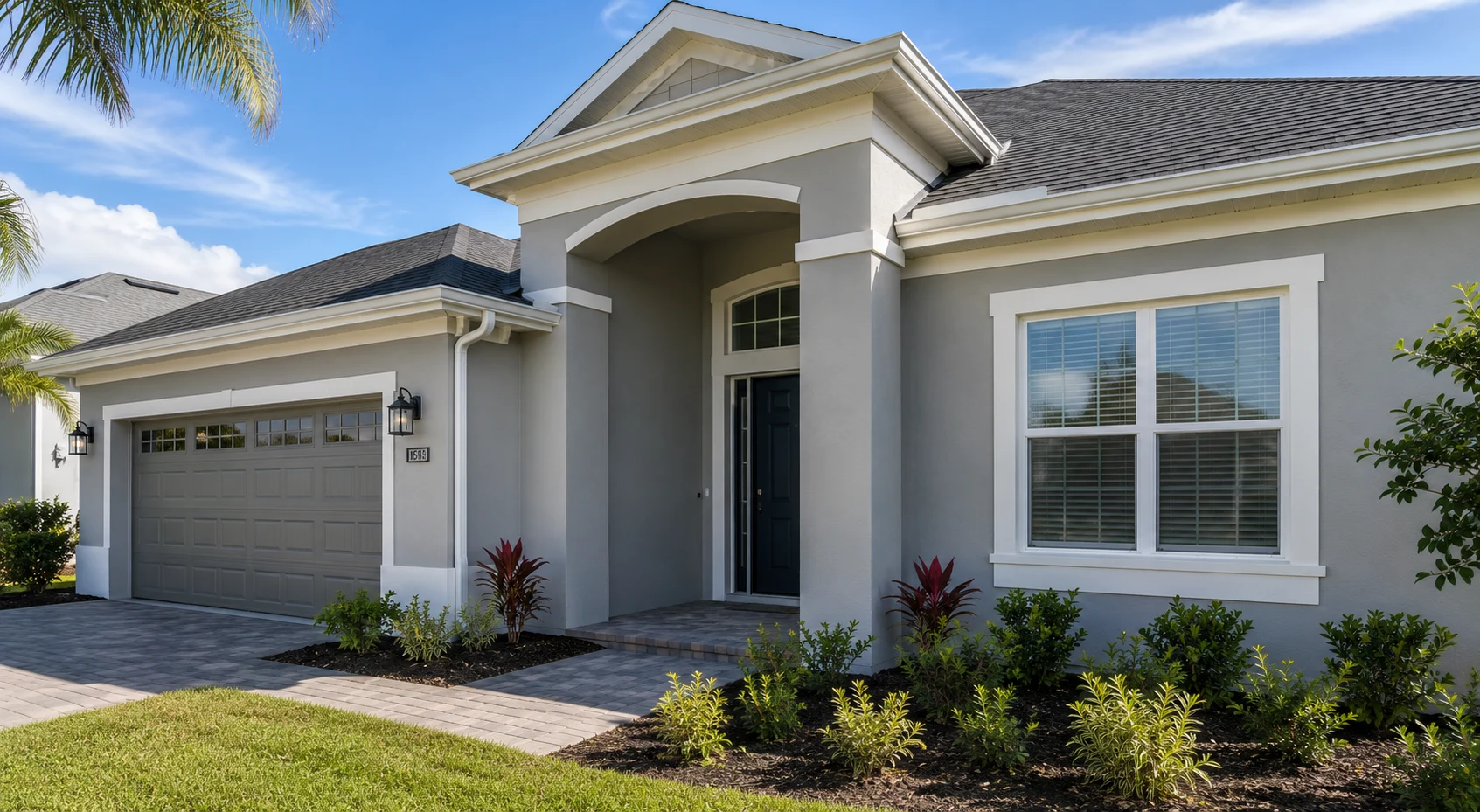
Residential Painting Serving Davenport
Serving homeowners throughout Davenport, where much of the housing is recent, a good share of it is held as a second home or an investment, and paint is the cheapest protection the building has. We treat it that way — specified for the surface, documented for the future, and scheduled before the cost moves from painting to repairs.
Get Your Free EstimateFree In-Home Consultation
Organized Process
Every project follows a clear, structured process from first contact to final walkthrough.
Quality Craftsmanship
We pay attention to the details that make a remodel feel finished and durable.
Clear Communication
You'll always know what's happening with your project and what comes next.
Commitment to Your Home
We treat every property with the same care and respect as if it were our own.
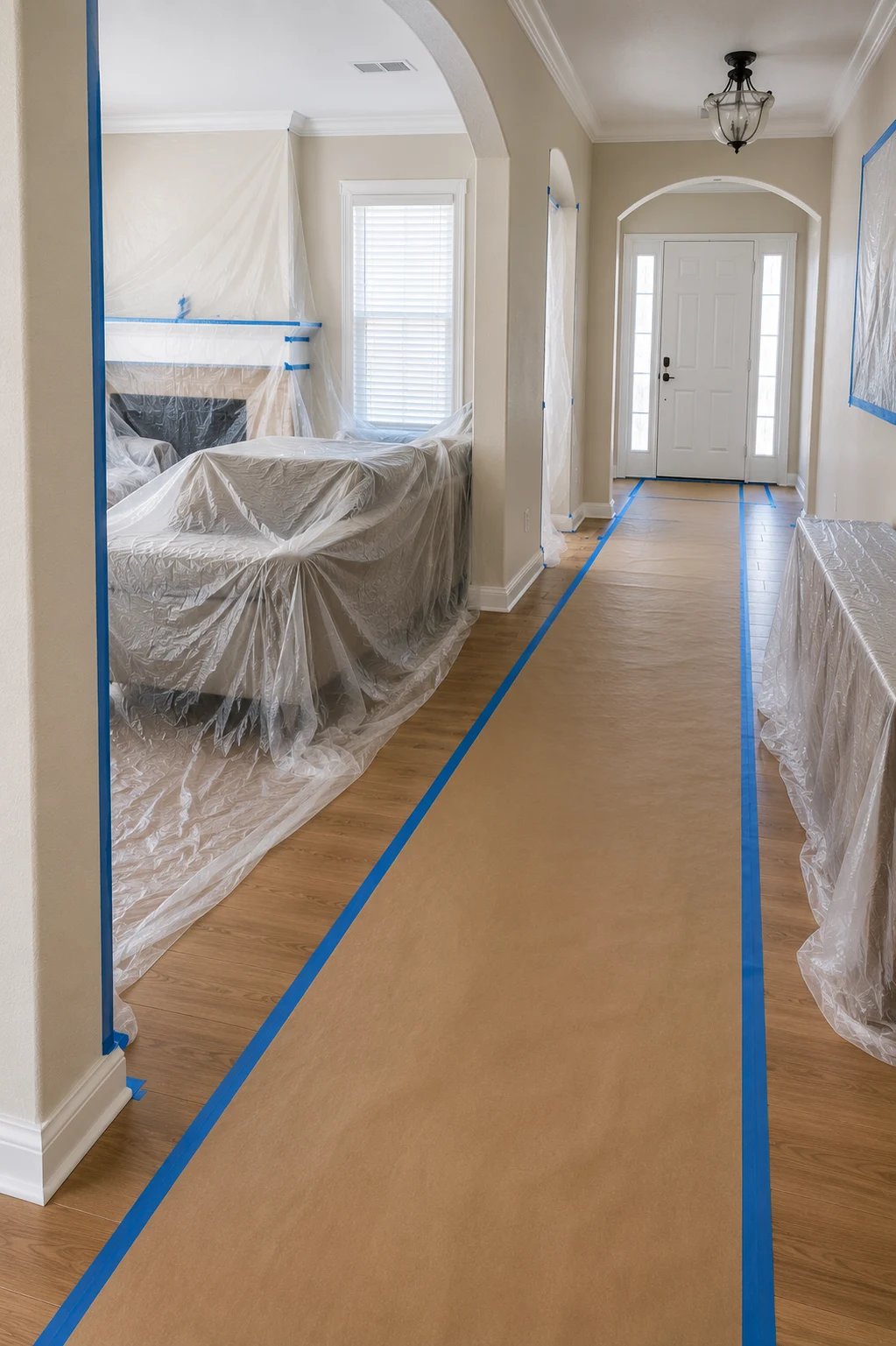 Assess & Protect
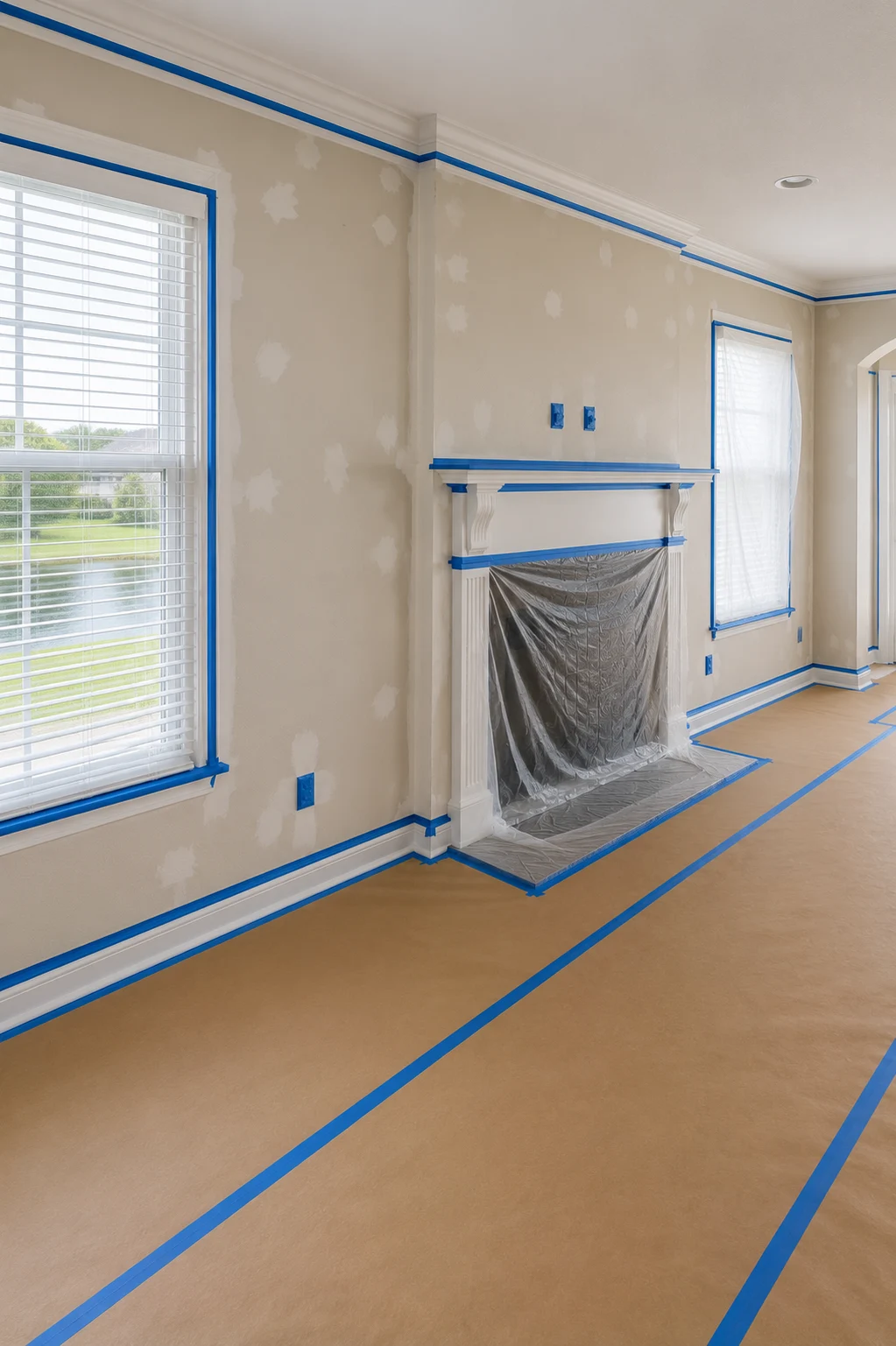 Repair & Prepare
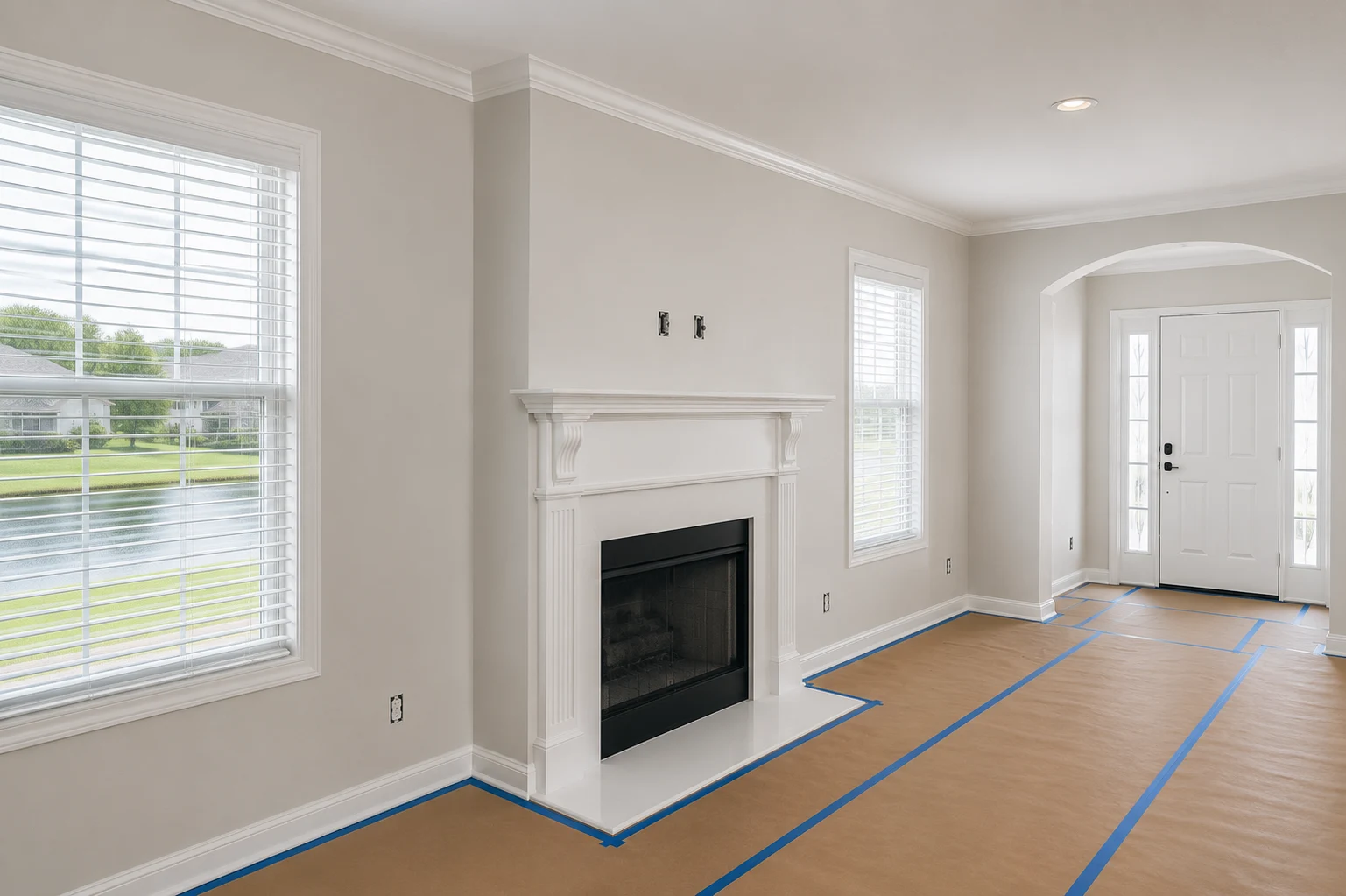 Apply
Apply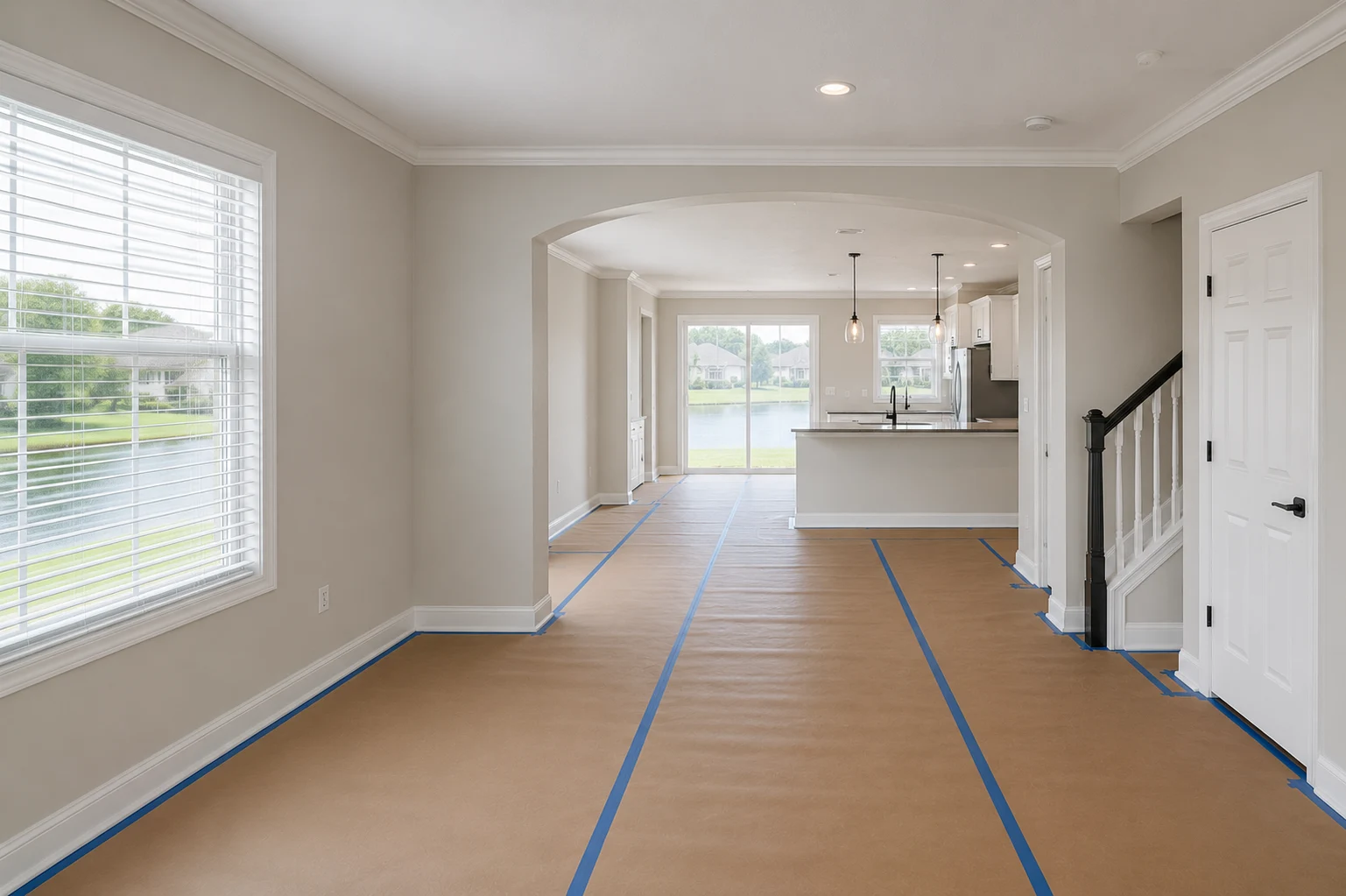 Review & Record
Working With Us
We're not focused on being the biggest — we're focused on being organized, communicative, and easy to work with.
Your project starts with a clear plan, not guesswork.
You'll hear from a real person about the status of your project.
We treat the small details as seriously as the big decisions.
How It Works
We start by understanding your goals, your home, and the scope of your project.
We translate your vision into a clear, organized plan before any work begins.
You choose finishes and materials with guidance from our team.
Our team executes the project with attention to detail and clear communication.
We review the finished work together to make sure everything meets your expectations.
Real Results
A repaint done while the surfaces are still sound is a paint job. The same work postponed long enough becomes carpentry, stucco repair, and a considerably larger number.
The Benefits
The same specification applied two years apart produces two completely different bills — one for painting, one for repair and painting.
What Else to Consider
Mobilizing a crew, covering a property, and setting up is a fixed cost paid once. Several adjacent jobs are considerably less expensive folded into it than booked on their own.
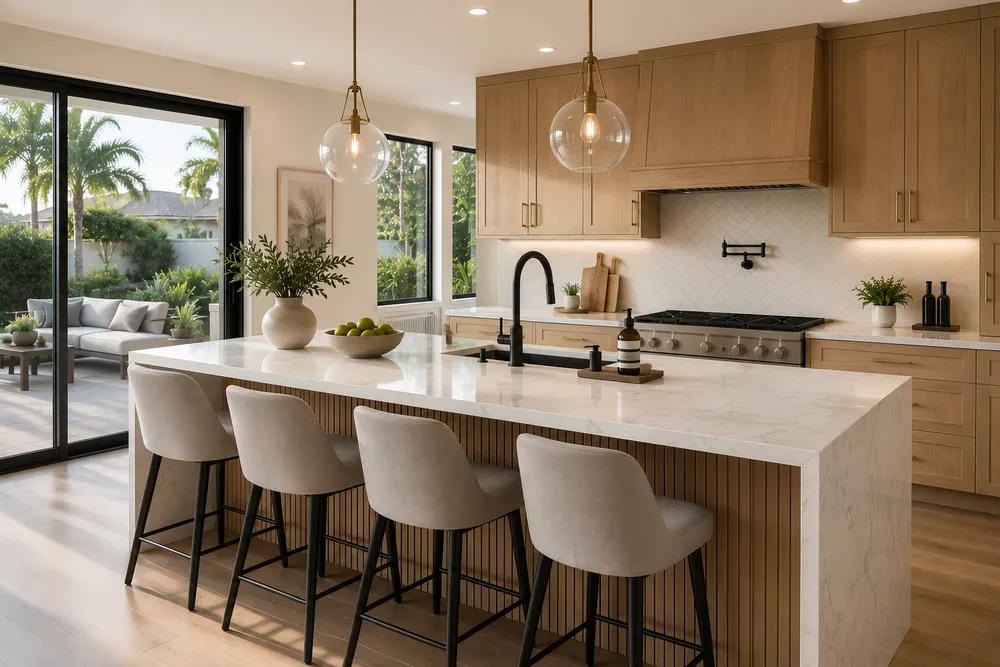
Transform the heart of your home with a kitchen that blends functionality, craftsmanship, and modern design.
Learn More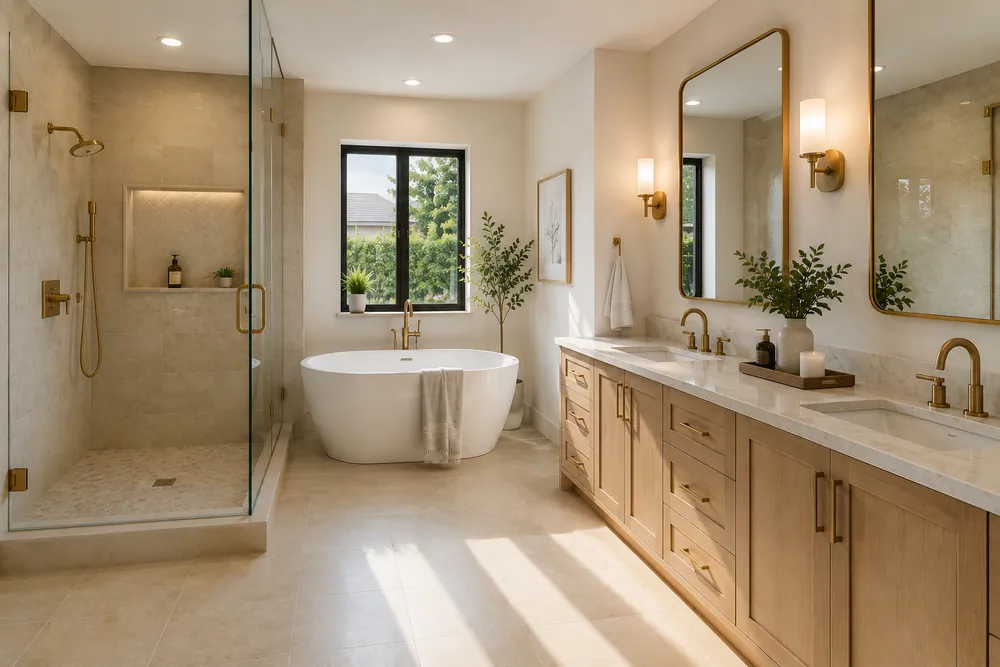
Modernize your bathroom with thoughtful layouts, quality finishes, and lasting comfort.
Learn More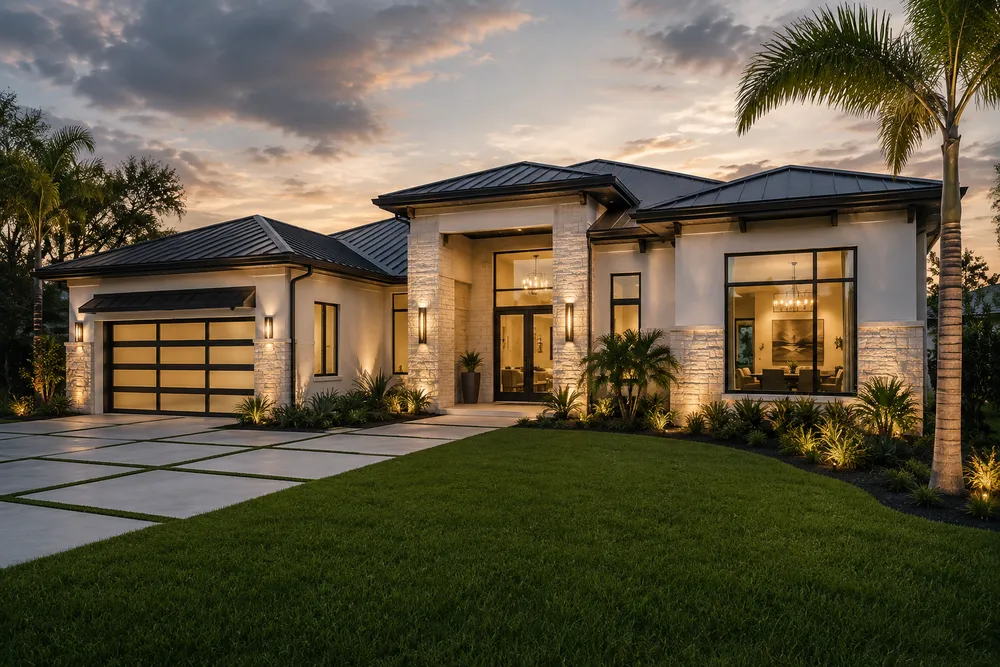
Coordinate a complete transformation of your home, from layout to finishing details.
Learn More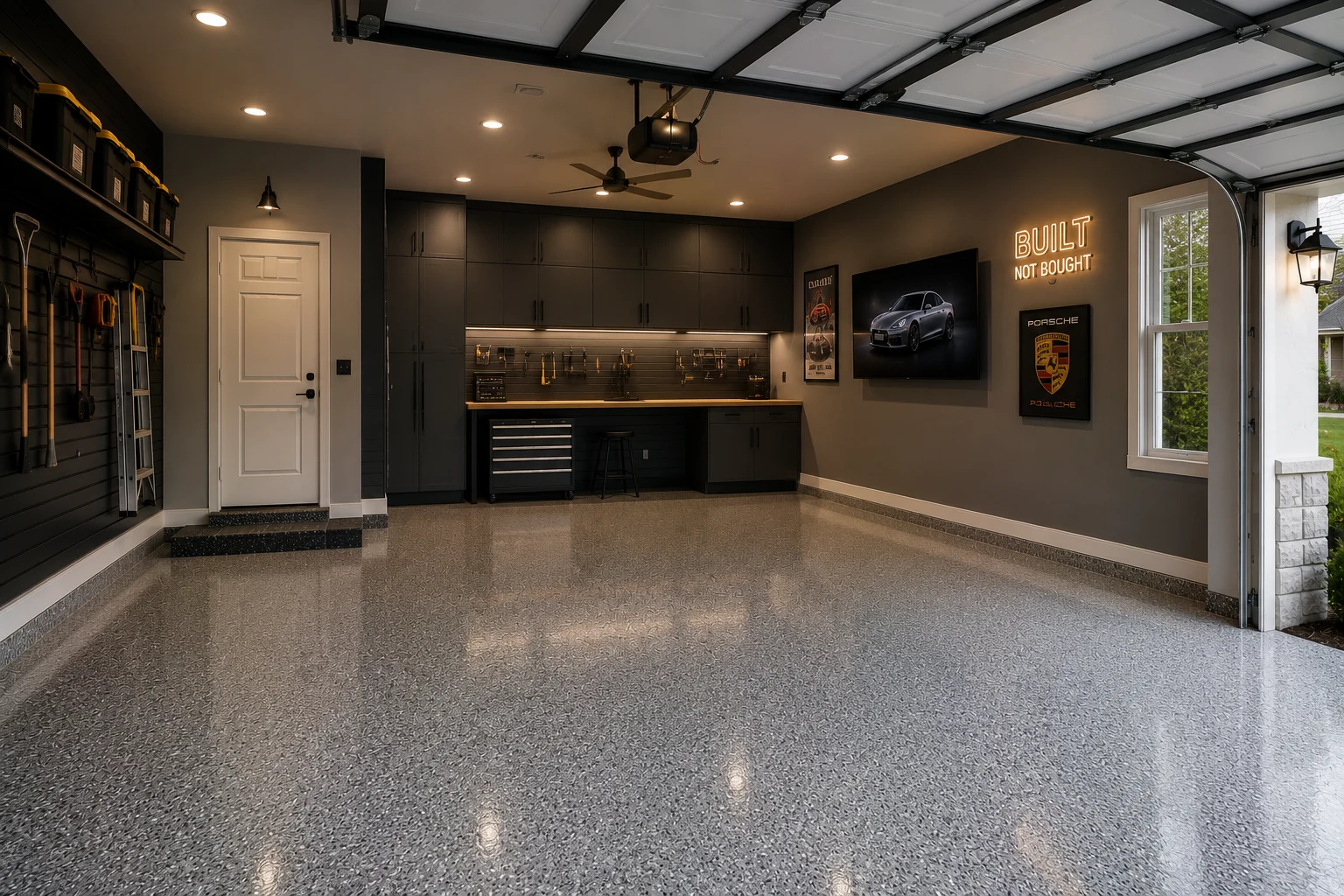
Turn your garage into an organized, durable, and functional extension of your home.
Learn More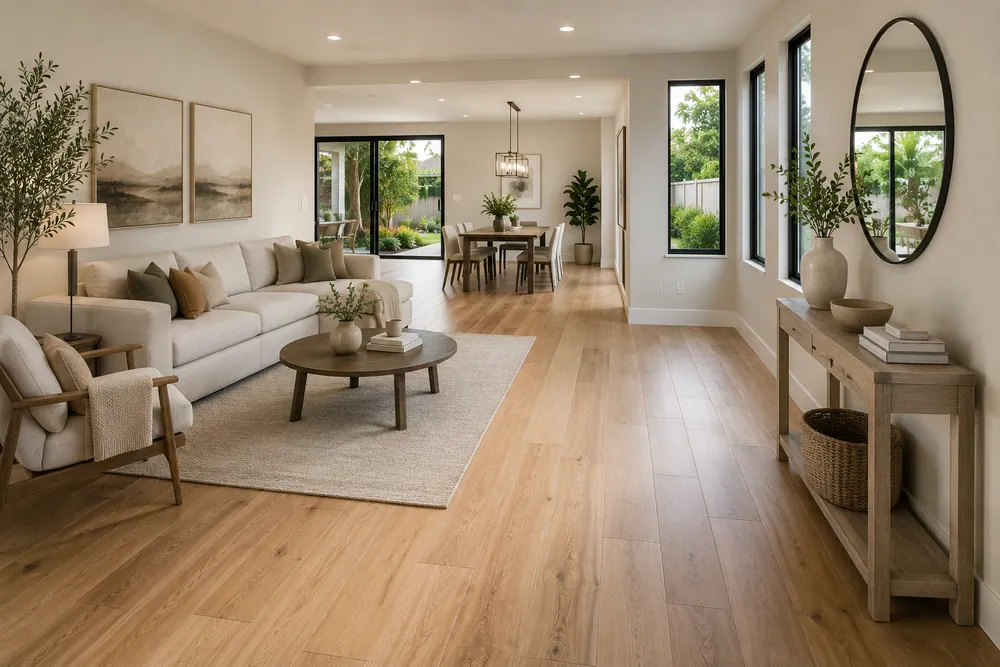
Install and refresh flooring throughout your home with materials built to last.
Learn MoreCurrent ServiceRefresh interior and exterior surfaces with professional, detail-oriented painting.
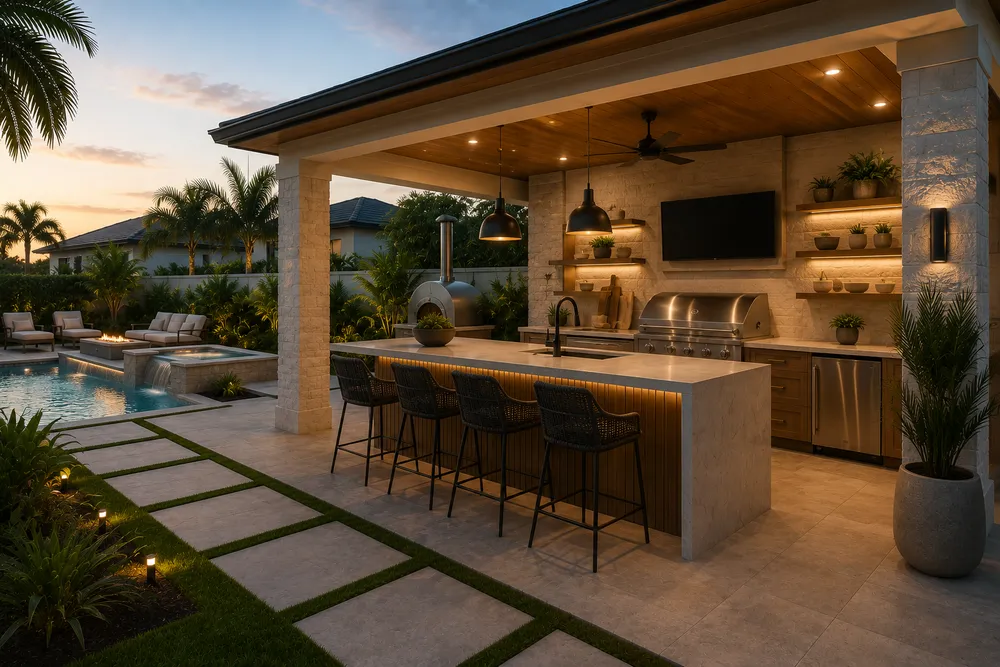
Create outdoor spaces designed for everyday living and relaxed entertaining.
Learn More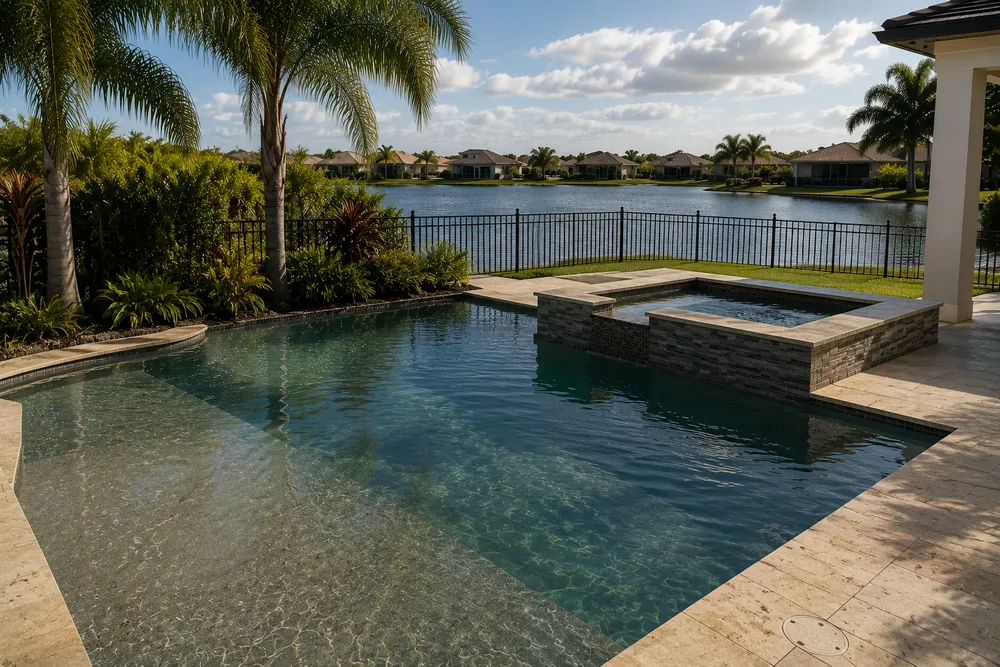
Design and build a custom pool tailored to your home and lifestyle.
Learn More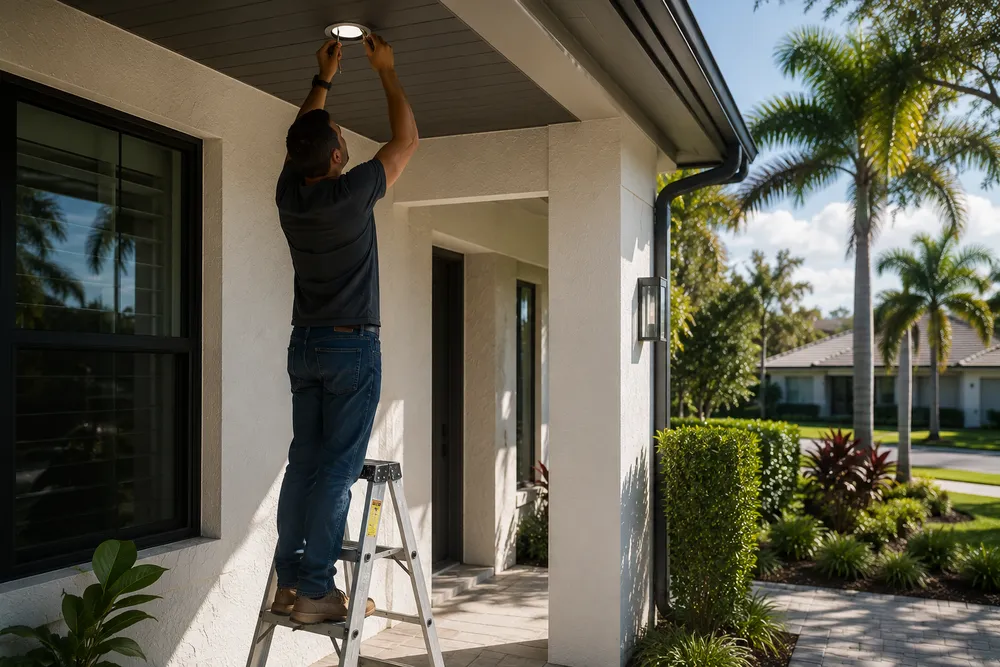
Handle everyday repairs and improvements with the same attention to detail as larger projects.
Learn MoreGet Started
Tell us about your project and our team will reach out to discuss the next steps.
Get your free estimate in less than 2 minutes
Prefer to talk it through first? Call or email us directly.
Working With Us
Not because they were careless — because nothing about a coating failing announces itself. The color flattens gradually, a chalky film develops that nobody touches, a hairline crack opens somewhere nobody walks past, and the wall behind it starts taking water it was never meant to take. By the time it is obvious from the driveway, the project has quietly stopped being about paint.
So the conversation we prefer to have is an earlier one. We walk the property, tell you plainly what is still sound and what is starting to go, and give you a realistic sense of what waiting another season actually costs. If the honest answer is that nothing needs doing yet, that is what you will hear. Here is how a project runs once there is something worth doing.
Planning Ahead
Four points that matter more here than almost anywhere — particularly if the property is newer, or if you are not the one living in it.
A coating protects the wall for a finite period and then stops. Everything after that point is the substrate taking weather directly: stucco absorbing water at hairline cracks, trim softening at the joints, sealant lines opening around windows. Painting on time is a maintenance cost you can plan for. Painting late is the same cost plus carpentry, stucco repair, and the parts of the house that had to be replaced rather than protected. The decision is rarely whether to spend — it is which invoice you would rather receive.
Ask most owners of a recently built home what body color, trim color, and sheen they have, and there is no answer — the builder chose it and nobody recorded it. That becomes a problem the first time something needs touching up, and a bigger one when a manager or a future owner tries to match it. We document the specification at completion: colors, sheens, product lines, and which surface got what. It costs nothing and it is worth a great deal three years later.
Owners with several homes in these communities gain more from consistency than from optimizing each house separately. One agreed palette and one set of finishes means touch-up stock is interchangeable between properties, a turnover no longer starts with identifying a color, and the person doing the work does not need instructions each time. The exception is where a property genuinely differs — a different elevation, a different community palette — and we will tell you when that is the case.
New construction arrives with coverage of some kind, and the specifics are in your own paperwork rather than anything we would presume to state. What is worth noting is the practical consequence: once that period ends, every surface on the building is your maintenance responsibility, and the original coat was never specified to carry a decade of Florida weather. Checking the exterior condition while the walls are still sound puts you ahead of that transition instead of behind it.
Why SAVAM House
Every project follows a clear, structured process from first contact to final walkthrough.
We pay attention to the details that make a remodel feel finished and durable.
You'll always know what's happening with your project and what comes next.
We treat every property with the same care and respect as if it were our own.
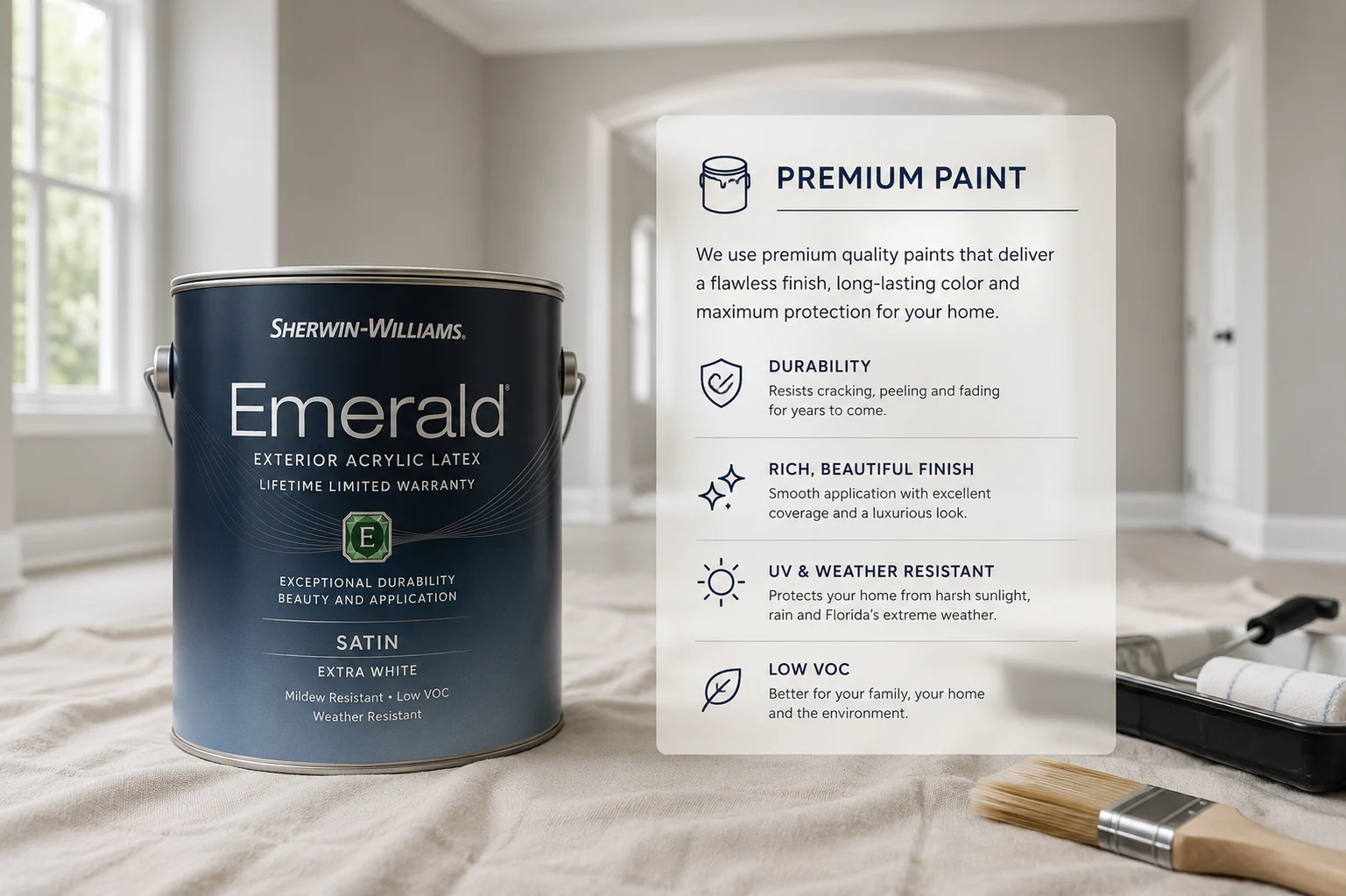 Durable Paint SystemsSpecified for the exposure and the surface rather than by habit, and paired with the primer that makes the topcoat perform as intended.
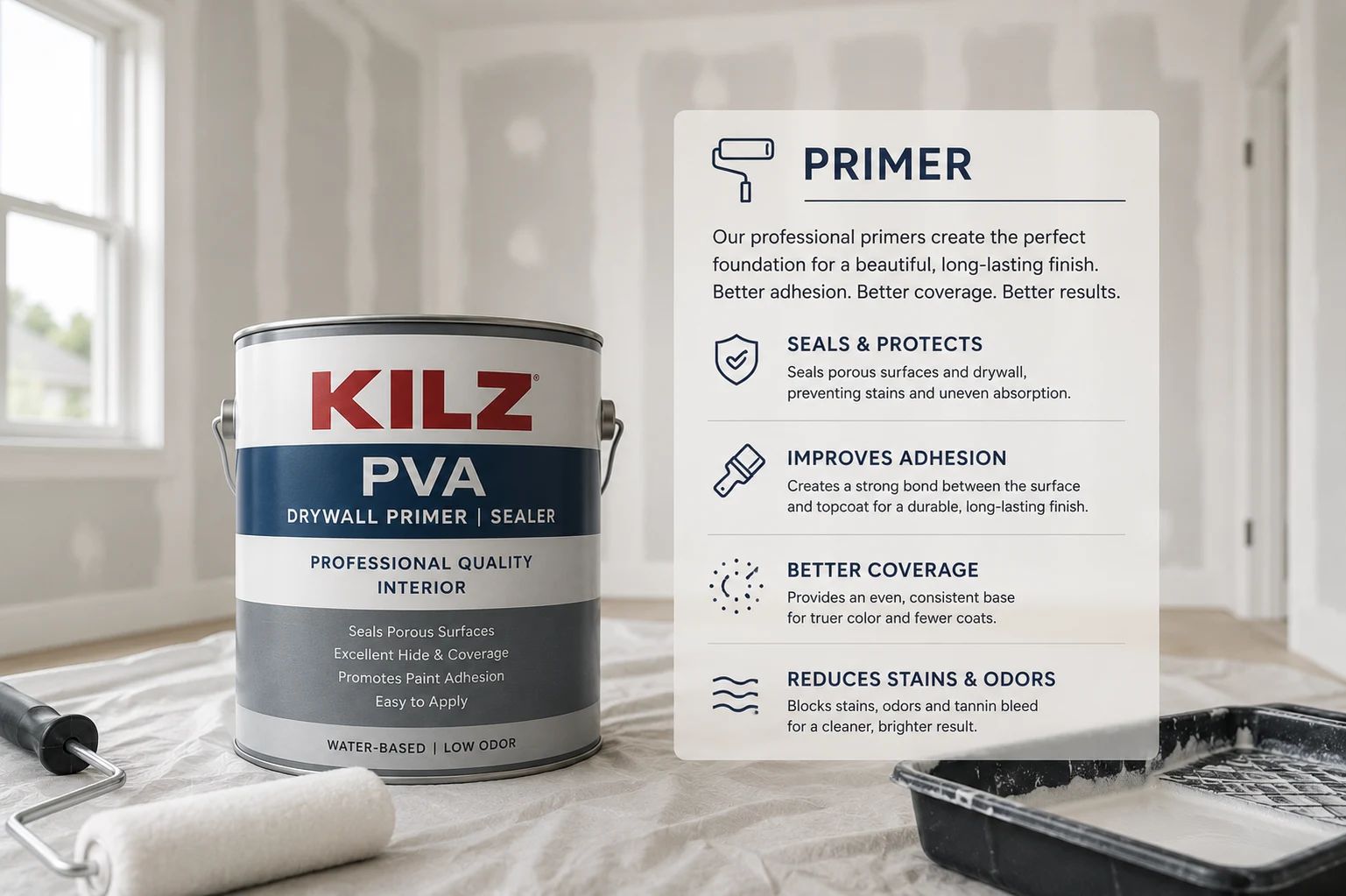 Primers and SealersChosen for what is actually underneath — chalked stucco, repaired areas, factory-primed trim — because that layer decides service life.
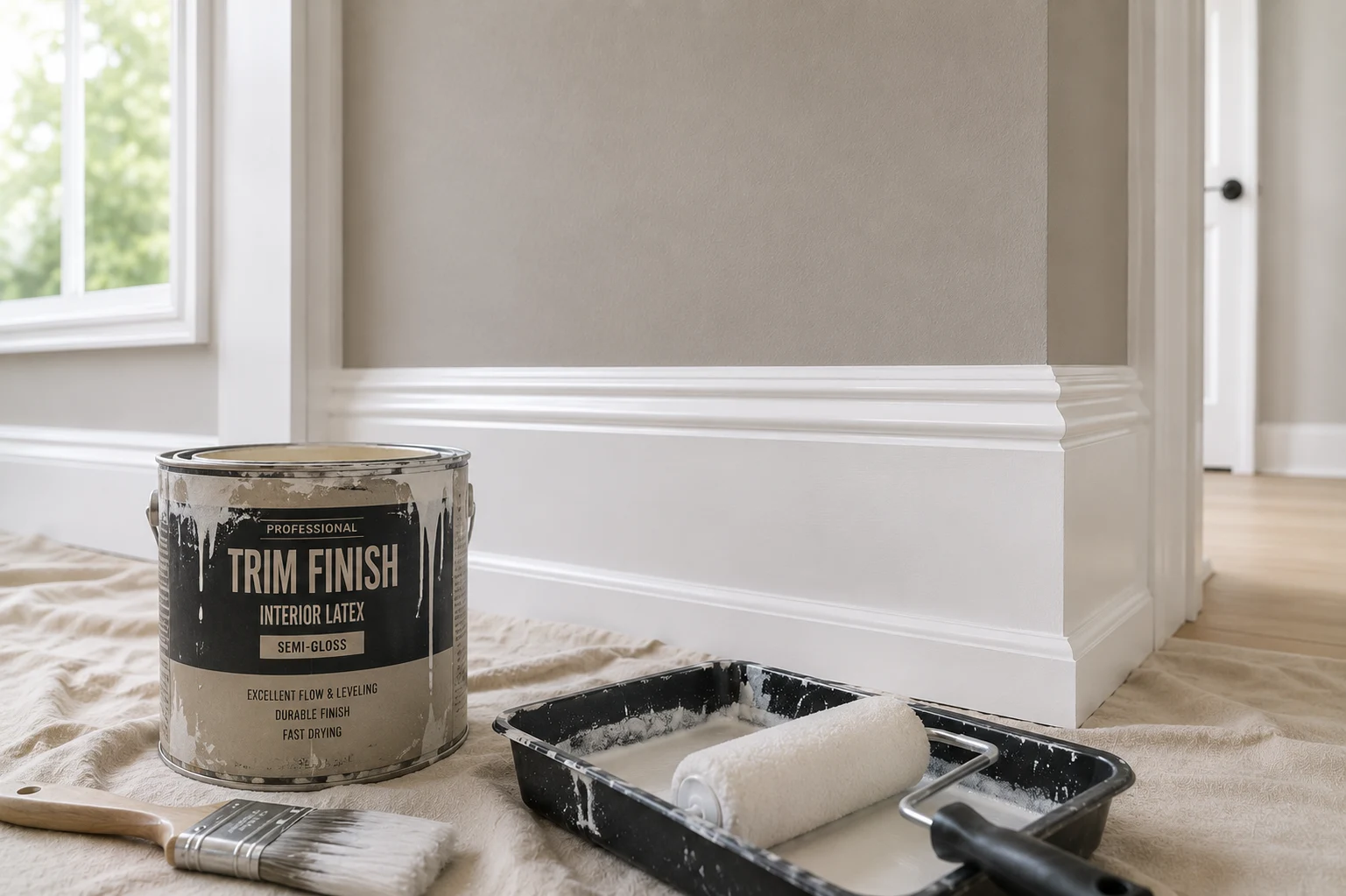 Trim, Door & Cabinet FinishesHarder, more cleanable finishes for the surfaces that take daily contact, where wall paint would need attention within a season.
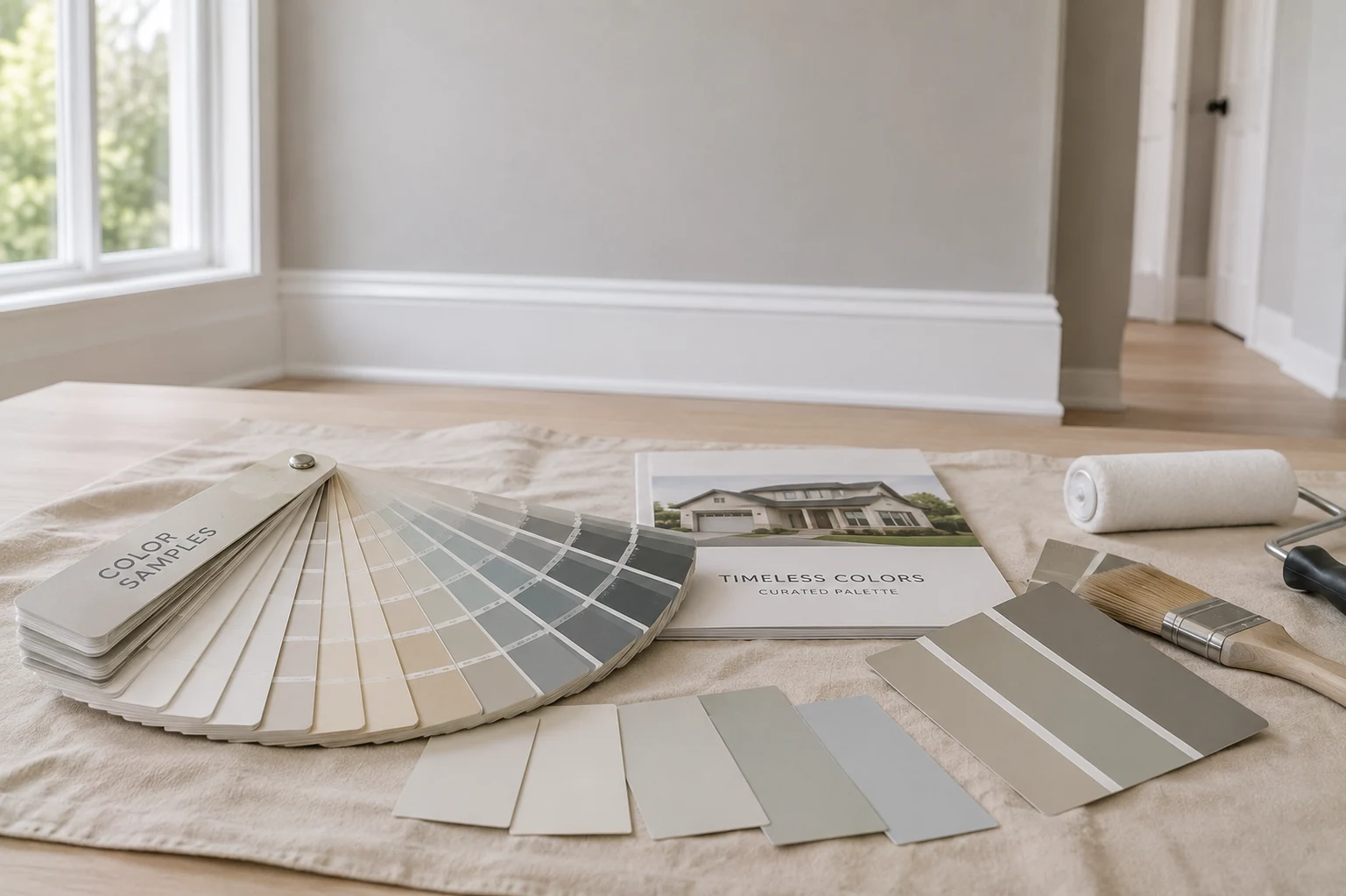 Documented Color SpecificationColors, sheens, and product lines recorded by surface, so future touch-ups and repaints match without anyone having to guess.
Get Inspired
Three practical routes — updating the interior, renewing the exterior, or bringing the entire property onto one documented palette.
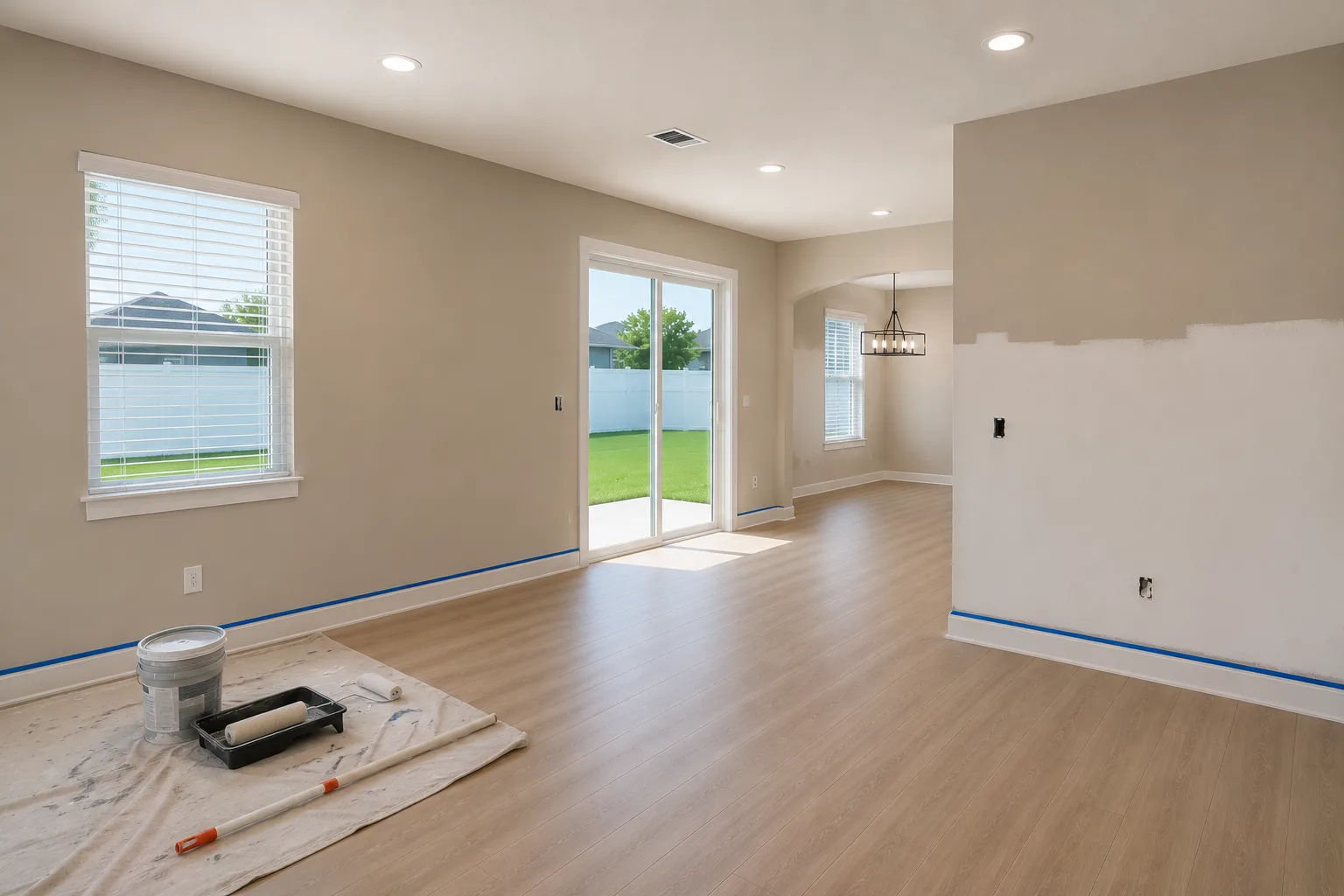
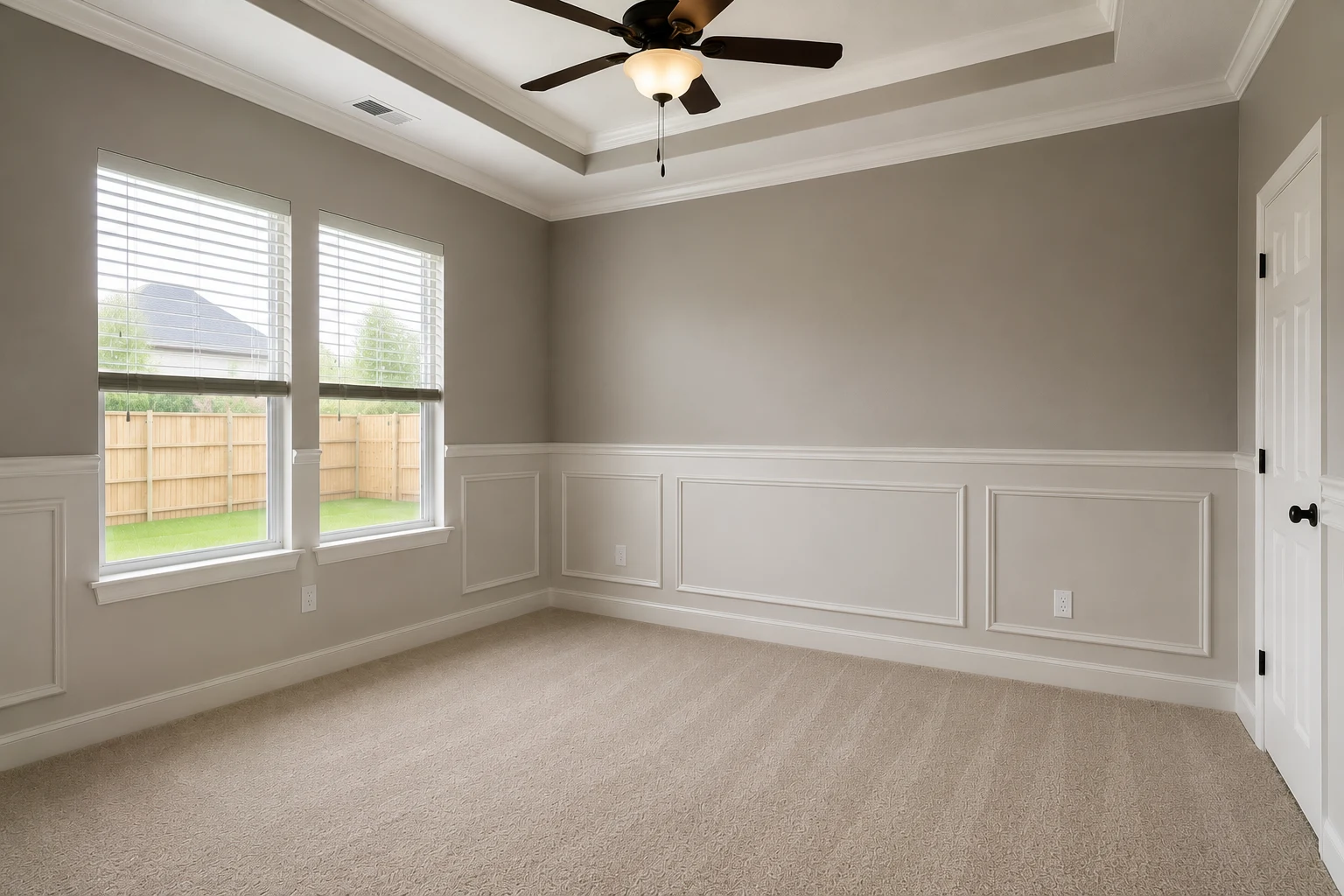
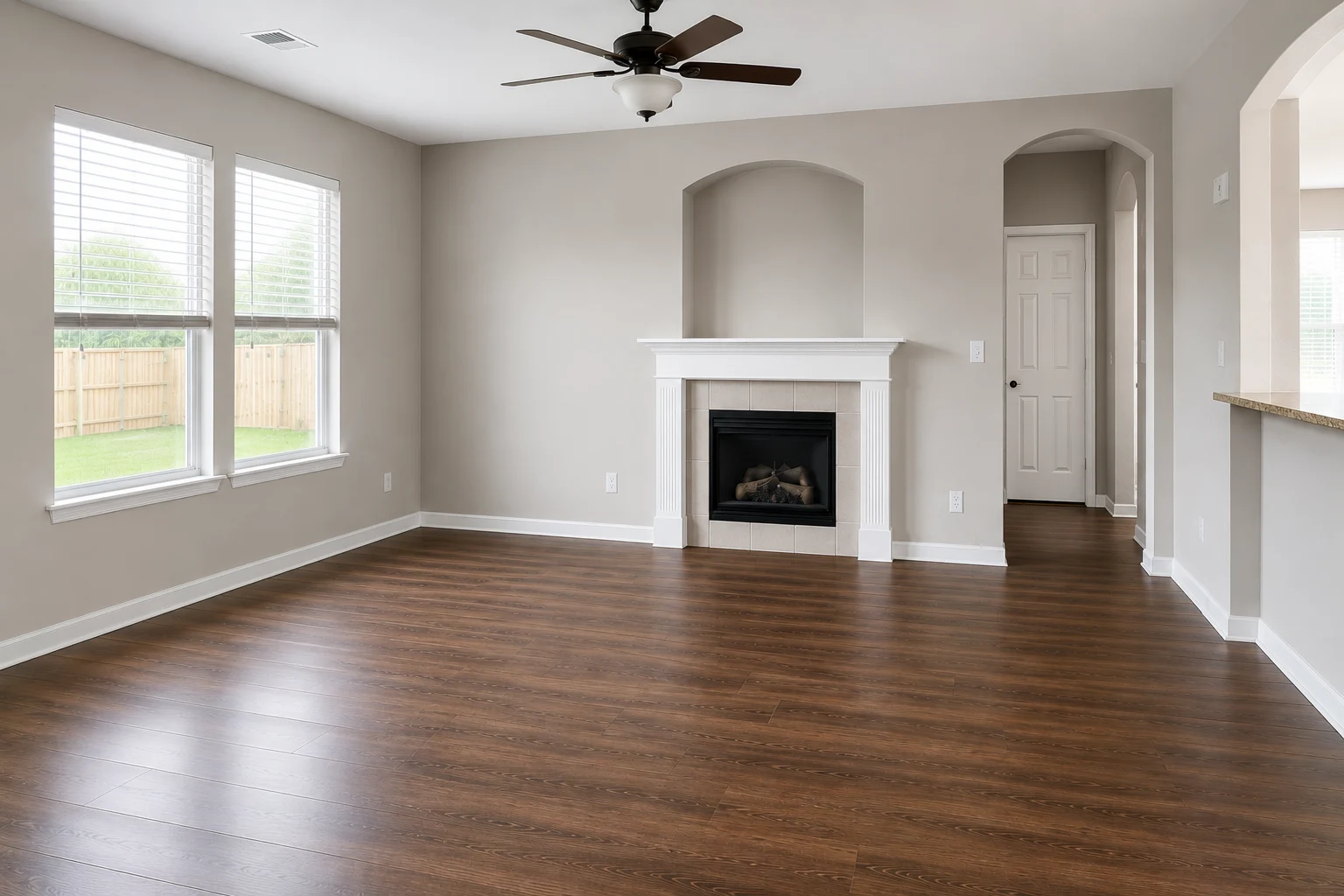 ConceptPaintingSoft Neutral Interior Concept
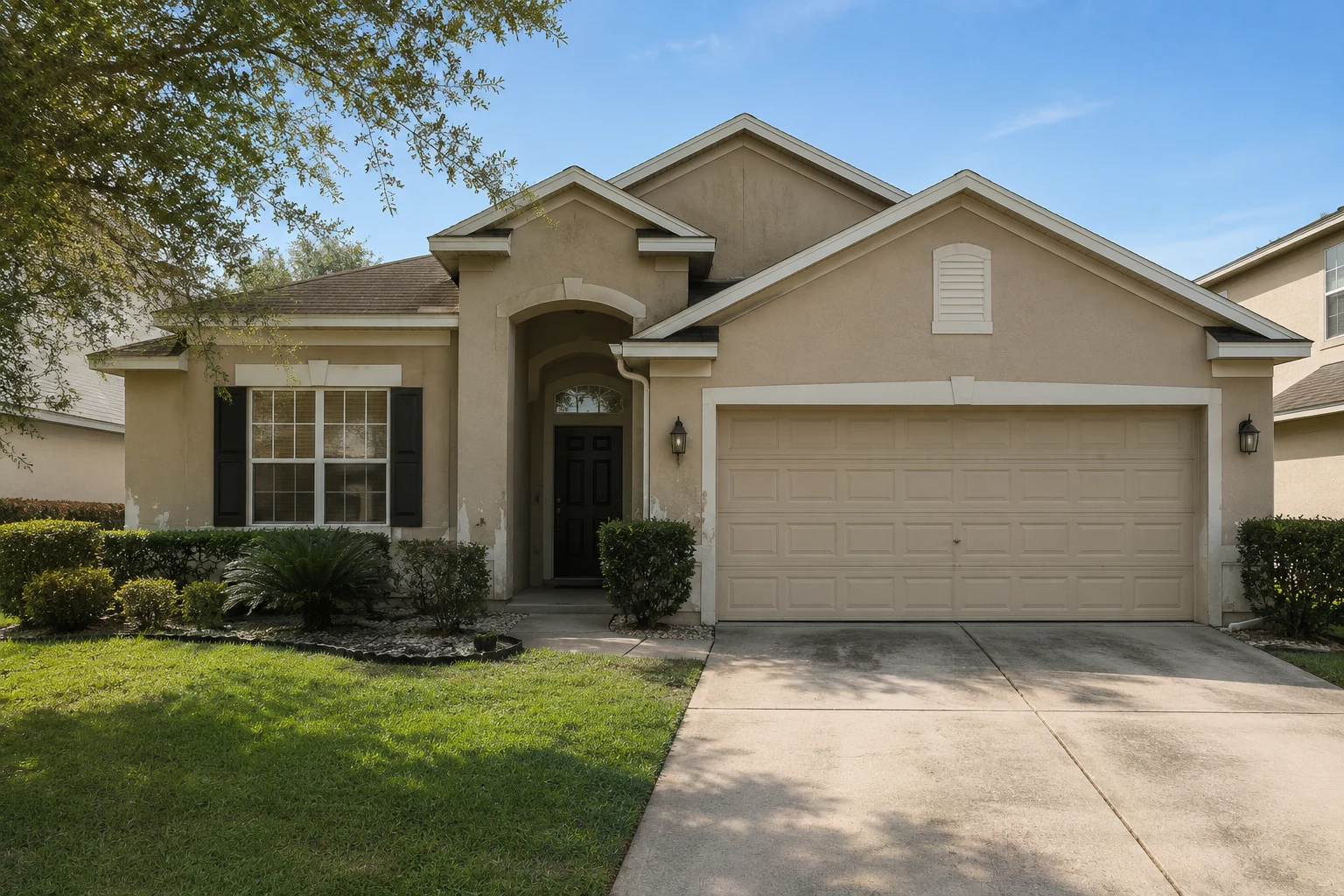
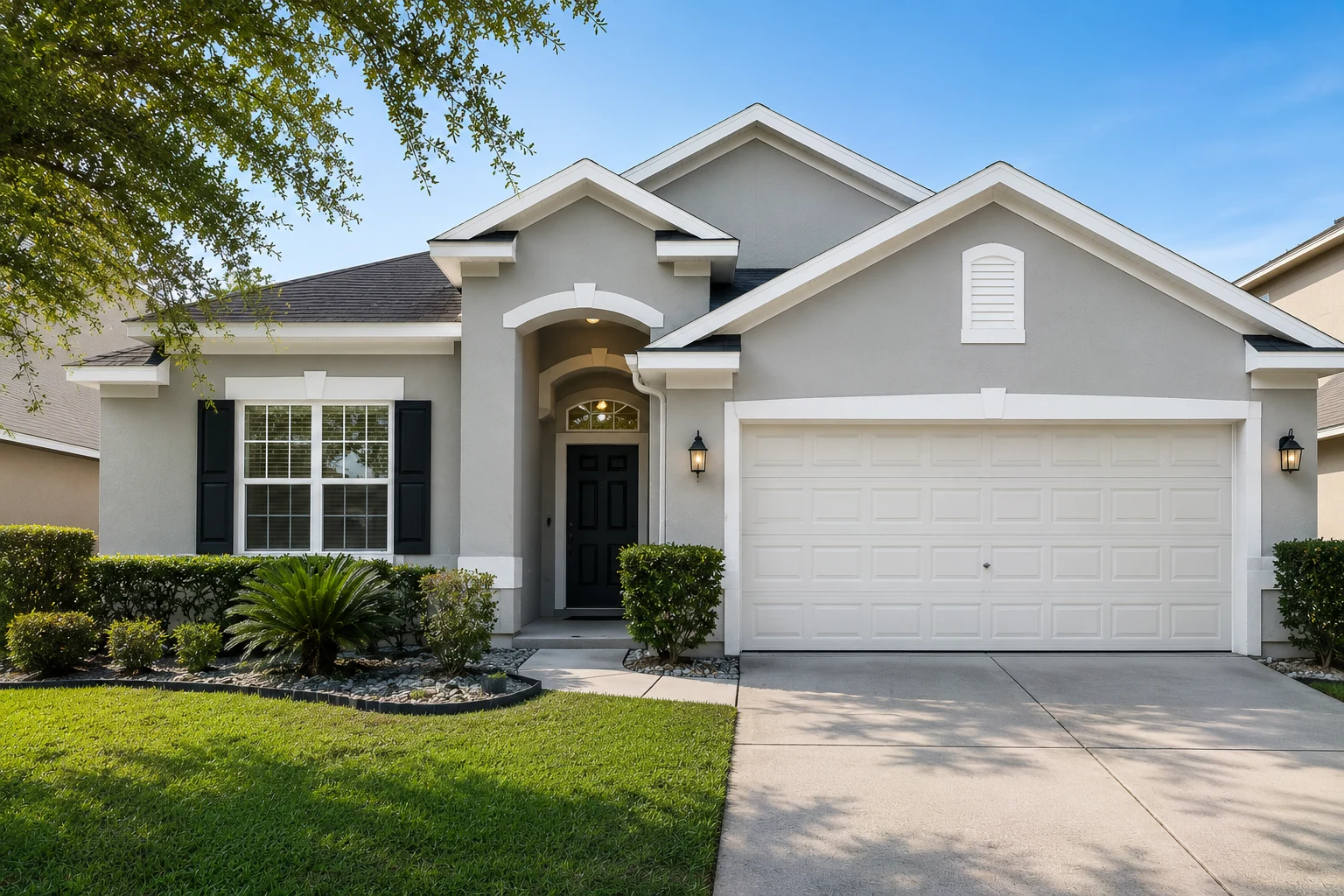
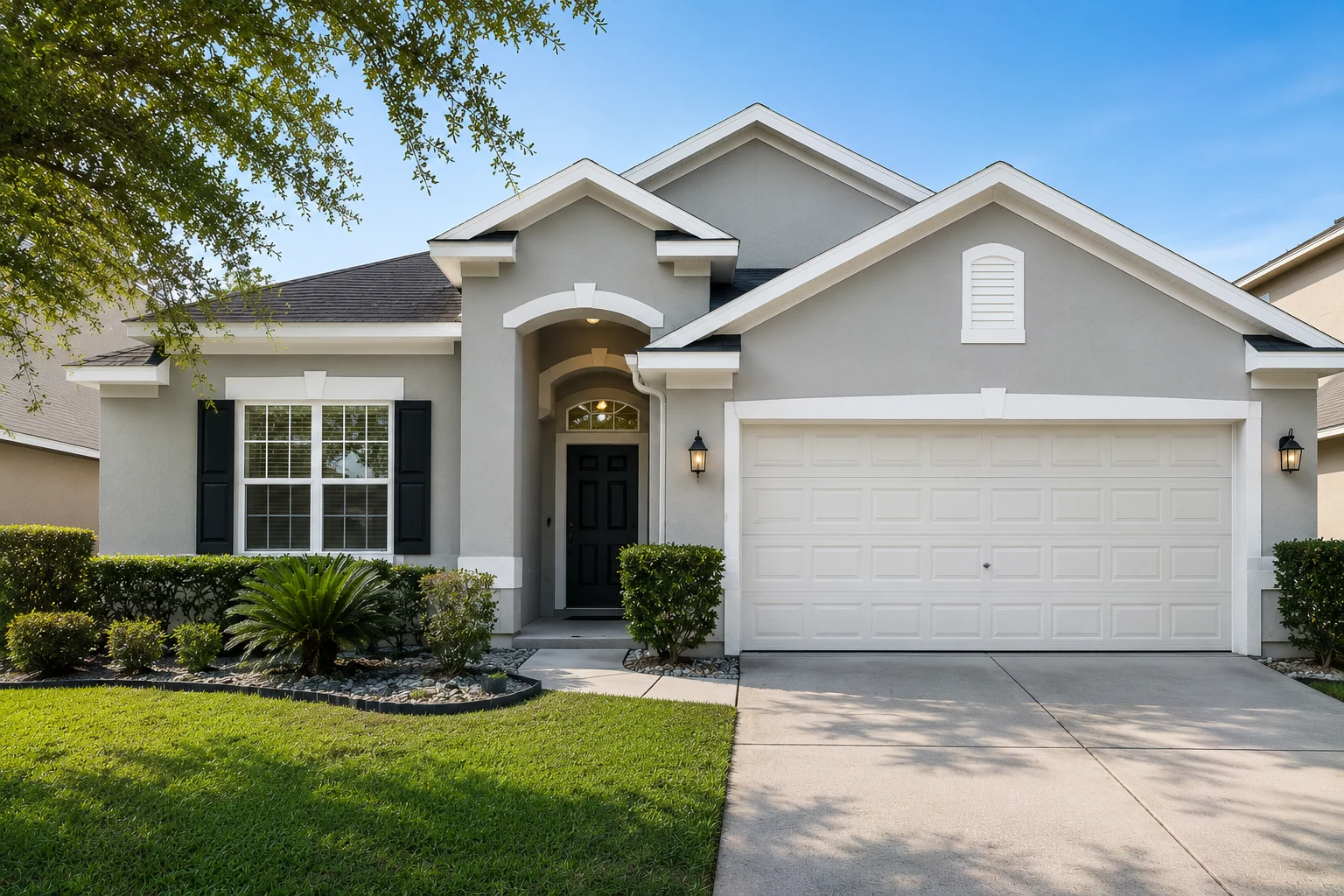
 ConceptPaintingRefreshed Stucco Exterior Concept
 ConceptPaintingCoordinated Whole-Home Palette Concept
These images are conceptual visualizations meant to illustrate the style and quality SAVAM House can deliver — not photographs of projects completed by our team.
Questions
Because the original coat was specified for handover day, not for a decade of Florida sun. On new construction it is typically applied thin and over minimal preparation, so it protects far less than its appearance suggests. The test costs nothing: run a hand along a wall that takes afternoon sun. If it comes away powdery, the coating is already breaking down at the surface regardless of how recently the house was built.
It matters the first time something needs touching up, and it matters more if you are not the one living there. Without a record, matching becomes an exercise in approximation, and approximation is visible on a wall. We take a reading from the existing surfaces and, at completion, document what went where — colors, sheens, and product lines — so the next person to touch the property is not starting from nothing.
Usually yes, and it is worth doing. One palette and one set of finishes across your properties means touch-up material is interchangeable, a turnover does not begin with identifying a color, and whoever handles small repairs can do so without asking. The exception is where a community palette or a genuinely different elevation makes it unwise, and we will say so rather than force consistency for its own sake.
It moves the money rather than saving it. While the coating is intact, you are buying paint. Once it fails, water reaches the substrate — stucco takes it in at hairline cracks, trim softens at the joints — and the next quote includes repair work that painting on time would have prevented entirely. Postponing is only cheaper if you sell before the bill arrives.
The exterior, almost always, because it is the only one doing a protective job. Interior paint is about appearance and cleanability; exterior paint is what stands between weather and the building. If the outside is sound and you are choosing purely on presentation, then interiors are the better spend — but a failing exterior should never wait behind a cosmetic interior update.
Enough to plan around. Humid air slows how quickly each coat releases moisture, so recoat and cure times run longer than the label suggests — and rushing that leaves finishes soft, streaky, or slow to harden. Outside, walls also need genuine drying time after washing, which is not the same as looking dry. We build those waits into the schedule rather than compressing them.
Three unglamorous things, none of them visible afterward. The wall has to be washed until the chalky residue is genuinely gone, because nothing bonds through it. Cracks have to be opened and filled rather than bridged with paint, or the same line reappears within a year. And the joints — window perimeters, trim junctions, control joints — have to be re-sealed so driven rain cannot get in behind the finish.
Very likely, since most of the newer communities here review exterior schemes before work can begin. The requirements differ from one association to the next, and what matters most is the lead time — that review runs on their calendar, not yours, and is frequently the longest item in an exterior project. Ask while you are still narrowing colors and it costs you nothing.
It holds up well when the preparation is right, and poorly when it is rushed — there is very little middle ground. Cooking film has to come off completely, the surface needs scuffing so the primer has something to grip, and that primer has to suit the factory coating underneath. Done properly, refinished fronts take daily use for years. Done quickly, they chip at the handles within one.
Plan by exposure and condition rather than by a fixed number. Sun-facing exterior walls will always need attention first, sometimes years ahead of sheltered elevations. Inside, wear and taste drive it — a hallway or a rental interior long before a guest bedroom. The useful habit is checking the exterior annually rather than waiting until it looks bad from the street, because by then the cheap window has closed.
Yes, and we consider it part of the work rather than a favor. At completion you get the colors, sheens, and product lines recorded by surface — body, trim, doors, ceilings, interiors. That record is what lets a small repair be handled without a site visit, lets a property manager act without calling you, and lets a future repaint match rather than start over.
Send us the outline through the form on this page — the property, whether you live in it or manage it from elsewhere, and what has prompted the enquiry. We will follow up to discuss it and, where it makes sense, come out and assess the condition before putting numbers to anything.
Tell us about the house and how it is used, and we will assess the condition honestly, tell you what is worth doing now, and put a documented scope behind the number.