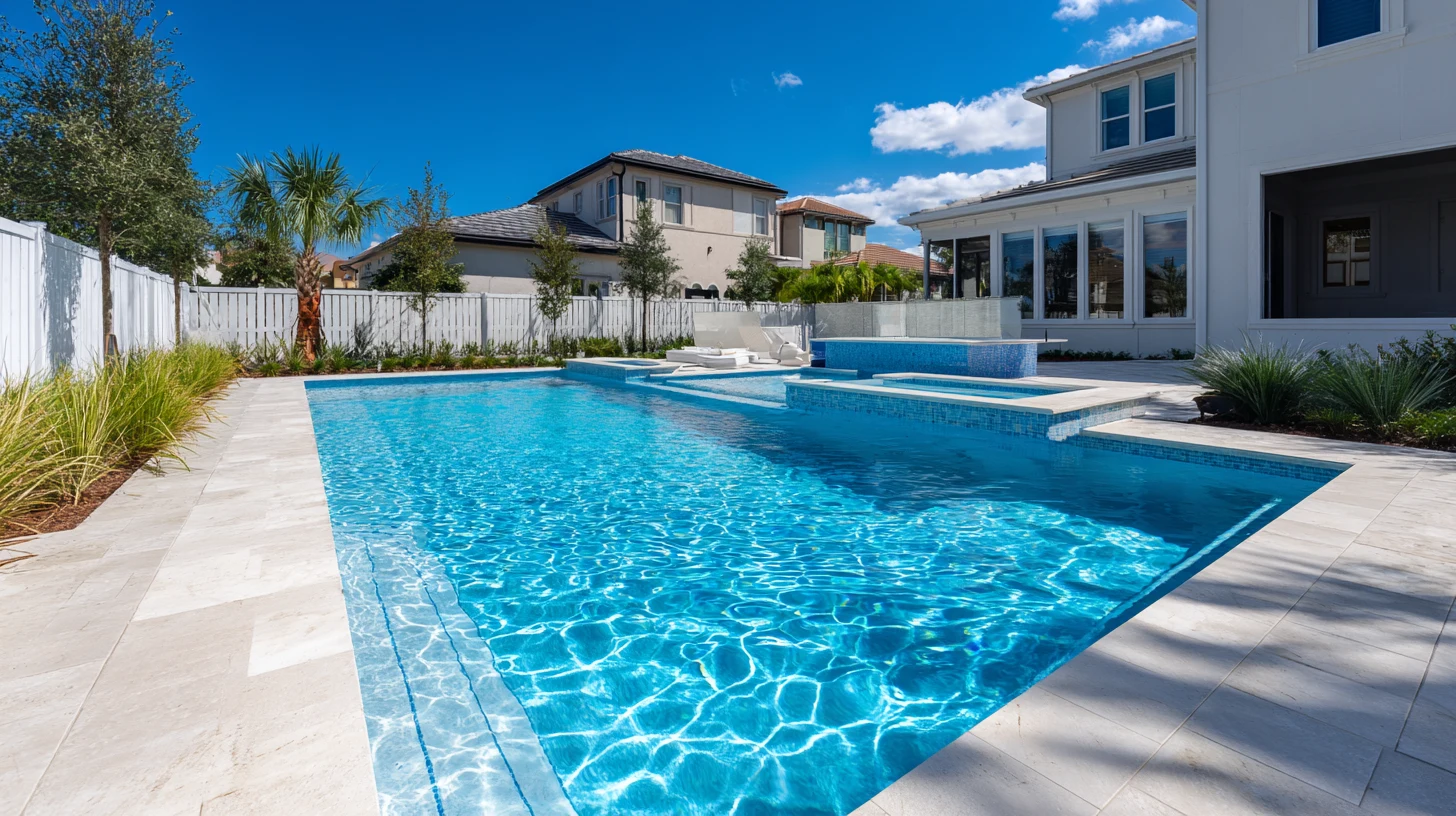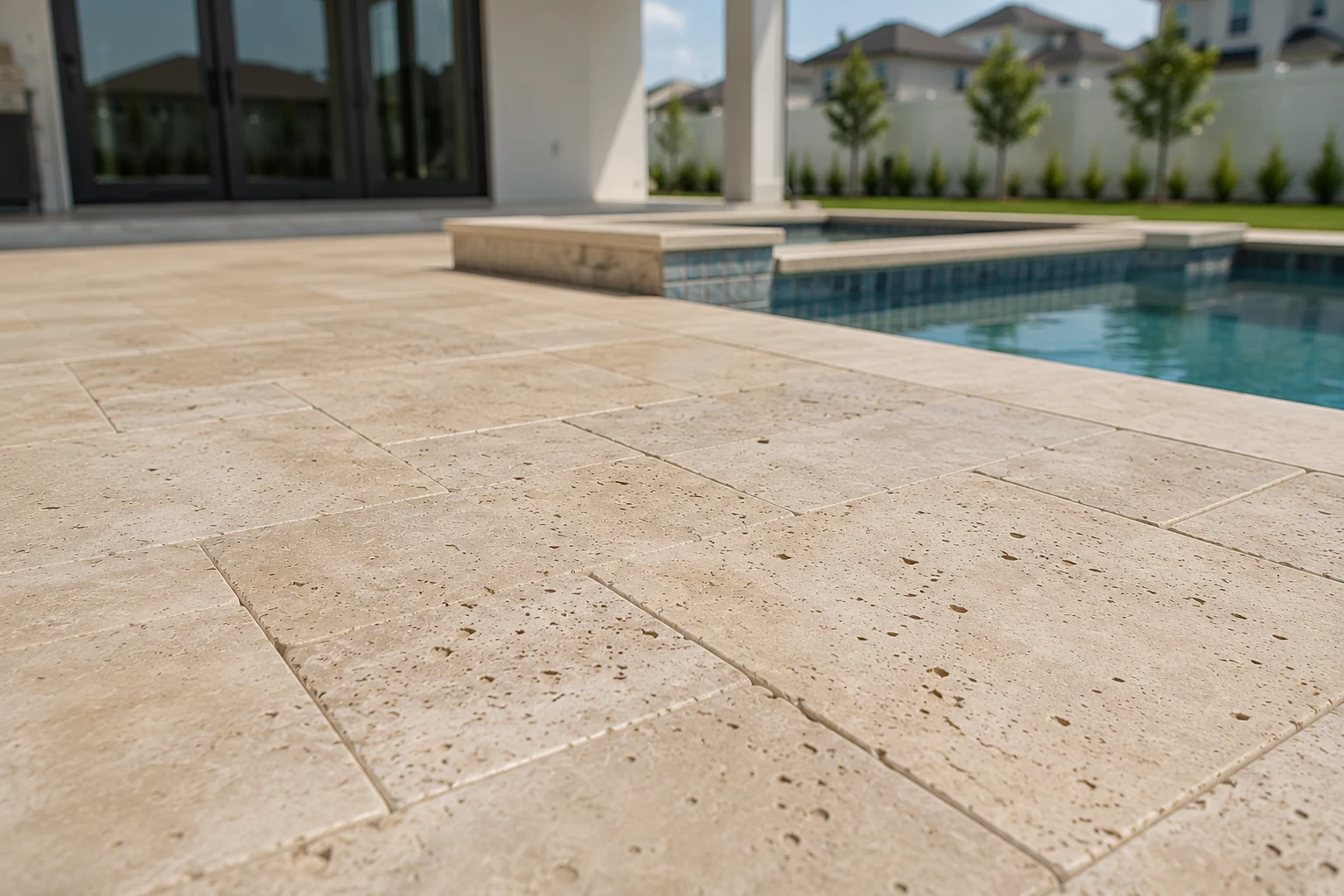
The short answer
Gunite (sprayed concrete) is the most flexible and longest-lived structure but costs the most, takes the longest to build and needs its interior finish renewed periodically. Fiberglass installs fastest and needs the least surface upkeep, but you choose from a manufacturer's fixed shapes and sizes. Vinyl liner has the lowest starting price and the shortest renewal cycle, because the liner itself is replaced from time to time.
In Central Florida, the deciding factors are usually design and groundwater. If you want a spa, a sun shelf, a specific shape or a size a factory mold does not offer, concrete is the only option. If a catalog shape fits your yard and speed matters, fiberglass is a strong choice, installed with a plan for the high water table.
Key takeaways
- Choose by design first. If no factory shell fits your yard and plans, the price comparison stops mattering.
- Fiberglass trades design freedom for speed and a smooth, low-upkeep surface. That is a fair trade for many families.
- Vinyl's low entry price comes with a recurring liner replacement that belongs in the ownership budget from day one.
- A high water table affects all three types. Ask how the pool resists groundwater, not only how it holds water.
- Concrete pools age at the surface, not the structure. Resurfacing renews the finish without rebuilding the pool.
The Short Answer for Central Florida
There is no universally best pool type. There is a best type for a given yard, a given budget and a given tolerance for upkeep, and the order in which you ask the questions decides the answer faster than any list of pros and cons.
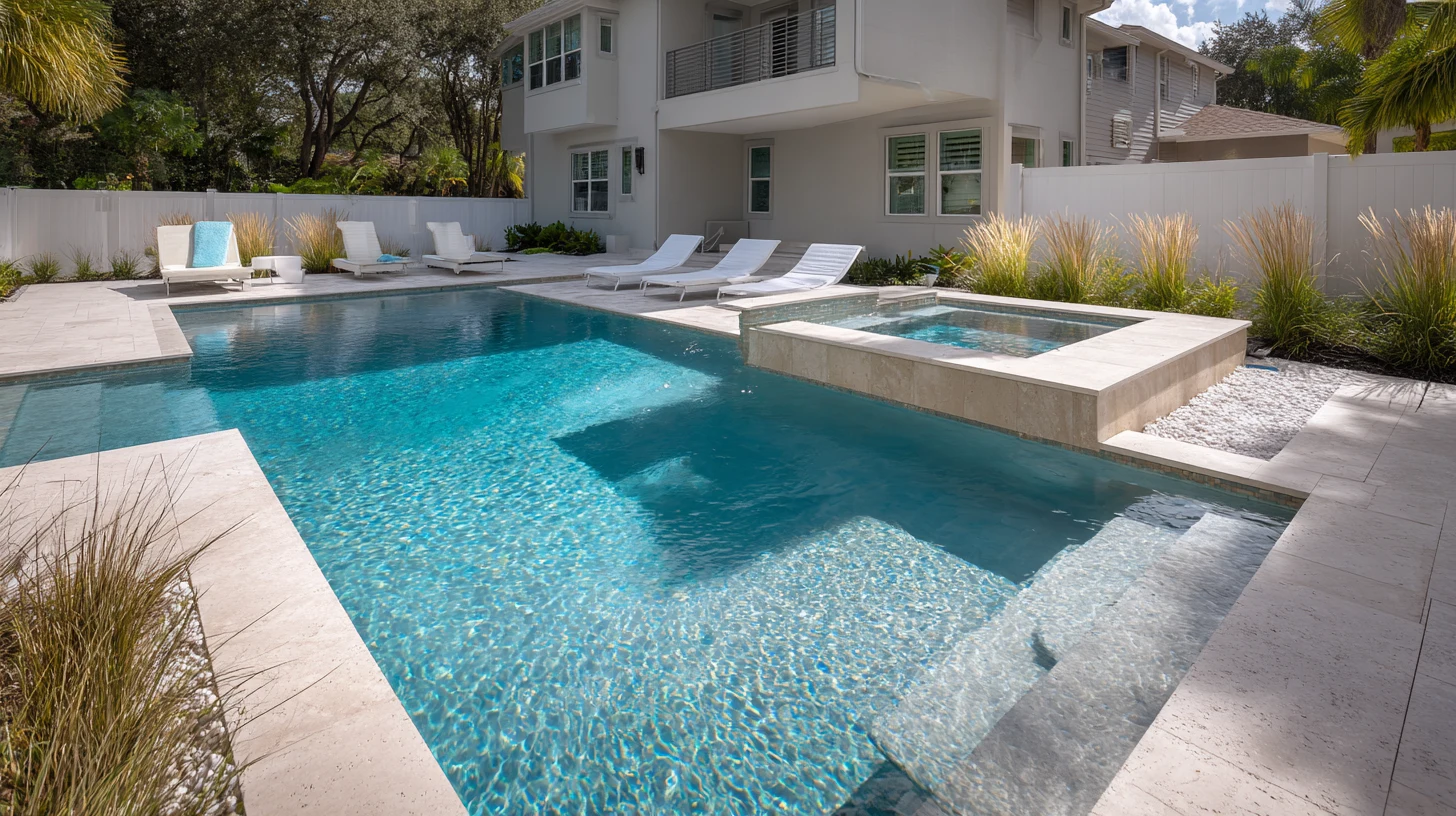
Start with design. If what you want is a rectangle or a freeform shape of a common size, all three types are on the table. If you want an attached spa with a spillover, a sun shelf of a particular depth, a vanishing edge, a lap lane of a specific length or a pool shaped to an odd lot, only concrete can be built to that drawing.
Then look at the ground. Much of Central Florida has a high water table, and a pool is a hollow box sitting in it. Each construction type handles groundwater differently, and a builder should be able to explain how theirs does.
Only then compare price and upkeep. The comparison is meaningful once you know which types are actually eligible.
Gunite: Fully Custom, Longest Build
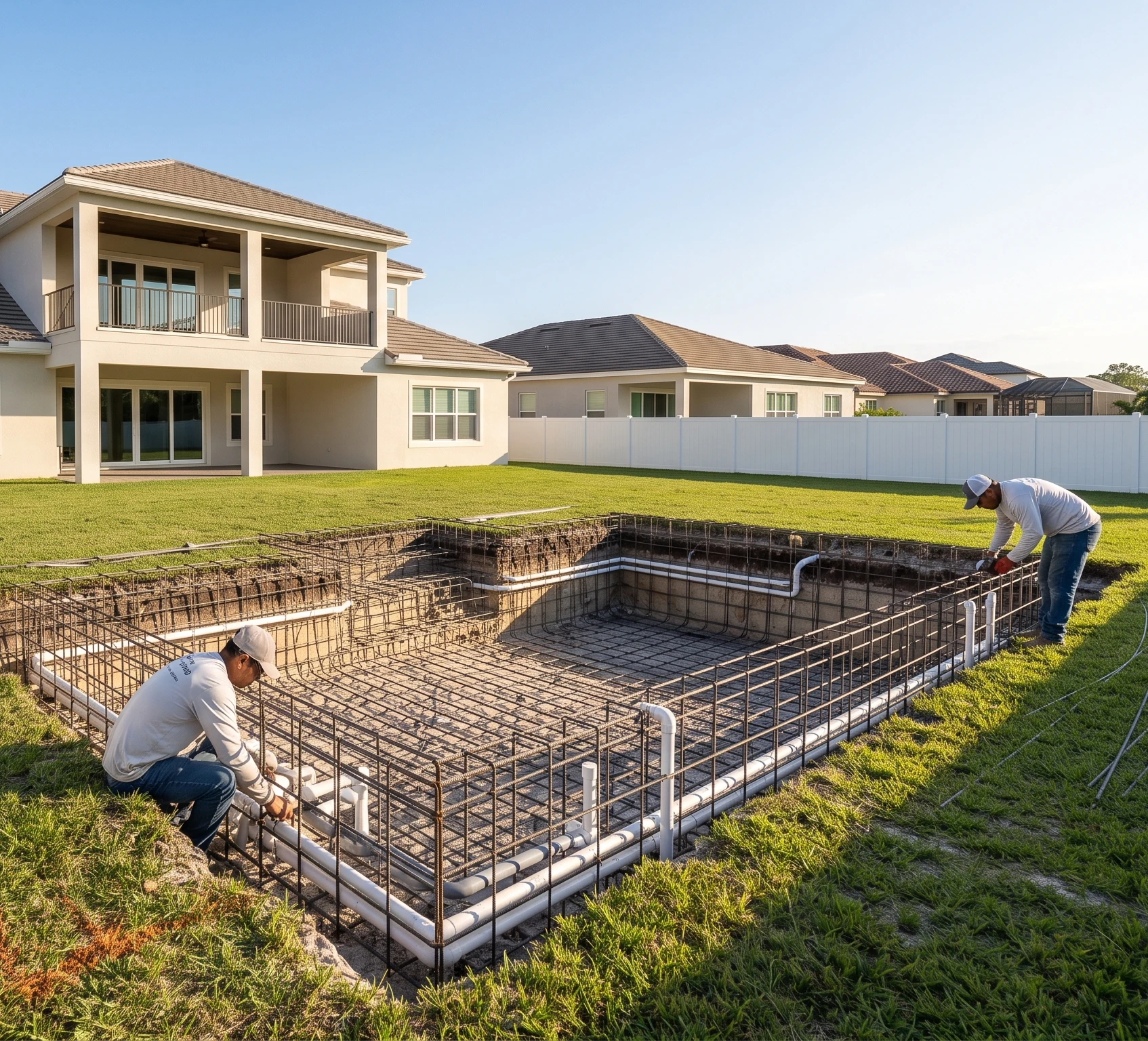
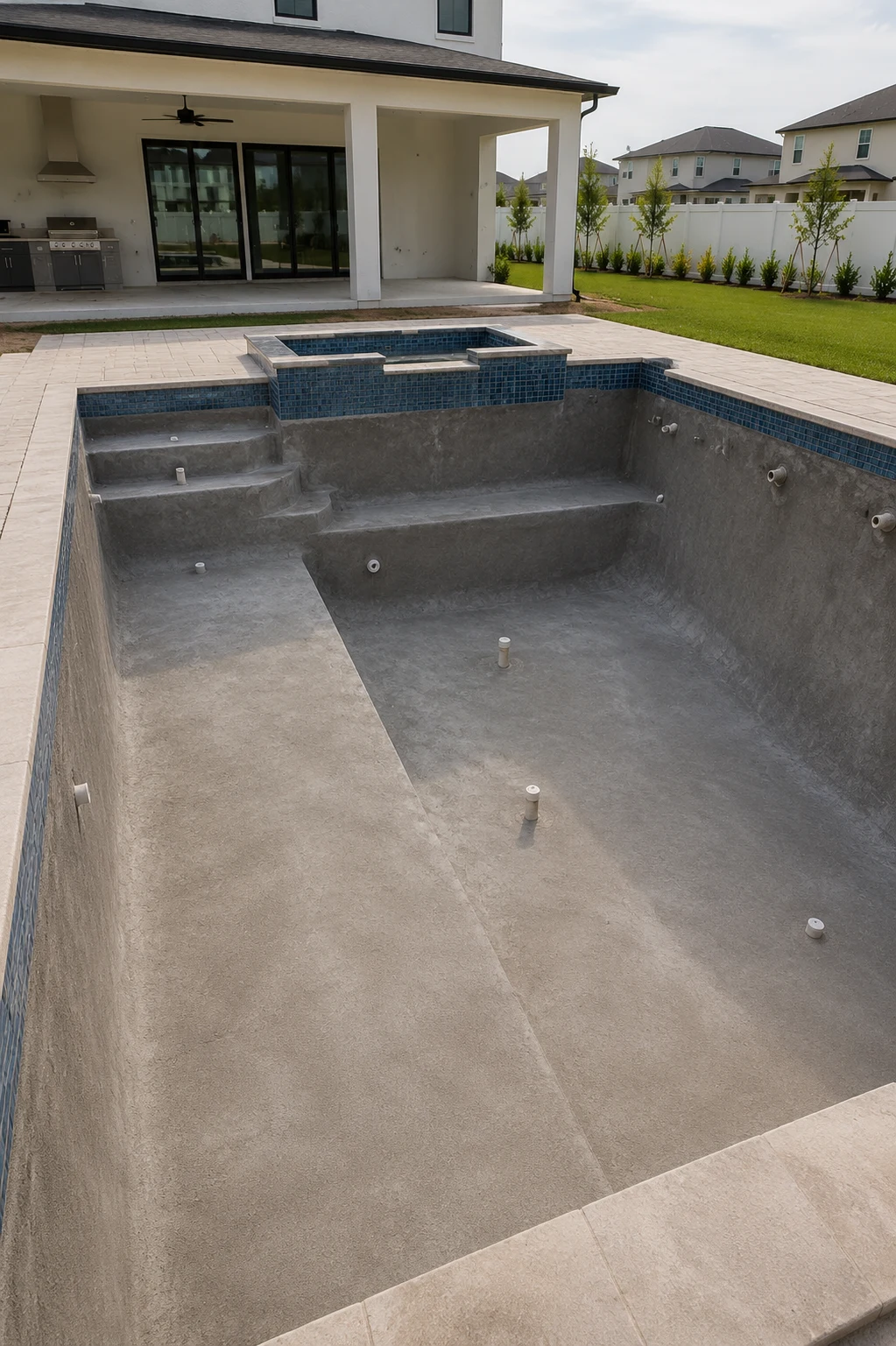
Gunite and shotcrete are the same idea: concrete sprayed at high velocity over a cage of reinforcing steel, shaped by hand while it is still workable. The structure is monolithic, built on site and engineered for the specific pool.
That is where its strengths come from. Any shape, any depth profile, integrated spas, benches, steps, beach entries and water features are all part of the same shell. A well-built concrete shell is also the most durable structure of the three, which is why these pools are measured in decades.
The surface is chosen separately from the structure. Plaster, quartz and pebble aggregate finishes give different colors, textures and lifespans, and the same shell can take a different finish when it is resurfaced years later.
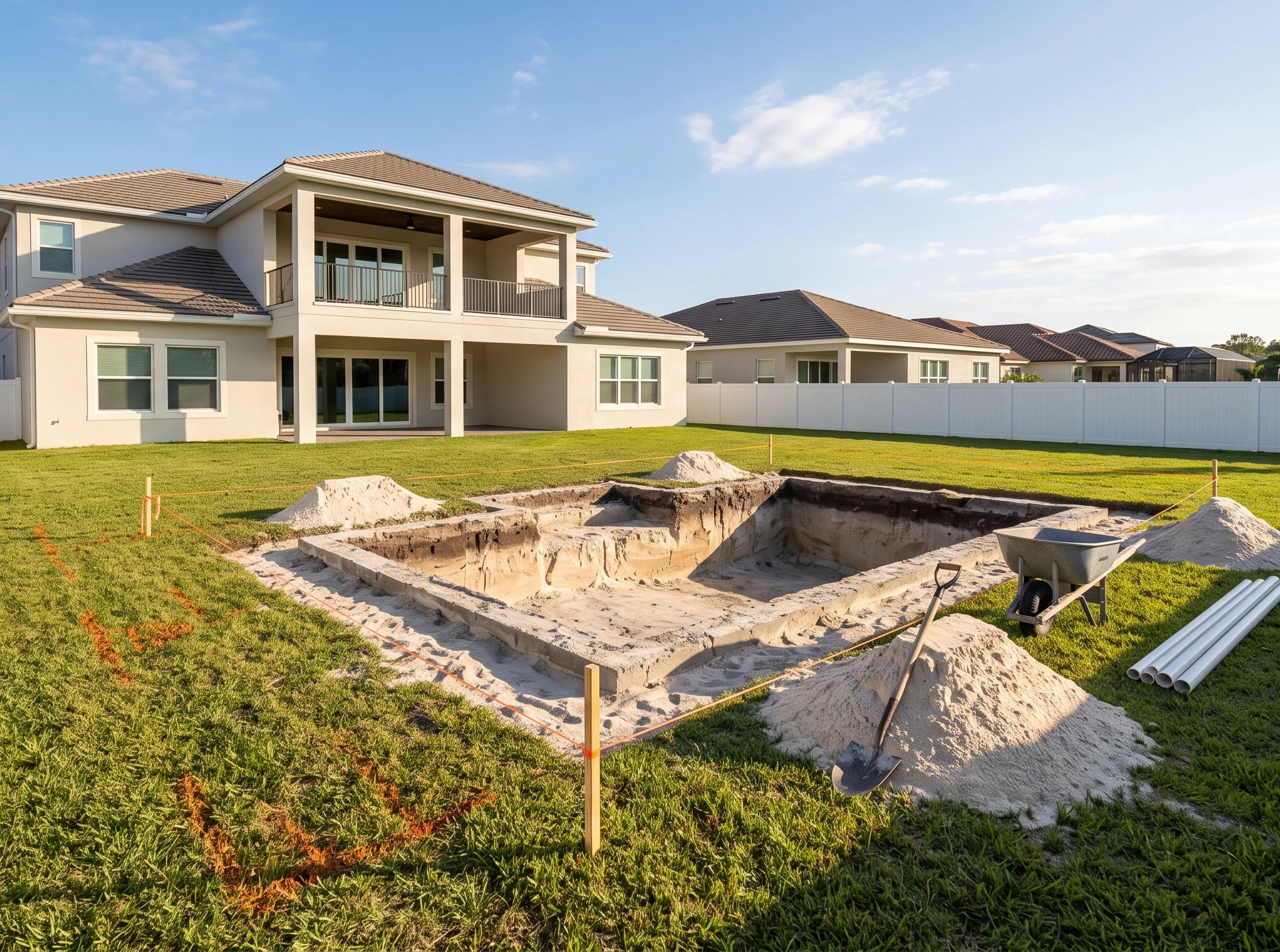
The trade-offs are time and surface. A concrete pool has the most phases, the most inspections and a cure period, so it takes the longest to build, as the full construction sequence makes clear. The interior finish, whether plaster, quartz or pebble, is porous compared with fiberglass, supports algae more readily if chemistry slips, and eventually needs renewing.
Fiberglass: Fast Install, Fixed Shapes
A fiberglass pool is a one-piece shell molded in a factory, trucked to the site and set into a prepared excavation. Because the shell arrives finished, installation takes much less time on site than a concrete build.
Its surface is the main day-to-day advantage. The gelcoat is smooth and non-porous, so it resists algae and is easy on feet, and it does not need the periodic resurfacing that concrete finishes do.
The limits are real. You choose from the manufacturer’s molds, and road transport restricts how wide and long a shell can be. Design changes after purchase are essentially impossible. Repairs to the gelcoat are possible, but color matching an older surface can be imperfect.
Installation has its own requirements. The shell is usually lifted into place by crane, so the crane needs a place to stand and a clear path over or around the house. It is set on a prepared base, leveled, and backfilled while it is filled with water so the pressure inside and outside stays balanced. How carefully that is done decides how the shell behaves in wet ground for the rest of its life.
Vinyl Liner: Lowest Entry, Highest Replacement Cycle
A vinyl liner pool is built from wall panels, usually steel or polymer, a floor base and a flexible vinyl membrane that holds the water. It is usually the least expensive way to get an inground pool, the liner is soft underfoot, and liners come in many patterns, so the look can change at each replacement.
The liner is also the weak point. It can be punctured, it fades and loses elasticity in strong sun, and it is replaced periodically over the life of the pool. Industry sources commonly cite a service life somewhere in the range of five to fifteen years, depending on sun, chemistry and wear. That replacement is not a failure; it is the ownership model, and it belongs in the budget.
Vinyl liner pools are comparatively uncommon in Central Florida. Groundwater is one reason: when the pool has to be drained, water pressure under the liner can lift it, so draining needs careful planning.
Side-by-Side Comparison Table
This comparison sets the three types against the criteria that usually decide the choice. It describes relative position, not specific prices, because prices depend on the design and the lot.
| Gunite / shotcrete | Fiberglass | Vinyl liner | |
|---|---|---|---|
| Design freedom | Any shape, depth, spa or feature | Manufacturer molds only | Standard shapes, some custom liners |
| Upfront cost | Highest ceiling | Middle, set by the model | Lowest starting point |
| Time on site | Longest | Shortest | Short to moderate |
| Structure lifespan | Longest when well built | Long | Walls long, liner replaced periodically |
| Surface upkeep | Porous finish, periodic resurfacing | Smooth gelcoat, least upkeep | Liner care, periodic replacement |
| Groundwater sensitivity | Designed into the structure | Shell must be anchored and backfilled for it | Liner can lift when drained |
Read by scenario, the table gives three clear answers.
Choose gunite or shotcrete when the design drives the decision: a spa built into the pool, a sun shelf of a particular depth, an unusual lot, a long lap lane, or a pool meant to last as long as the house. It is also the natural choice when the pool has to fit an existing lanai or screen enclosure exactly.
Choose fiberglass when one of the manufacturer’s shapes fits the yard, the lot allows crane access, and low surface maintenance and a short build matter more to you than design freedom.
Choose vinyl when the upfront budget is the deciding constraint and you are comfortable planning for liner replacement, with a builder who can explain how the pool will be protected from groundwater when it is drained.
Upfront Cost
Published 2026 cost guides place vinyl lowest, fiberglass in the middle and concrete with the widest and highest range. The real spread comes from the design: a small fiberglass pool and a small concrete pool are closer in price than a small fiberglass pool and a large concrete pool with a spa. Published cost ranges and the lines that move them matter more than the type label.
Lifespan
The structures last differently. A concrete shell and a fiberglass shell are both long-term structures when installed correctly. Vinyl liner pools have long-lived walls and a liner that is replaced on a cycle.
Maintenance
Fiberglass is the easiest surface to keep clean. Concrete finishes need consistent chemistry and brushing, especially in summer heat, when algae grows fastest. Vinyl needs chemistry kept in range to protect the liner and care around sharp objects.
Repair and Resurfacing
Concrete is renewed by resurfacing the interior, which gives the pool a new surface on the same structure. Fiberglass is repaired locally or refinished, a larger job when the whole surface is involved. Vinyl is repaired with patches until the liner is replaced. For concrete, the signs that a finish is due are mostly felt before they are seen.
Which Holds Up Best in Florida Heat and Water Table
Heat and UV work on every surface. Plaster etches and stains faster when chemistry drifts in hot water. Gelcoat can chalk or fade over many years of sun. Vinyl ages fastest in direct sun.
Groundwater is the Florida-specific test. A pool that is full pushes outward; an empty pool in wet ground is pushed upward. Concrete pools are commonly built with a hydrostatic relief valve in the floor so groundwater can enter rather than lift the shell when the pool is drained. Fiberglass shells depend on correct bedding, backfill and anchoring, which is why Orange County’s permit requirements for fiberglass pools ask the applicant to show a method to resist hydrostatic pressure. Vinyl liners are simply pushed up if water gets behind them.
The practical rule for any type: never drain a pool in Central Florida without asking the builder or a pool professional first, especially during the wet season.
Resale Value by Pool Type
There is no reliable data showing that buyers pay a fixed premium for one construction type over another. What appraisers and buyers react to is condition and fit. A clean, recently resurfaced concrete pool or a well-kept fiberglass pool reads as an asset; a faded liner or a stained, rough finish reads as a project the next owner has to fund.
Two points carry more weight than the type itself. First, whether the pool, deck and enclosure were permitted and finalized, which a buyer’s inspector and lender may check. Second, how much life is left in the surface, because a buyer will price the next resurfacing or liner into their offer.
Which One We Build, and When It Is Not the Right Call
Our custom pools are built as steel-reinforced concrete shells, because that is what allows a pool to be designed to the lot rather than chosen from a catalog. It is the right answer when the design needs it: an integrated spa, a specific shape, a sun shelf, a lap length, a pool that has to work with an existing lanai.
It is not automatically the right answer for everyone. If a standard fiberglass shape fits your yard, you want the least surface maintenance and you value a short build, fiberglass is a sensible choice, and we would rather say so than sell you a design you do not need. If budget is the only constraint and you accept periodic liner replacement, vinyl is a legitimate way in.
If you are leaning toward a design that only concrete can deliver, here is how we design and build a custom concrete pool around a specific lot.
Share this article