The short answer
Published 2026 cost guides put a typical inground pool in the United States at roughly $44,000 to $87,000, with an average near $66,000 (Angi), and a concrete or gunite pool at roughly $50,000 to $120,000 (HomeGuide). Those are national figures for the pool itself. Around Orlando, the total a homeowner actually signs for is usually higher, because the deck, the screen enclosure and a heater are separate lines that the headline numbers often leave out.
What moves a quote most is size and depth, the spa and water features, the finish level, how much deck surrounds the pool, whether a screen enclosure is included, and site conditions such as a high water table or a tight side yard for equipment. Two quotes that differ by tens of thousands are often pricing different scopes, not different prices.
Key takeaways
- Compare scopes before you compare totals. A quote without deck, enclosure or heater is not cheaper; it is shorter.
- The shell is rarely the biggest variable. Deck area, spa, finish tier and enclosure size move the total more than the pool's length.
- Site conditions can add cost you cannot see on a design: groundwater, fill, access and distance to the equipment pad.
- A published national range is a starting point for budgeting, not a quote. Local labor, code and the lot decide the real number.
- Ownership costs continue after the build: electricity, chemicals, service, and a future resurfacing of the interior finish.
- Allowances are where budgets drift. Ask what each allowance buys and what happens if your selection costs more.
Average Pool Cost: What the Published Numbers Say
Three published figures are worth knowing, as long as you remember what they measure.
Angi’s 2026 national cost guide puts the average inground pool at about $66,000, with most homeowners paying roughly $44,500 to $87,300. HomeGuide’s 2026 guide puts a concrete or gunite pool at $50,000 to $120,000. The same HomeGuide material puts a pool screen enclosure at about $5 to $15 per square foot, or $4,000 to $14,000.
Those are national numbers, gathered from projects across very different markets, and they are ranges for a pool, not for a finished backyard. Nobody publishes a statistically reliable average for Orlando alone. What local builders advertise online spreads so widely that it tells you more about what each one includes than about what pools cost.
So treat the national ranges as a reference frame, then build your own number from the lines below. That is also how a good quote is built.
Cost by Pool Type: Gunite, Fiberglass, Vinyl
The three construction types sit in different places in those guides. Vinyl liner pools tend to start lowest, fiberglass sits in the middle for a comparable size, and concrete (gunite or shotcrete) has the widest range because it is the only type built entirely to a custom shape.
| Type | Where it sits in published ranges | Main cost later in ownership |
|---|---|---|
| Vinyl liner | Lowest starting price | Periodic liner replacement |
| Fiberglass | Middle, set largely by the shell model | Relatively little surface upkeep |
| Gunite / shotcrete | Widest range, highest ceiling | Periodic interior resurfacing |
The table is about purchase price, not value. A concrete pool costs more mainly because it is designed and built on site; that is also what allows the spa, benches, beach entry and irregular shapes that factory shells cannot offer. How each type ages in Florida heat and groundwater is a separate question from what it costs to build, and often the more important one.
What Drives the Price Up or Down
Two pools with identical dimensions can be priced very differently. The difference usually hides in one of four places.
Size and Depth
Surface area drives the amount of steel, concrete, finish and tile. Depth drives excavation and, in Central Florida, how much groundwater you are likely to meet. A deep diving end costs more than its extra gallons suggest, and many owners who ask for one end up choosing a uniform depth after pricing it.
Soil and Water Table
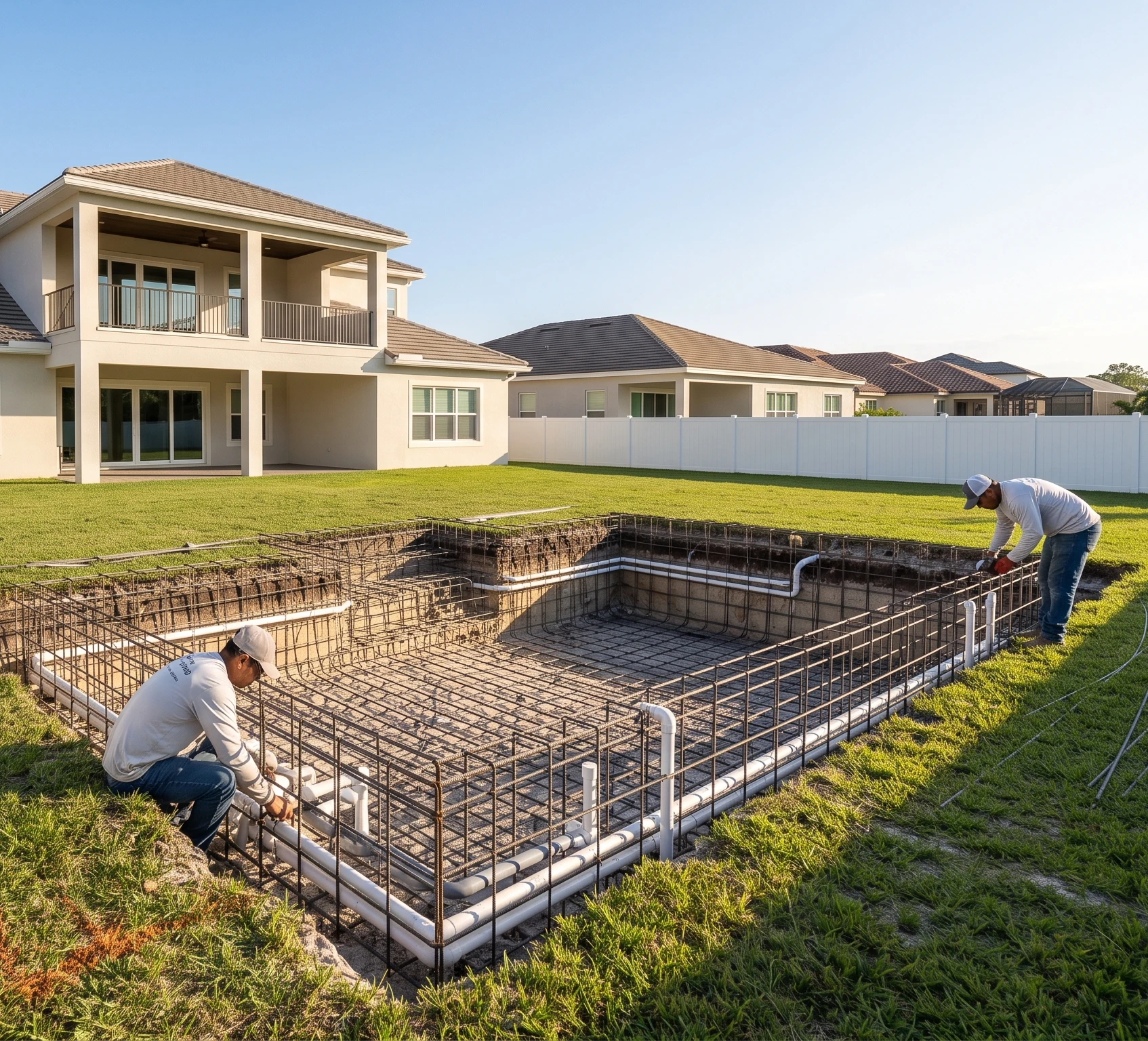
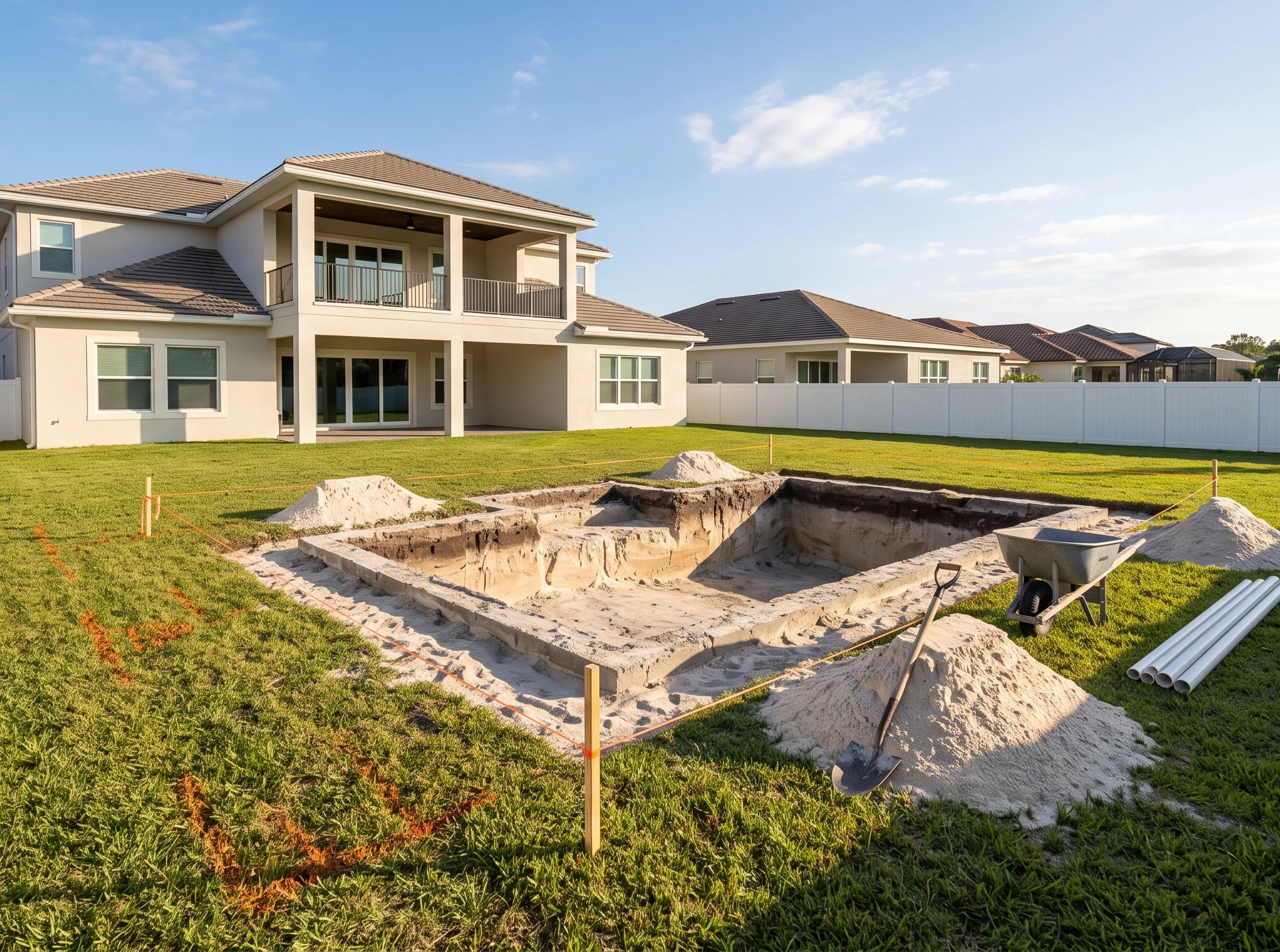
Sandy soil is easy to dig and harder to hold open. Where the water table is high, the excavation may need pumping during construction, and the pool has to be designed to resist groundwater pressure when it is drained for future work. None of that is visible on a rendering, and all of it is real cost.
Access for Equipment
Excavators, dump trucks and a concrete pump have to reach the back of the lot. A wide side yard is cheaper than a narrow one; a lot where equipment must be craned over the house is in a different category. Restoring the path afterward, including sod, irrigation and sometimes a fence, belongs in the budget.
Finish Level
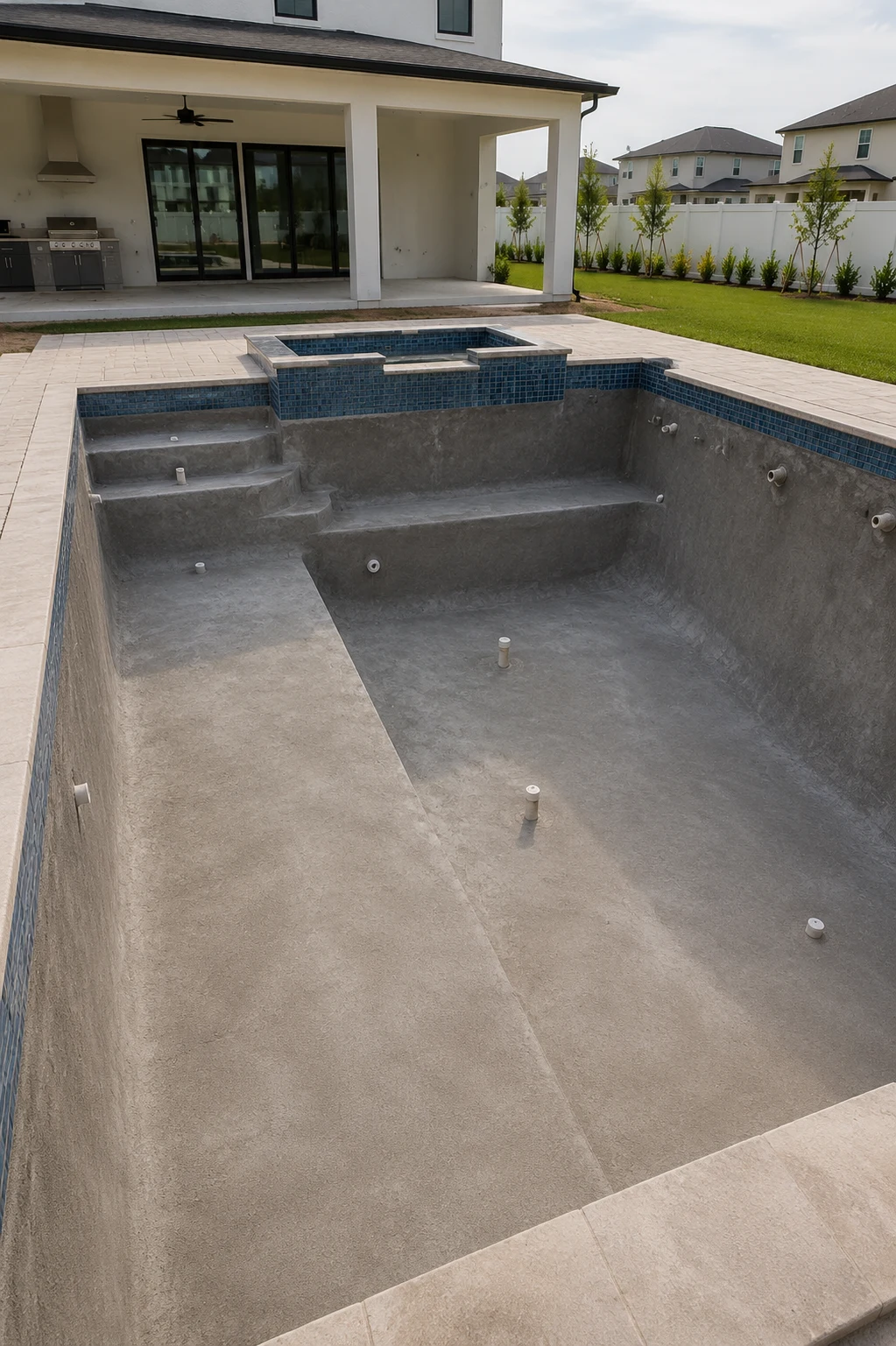
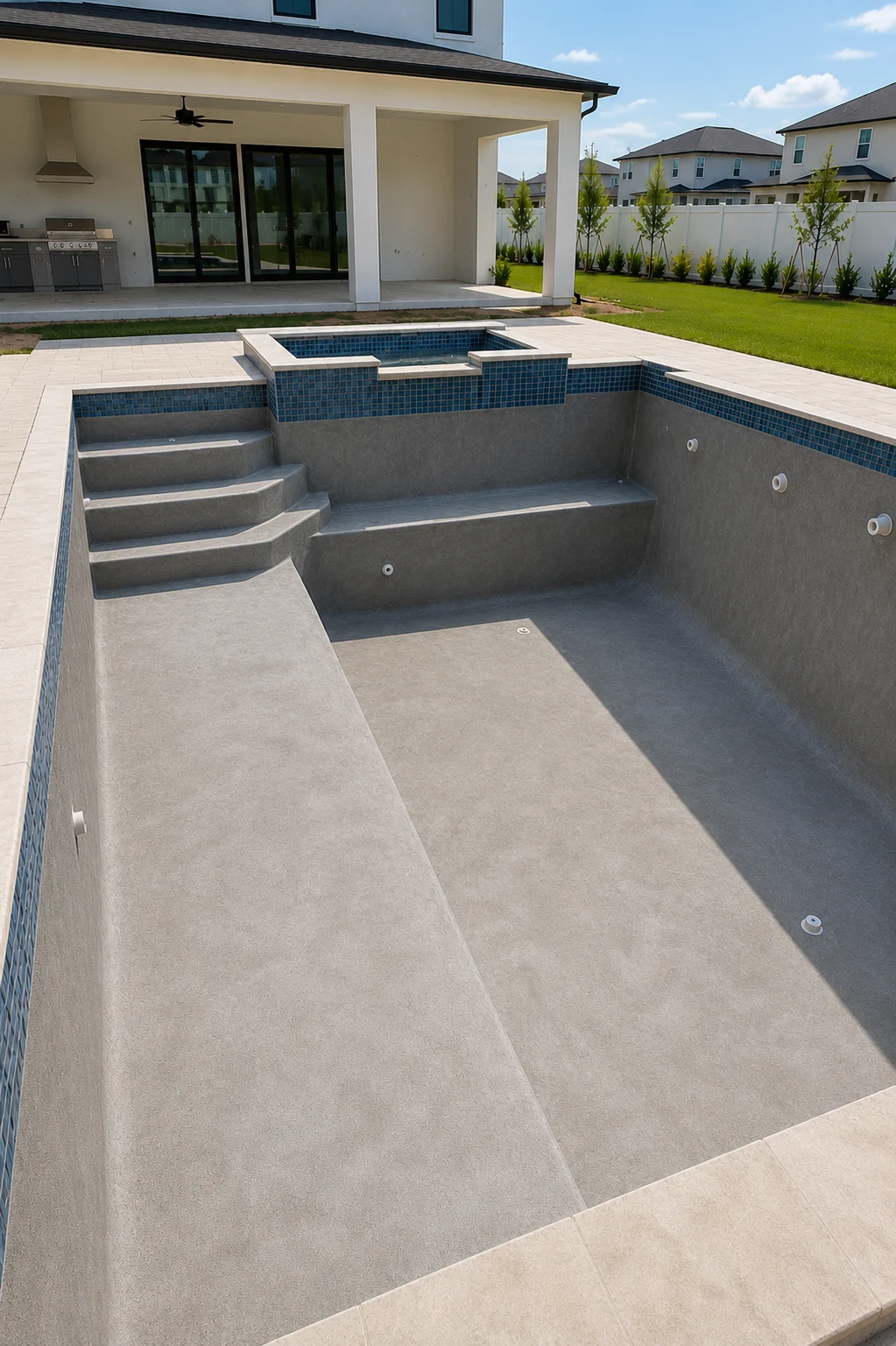
Standard plaster, quartz and pebble aggregate finishes differ in both price and lifespan. Waterline tile ranges from basic ceramic to glass mosaic. Coping ranges from pavers to cut natural stone. Each step up is modest on its own and significant in combination.
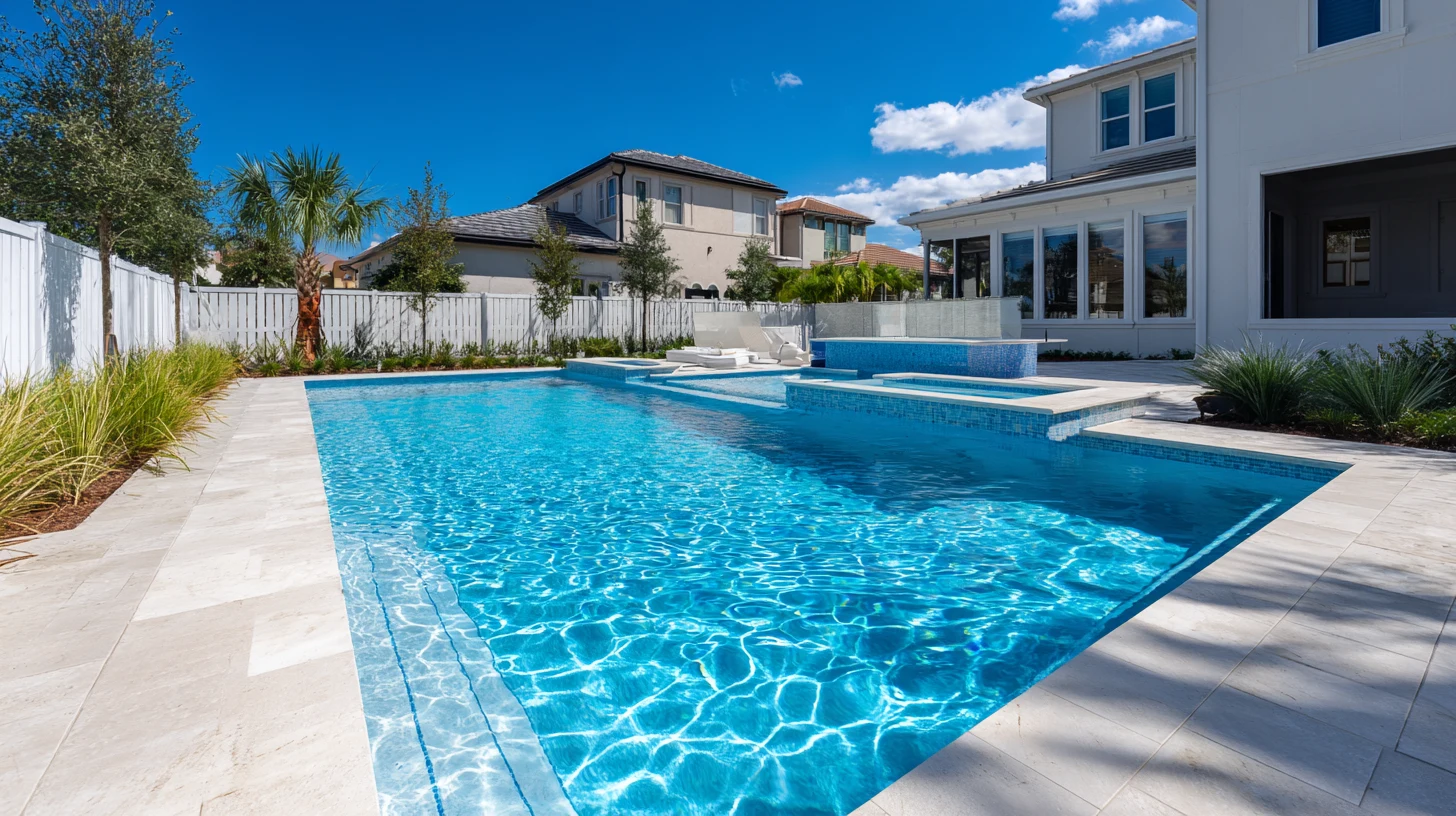
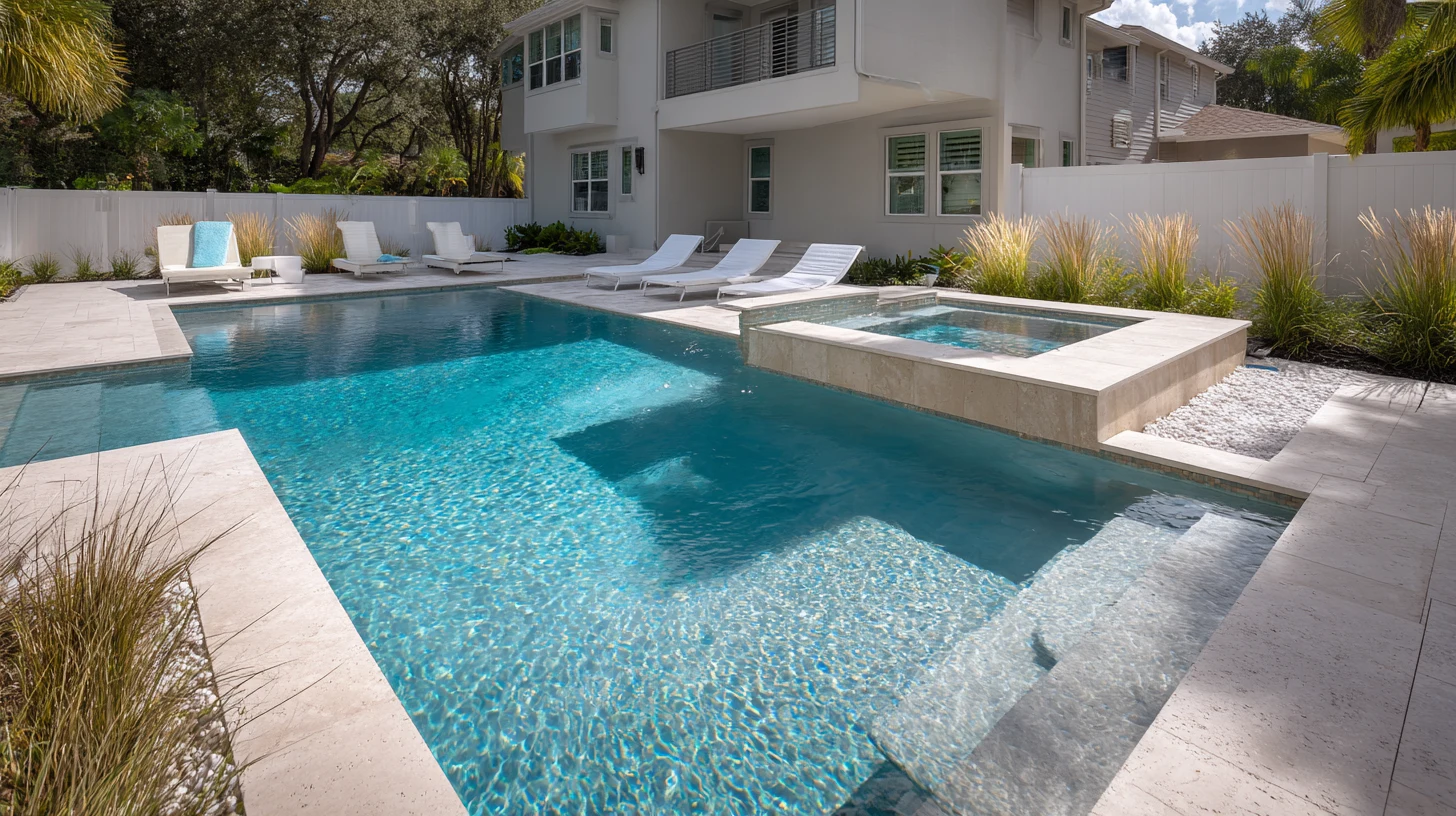
Features sit on top of that. An attached spa is effectively a second, smaller pool with its own plumbing, heat and controls. Sun shelves, raised walls, spillovers, sheer descents and bubblers each add structure, plumbing and, in some cases, engineering.
Where Savings Usually Come From
When a design comes back over budget, the owners who stay happy with the result usually trim in the same places. A uniform depth instead of a deep end. A smaller spa, or a spa planned for a later phase with the plumbing stubbed in now. Less deck area, or a coated concrete deck instead of stone. An equipment pad close to both the pool and the electrical panel, which shortens every run.
What rarely pays off is cutting below the surface: less steel than the engineer specified, a pump sized for the showroom rather than the plumbing, or skipping conduit for lights you will want later. Those savings are invisible until they are expensive.
Deck, Screen Enclosure and Landscaping Costs
This is where most budget surprises come from, because these lines are often quoted separately, by a different trade, or not at all.
The deck is priced mostly by area and material. Pavers and travertine carry a base preparation cost; poured concrete with a textured coating is usually less; the choice between them is really about heat, maintenance and repairs, which is where a comparison of deck surfaces helps more than a price list.
The screen enclosure is priced by area, height, roof style and wind design. The HomeGuide per-square-foot range quoted above is a national figure; an enclosure over a large pool and deck, engineered for Florida wind loads, can sit well above the low end of it. What a cage involves and why it is engineered matters for its price as much as its footprint.
Landscaping is the line most owners forget. Sod replacement along the construction path, new planting beds and irrigation repairs are small individually and noticeable together.
Heating, Lighting and Automation
A heater is optional in Central Florida but common, because it decides whether the pool gets used in the cooler months. Heat pumps, gas heaters and solar systems cost differently to buy and very differently to run, and the right one depends on how you use the pool, as the comparison of heat pump, gas and solar heating shows.
LED lighting and automation are smaller lines. They are easiest and cheapest to include during construction, while conduit and wiring can still run under the deck.
Permit and Engineering Fees
Permit fees are set by the jurisdiction that issues the permit, published in its fee schedule, and are often tied to the project’s value. Engineering is priced by the engineer. Neither is large compared with the pool, but both should appear on the quote, together with any surveys the building department requires. If a quote does not mention them, ask whether they are included or will be billed later.
Ongoing Cost of Ownership
The build is the first cost, not the last. Budget for electricity to run the pump and any heater, chemicals or a salt system’s cell replacement, regular service if you do not maintain the pool yourself, and screen repairs after storms.
The pump runs every day, so its efficiency matters more than its purchase price. Variable-speed pumps can run for long hours at low speed, which moves the same water with far less electricity than an older single-speed pump, and federal efficiency standards have pushed most new inground pool pumps in that direction. Ask what speed schedule the builder plans to program, not only which pump model is listed.
The largest recurring item is the interior finish of a concrete pool, which eventually needs resurfacing. HomeGuide’s 2026 national figures put pool resurfacing at roughly $6,000 to $15,000 depending on size and material. When it is due depends mostly on water chemistry, and the signs that a finish needs resurfacing show up years before it fails.
How to Read a Pool Quote Line by Line
A useful quote is itemized. This table is a checklist for comparing two of them.
| Line | What it should say | What to ask if it is missing |
|---|---|---|
| Pool and spa | Dimensions, depths, surface area, features | Is the spa priced separately? |
| Structure | Steel, shell type, engineering | Who provides the engineering? |
| Plumbing and equipment | Pump, filter, sanitizer, brand and model | Are these allowances or models? |
| Electrical | Bonding, lights, run to the panel | Does the panel have capacity? |
| Tile, coping, finish | Product or allowance with its value | What does the allowance buy? |
| Deck | Material and square footage | Who prepares the base? |
| Enclosure | Included or not; size and roof | Separate contract or permit? |
| Permits, surveys, fees | Included or billed later | Which ones and how much? |
| Exclusions | Site conditions, restoration, dewatering | How are extras priced? |
When two quotes cover the same lines, the comparison becomes simple. When they do not, the lower total usually belongs to the quote that left something out.
Financing a Pool in Florida
Most pools are paid for with cash, home equity or a loan designed for home improvement. The common routes are a home equity line of credit, a home equity loan, a cash-out refinance, or an unsecured personal loan from a lender that markets pool loans. Each carries different rates, terms and risks, and whether any makes sense depends on your equity and the interest environment when you build.
Whatever you use, match the loan’s disbursement to the contract’s payment schedule, so money is released as work is completed rather than in advance. The broader comparison of these options is in our guide to home remodeling costs and financing.
If you already know roughly what you want, the most accurate number will come from pricing that exact scope on your lot. When you request an estimate for a custom pool, ask for the pool, the deck and the enclosure as separate lines; it is the easiest way to see which of your choices are moving the total.
Share this article