The short answer
Resurface a concrete pool when the finish is rough enough to scrape feet or snag swimsuits, when stains and etching no longer respond to brushing and balanced chemistry, when patches sound hollow or flake off (delamination), or when the surface keeps pulling chemistry out of balance. Cosmetic fading alone is not a reason; loss of a smooth, sound surface is.
Standard plaster generally wears out soonest, quartz lasts longer and pebble aggregate finishes last longest. National averages published by HomeGuide for 2026 run from about $6,000 to $15,000, depending on size and finish. If you also want to change the shape, depth, tile or equipment, price a renovation at the same time rather than resurfacing twice.
Key takeaways
- Texture and soundness decide it, not color. A faded but smooth finish can wait; a rough or flaking one cannot.
- Water chemistry is the biggest lifespan factor in Florida heat. A new finish on the same chemistry will age the same way.
- Draining a pool in Central Florida carries groundwater risk. It should be planned by the contractor, not done by the owner.
- Tile and coping are cheapest to replace during a resurface, because the pool is already empty.
- If you want a sun shelf, a different depth or new features, resurfacing first and renovating later pays for the finish twice.
Warning Signs You Can See and Feel
Owners usually notice the problem with their hands and feet before their eyes. A finish that was smooth now feels like sandpaper on the steps. Children come out with scraped toes. Swimsuits pill where people sit on the benches.
Look next. Stains that return right after brushing, gray or dark mottling, patches where the finish has worn through to a darker layer, and bits of material in the filter all say the surface is breaking down. Then listen: tap suspicious areas with the handle of a brush after the water is lowered or during service. A hollow sound means the finish has separated from the shell.
Staining and Etching
Stains come from metals in the water, organic debris like leaves, or minerals. Many respond to targeted treatment and balanced chemistry. Etching is different: it is the surface itself being dissolved by water that is too aggressive, leaving it rough and porous. Stains can often be treated; etching is lost material.
Rough Spots and Delamination
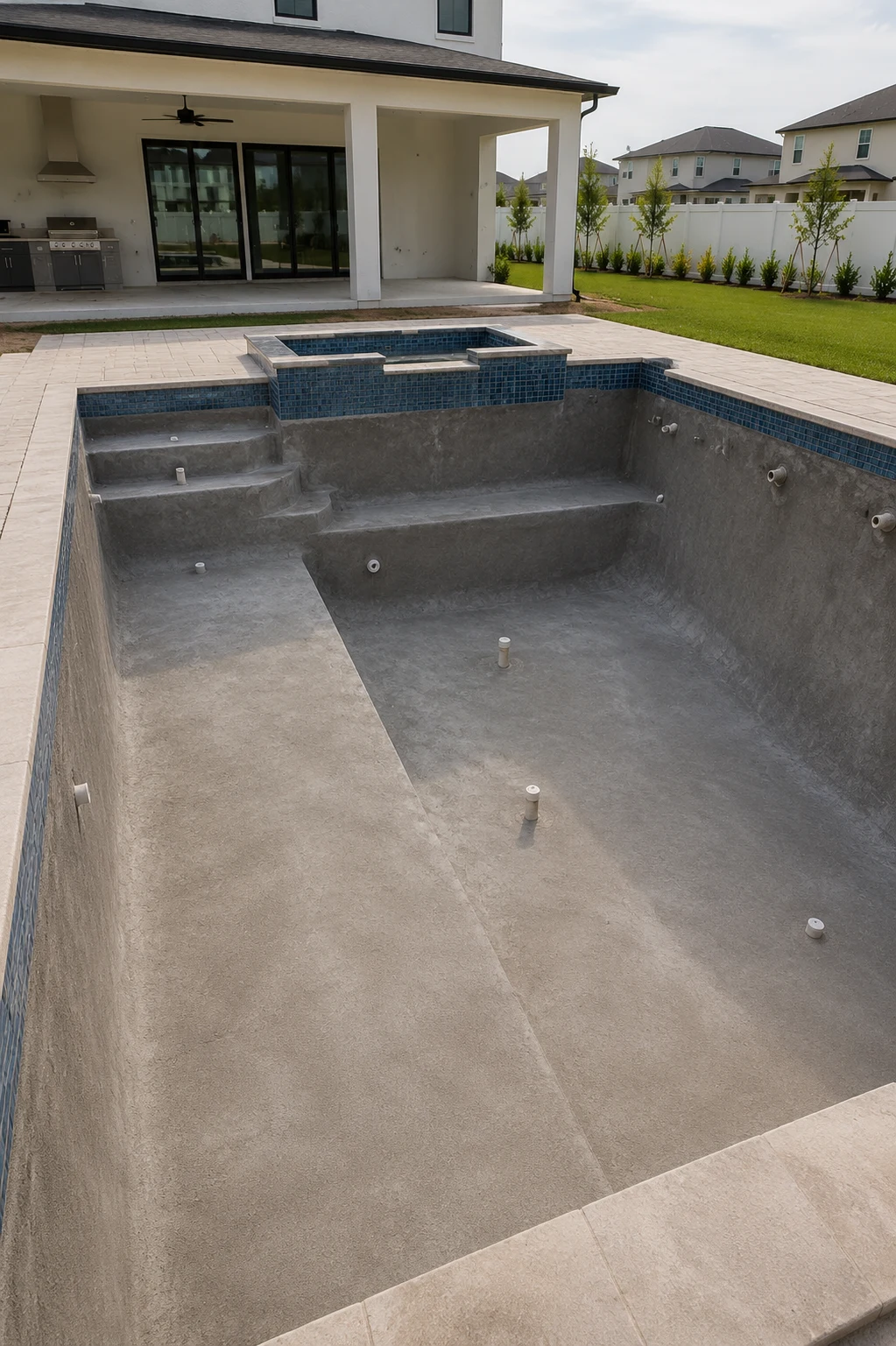
Roughness that spreads across the floor and steps usually means the top of the finish has worn away. Delamination is more serious. Areas of finish lose their bond to the shell, sound hollow, then crack and flake off, often around steps, benches and the waterline. Once delamination starts it tends to spread, and patching rarely matches or lasts.
Chemistry as a Root Cause
In Florida’s heat, water chemistry moves fast. Water that is persistently low in calcium hardness or pH pulls material out of cementitious finishes; water that is scaling deposits minerals on them. Salt systems, heavy rain and high bather loads all shift the balance. Resurfacing without fixing the chemistry that caused the damage gives a new finish the same fate.
How Long a Pool Finish Lasts in Florida
There is no calendar date, because chemistry, sun, use and the original application decide it. General expectations, drawn from industry sources and manufacturer claims, look like this.
| Finish | Relative lifespan | What shortens it |
|---|---|---|
| Standard plaster | Shortest of the three | Aggressive or poorly balanced water, stains |
| Quartz | Longer than plaster | Same chemistry issues, more slowly |
| Pebble aggregate | Longest; manufacturers claim 20+ years with proper care | Chemistry neglect, poor application |
The table ranks the finishes rather than promising years, because the same finish can last twice as long in one pool as in the pool next door. The one consistent pattern is that a well-maintained pool keeps any finish longer than a neglected one keeps a premium finish.
The Routine That Extends a Finish
Most of a finish’s life is decided by habits that take minutes. The frequencies below are a common routine for a residential pool in Florida; heavy use, rain and a salt system can call for more.
| Task | Typical frequency | Why it matters to the finish |
|---|---|---|
| Test sanitizer and pH | Several times a week in summer | Keeps water from etching or scaling the surface |
| Check alkalinity and calcium hardness | Monthly, and after heavy rain | Low hardness pulls material out of plaster |
| Brush walls, floor and steps | Weekly | Prevents algae and mineral deposits from bonding |
| Clean waterline tile | As scum lines appear | Keeps scale from building up at the waterline |
| Clean or backwash the filter | By pressure gauge or manufacturer schedule | Poor filtration leaves debris to stain the floor |
| Walk and feel the surface | Every few months | Catches roughness and hollow spots early |
Keeping a simple log of readings also helps if you ever need to make a warranty claim on a new finish.
Plaster, Pebble, Quartz and Aggregate Finishes
Standard white plaster is the traditional finish. It is the least expensive, gives the classic light-blue water color and shows stains and wear most readily.
Quartz finishes add crushed quartz aggregate to the plaster mix. They are harder and more stain-resistant than plain plaster and come in more colors.
Pebble and other exposed-aggregate finishes use small stones or glass beads set in a cement binder, exposed during finishing. They are the most durable and have the most texture, which some swimmers love and others find rough on feet. Smaller-grain versions reduce that.
The choice between them is a trade-off between cost now and cost later. If the pool will stay in the family for a long time, the longer-lived finish usually makes sense. Structure matters as well: these finishes apply only to concrete pools, one of several differences between pool construction types that show up years after the build.
Tile Line and Coping Replacement
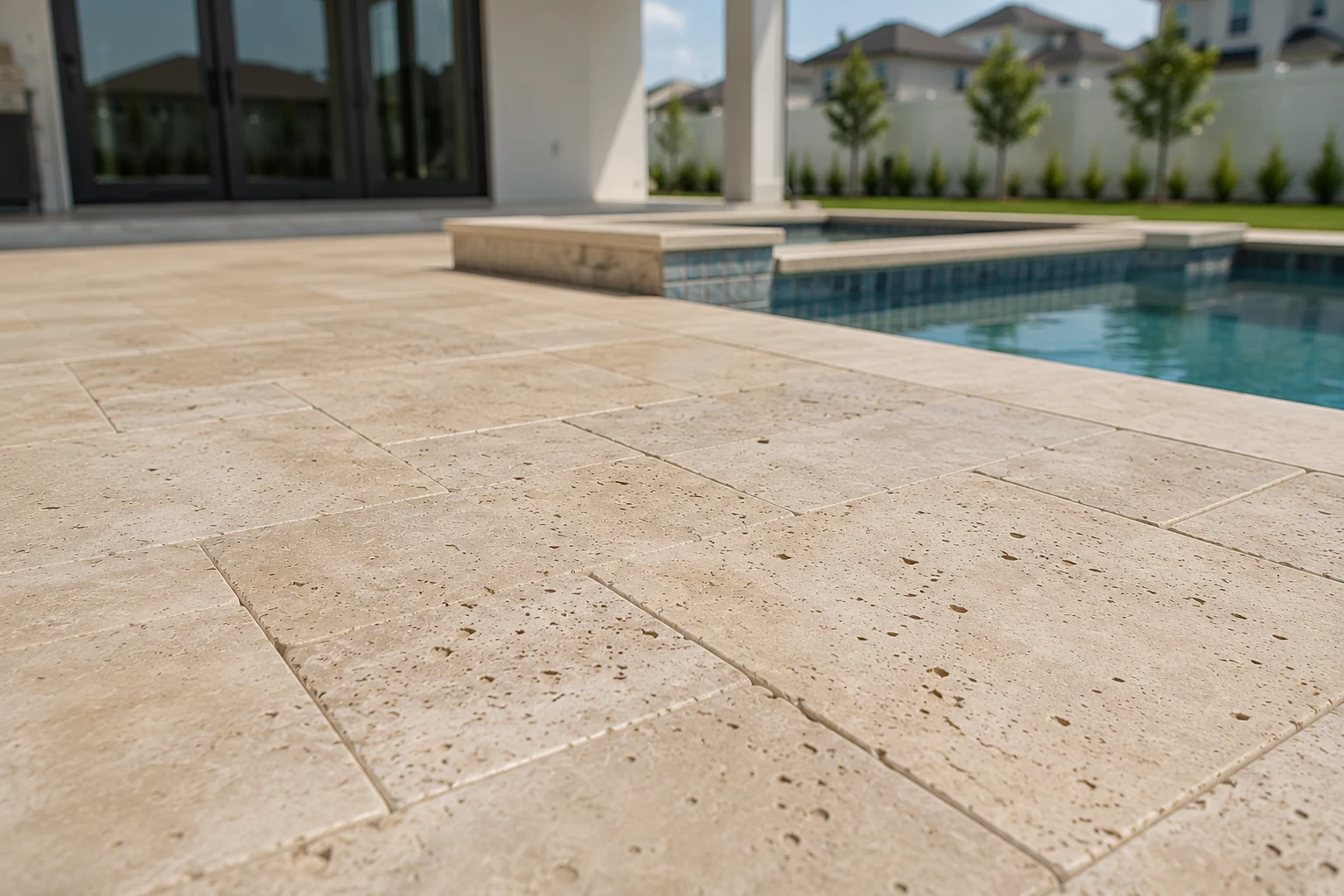
A resurface is the natural moment to replace waterline tile and coping, because the pool is already drained and the edges are exposed. Loose or cracked tile, failing grout and coping that rocks or has open joints are all easier to fix now than later.
It is also the moment to look at the deck. Replacing coping disturbs the joint between pool and deck, and a deck resurfacing scheduled after the pool is finished avoids splashing or staining the new interior. The options for resurfacing a pool deck range from a coating over sound concrete to new pavers or stone.
What the Process Involves
A typical resurfacing follows this sequence:
- The pool is drained under the contractor’s control, with attention to groundwater.
- The old surface is removed or prepared so the new finish can bond, and loose material is taken out.
- Cracks and damaged areas are repaired, and fittings, lights and drains are prepared.
- Tile and coping work is done if included.
- The new finish goes on, and filling starts the same day without a pause, because the finish cures under water.
- The startup procedure begins, with chemistry balanced and the surface brushed on the manufacturer’s schedule.
Whether resurfacing needs a permit depends on the jurisdiction and on what else is being done. Structural repairs, electrical work on lights and equipment changes are the usual triggers, so ask the contractor who will pull any permit required.
Cost by Finish and Pool Size
Across finishes, HomeGuide’s 2026 averages span about $6,000 to $15,000. By material, it lists standard plaster at about $6,000 to $8,000, quartz at about $7,000 to $10,000 and pebble finishes at about $10 to $20 per square foot of surface. These are national averages; the actual price depends on the pool’s surface area, depth, steps and benches, how much old material must be removed, repairs found after draining, and whether tile and coping are included. These are national averages for planning; pool size, finish, tile and any structural repair found once the old surface comes off put a real bid above or below them.
Seen over the life of the finish, the cheapest option is not always the least expensive. A longer-lived finish costs more today and may need replacing less often. Resurfacing is the largest recurring line in the full cost of owning a pool, so it is worth planning for years before it arrives.
Resurface vs Full Renovation
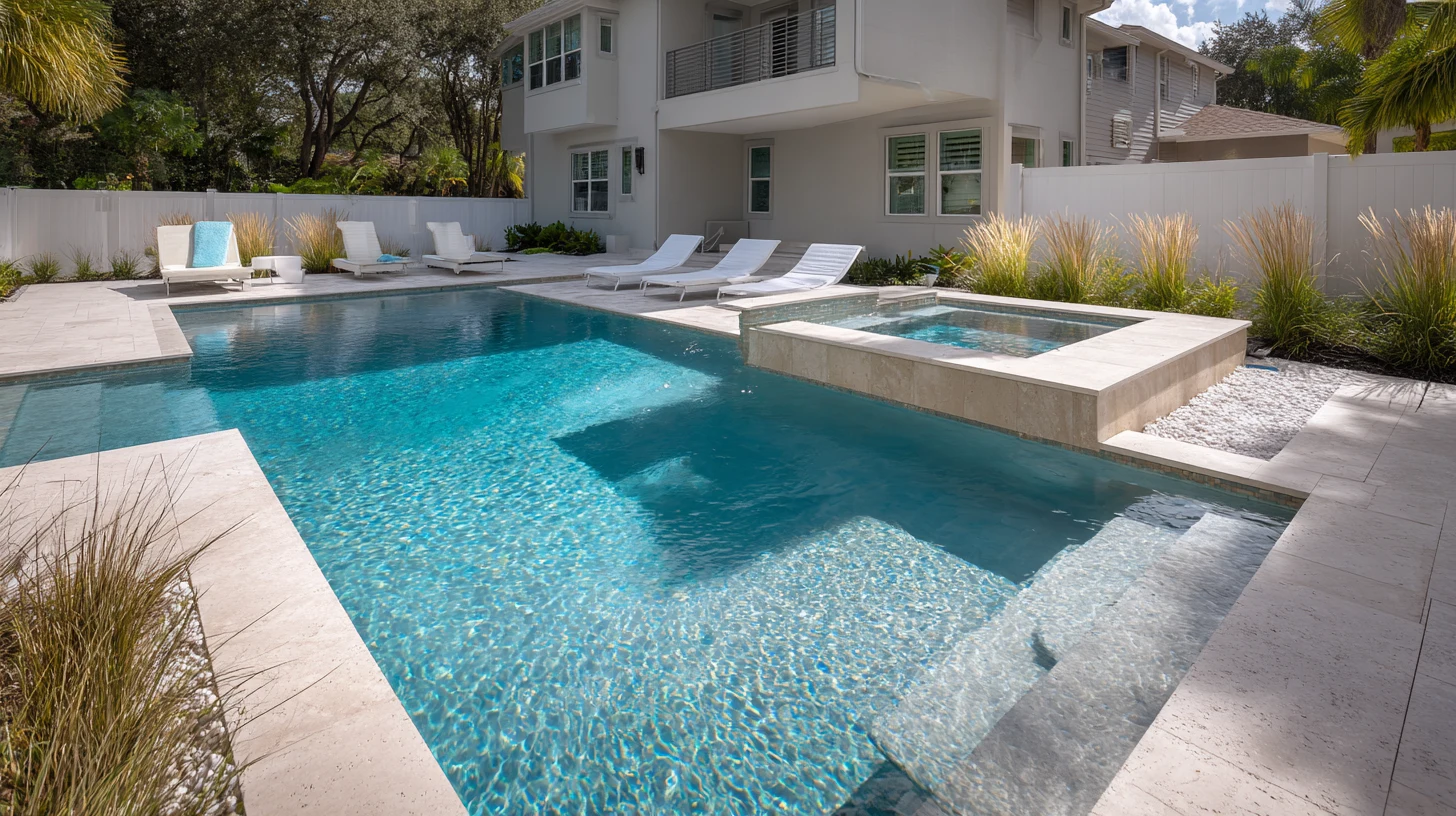
Resurfacing renews the surface. Renovation changes the pool. If the only problem is a worn finish, resurface. If you are also thinking about a sun shelf, a different depth, new steps or benches, a spa, new lighting, automation or new equipment, price them together now. Most of that work requires the pool to be drained and the surface removed anyway, so doing it after a fresh resurface means paying for the new finish twice.
Leaks, failing plumbing and structural cracks also push the decision toward renovation, because they have to be fixed before any new surface goes on. If the pool you have is no longer the pool you want, the right starting point is a design conversation, the same one that begins every custom pool project.
Share this article