The short answer
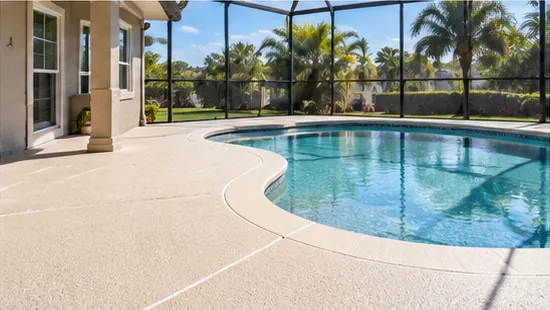
Concrete pool decks in Florida are usually finished with a textured cementitious topping, often called cool deck after the Kool Deck brand, or with an acrylic spray-texture coating. Both can be cleaned, repaired and recolored with coatings made for pool decks, which resist water, chemicals and foot traffic and keep enough texture for grip when wet. Ordinary wall or floor paint on a pool deck tends to peel and can become slippery.
Most coating failures on decks trace back to preparation or moisture: chlorine and dirt residue, old coatings that were already failing, or water reaching the coating from below or at cracks. HomeGuide's 2026 national data puts pool deck resurfacing at roughly $3 to $12 per square foot, with a cool deck coating around $4.
Key takeaways
- Use products made for pool decks. The product's own instructions set what it can go over and how long before the pool can be used.
- Texture is a safety feature. Recoating should preserve or restore it, not smooth it over.
- Chlorine, salt and sunscreen residue must be cleaned off before recoating, or the new coat will not bond.
- Cracks and peeling from below point to moisture or slab movement, which a coating cannot fix.
- Light colors stay cooler underfoot than dark ones in the Florida sun.
Why Pool Decks Need Different Products
A pool deck is one of the harshest places to put a coating. It sits in direct sun, takes splash water with chlorine or salt, gets hosed down and walked on barefoot, and has to stay safe when wet. Coatings designed for walls or indoor floors are not made for that combination.
Pool deck products are formulated to adhere to concrete that is regularly wet, resist pool chemicals, tolerate UV exposure and hold a textured, slip-resistant surface. Many are cementitious or acrylic-based rather than conventional paint, and they are applied in thicker, textured coats. The choice depends on what is already on the deck, because deck systems are designed to bond to specific surfaces. One widely used cementitious topping, for example, is made to bond only to cementitious surfaces, not over paints or sealers.
Cool Deck and Knockdown Texture Repair
Many Central Florida pool decks were finished with a textured cementitious topping. Kool Deck, a product of Mortex introduced decades ago, gave the category its name, and “cool deck” is now used for similar textured toppings. Spray-texture and knockdown acrylic finishes are another common type, sprayed on and flattened with a trowel to create a pattern.
Common repairs include:
- Cracks in the topping, which are routed or cleaned, filled with a compatible patching material and retextured.
- Worn or smooth traffic paths, retextured to match the surrounding surface.
- Spalled or delaminated patches, cut back to sound material and rebuilt.
- Stains and discoloration, often cleaned or covered with a color coat.
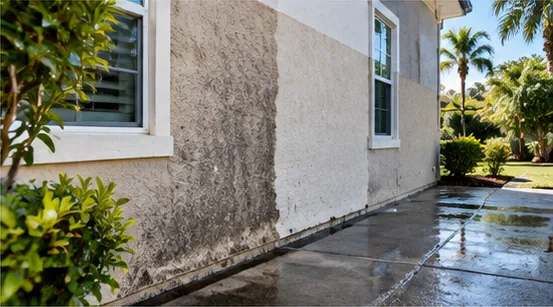
Texture matching is the challenge, just as with stucco. Patches that do not match the surrounding pattern or color stand out, which is one reason many owners recoat the whole deck after repairs rather than patching and leaving it.
For new cementitious toppings over existing concrete, manufacturers set specific conditions. One common product’s instructions call for concrete preferably at least 28 days old, application at 50°F and rising, and not over 90°F, the surface covered with plastic for two days after application, no contact for 48 hours, light foot traffic after three days, normal traffic after 14 and heavy furniture after 28.
Acrylic Concrete Coatings
Acrylic deck coatings are thinner than cementitious toppings and are often used to recolor and refresh an existing deck that is sound. They come as color coats, sometimes with added grit, and as spray-texture systems. They bond to properly prepared concrete and to compatible existing coatings.
Their advantages are lower cost and faster application. Their limits are durability under heavy wear and sensitivity to preparation: an acrylic coat over a dirty, chalky or failing surface peels quickly. They are best for decks that need a new color and some protection rather than repair of the underlying texture.
Deciding whether a coating is the right answer at all, or whether the deck should be resurfaced with pavers or stone, is a separate question with its own trade-offs, set out where pavers, stone and coatings are weighed against each other.
Slip Resistance Around the Pool
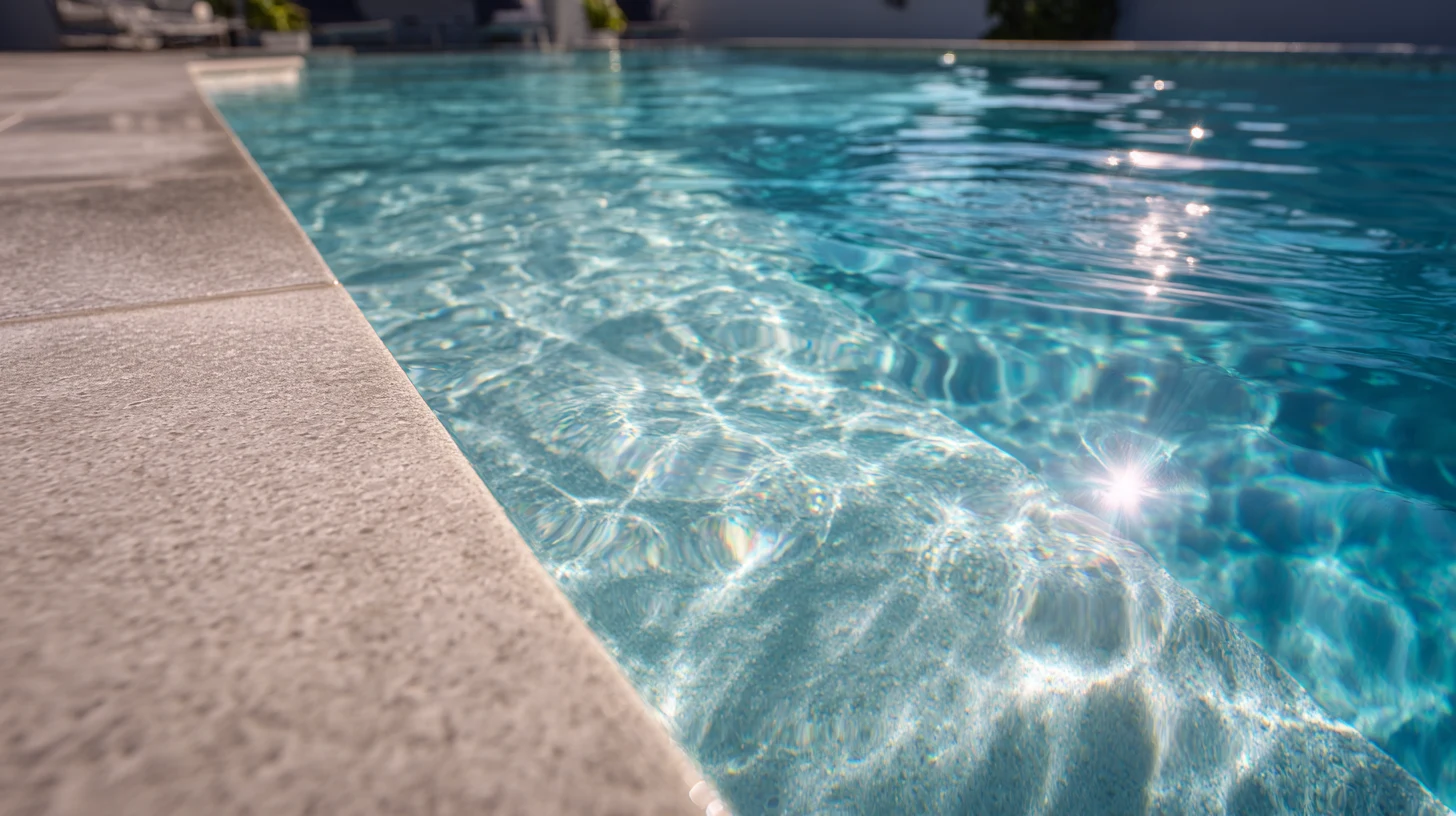
Texture on a pool deck is a safety feature. Smooth, glossy surfaces become slippery when wet, and a deck is wet much of the time. Cementitious and knockdown textures provide grip, and many coating systems include aggregates or anti-slip additives in the color coat.
Recoating should preserve that texture. Heavy coats of smooth paint fill in texture and reduce grip. A sealer applied too heavily can do the same. When recoating, ask how the product maintains slip resistance and whether an anti-slip additive is recommended for the final coat, especially around steps, the edge of the pool and the path to the house.
Heat Reflection and Barefoot Comfort
In full Florida sun, a pool deck can become uncomfortable underfoot. Lighter colors absorb less solar heat than darker ones and generally stay more comfortable, which is why pale tones are common on cool deck finishes. Some coating lines market heat-reflective formulas. Even the best coating does not keep a deck in direct sun truly cool on a July afternoon, but color choice makes a noticeable difference.
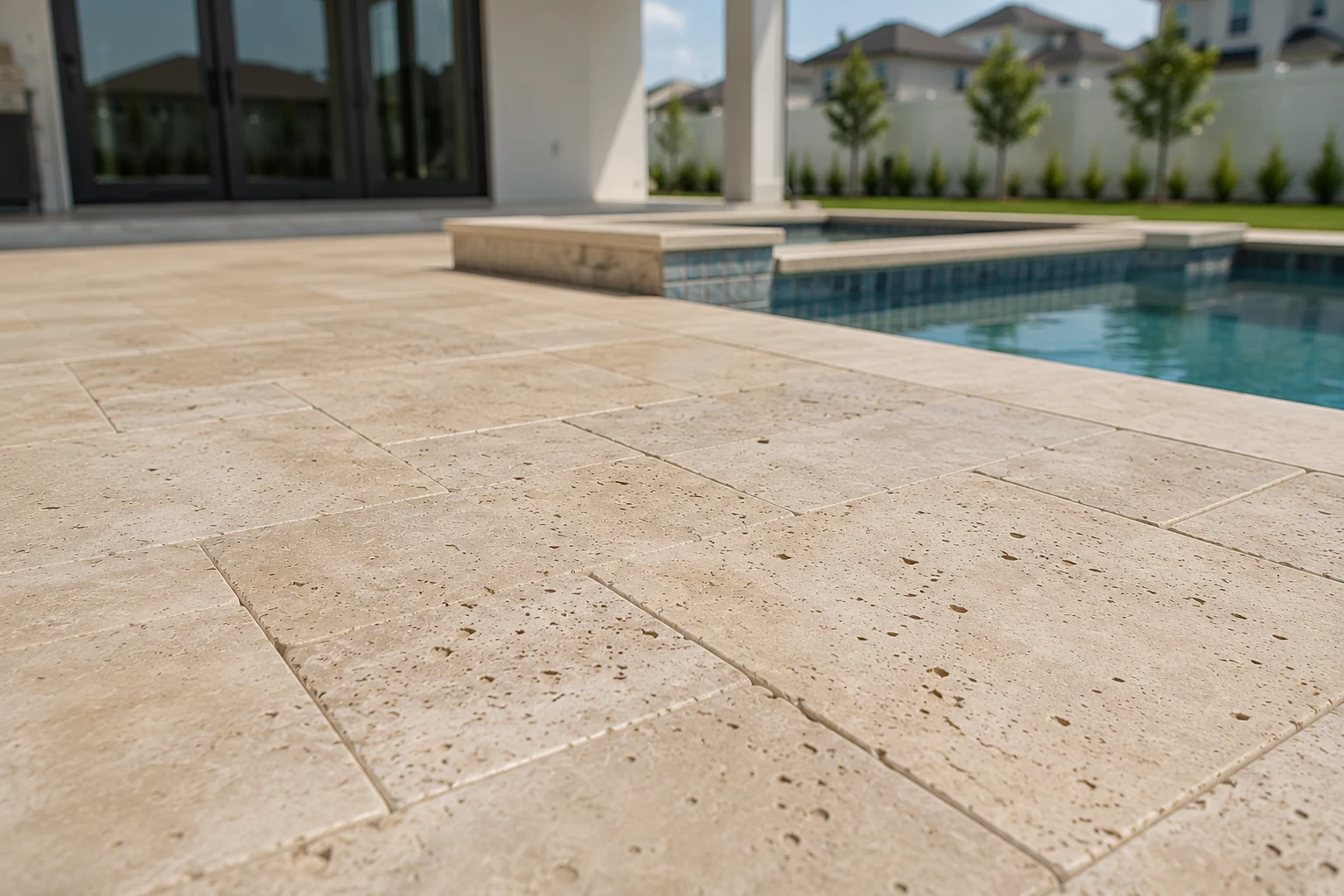
Natural stone behaves differently in the sun, and why travertine often feels cooler is worth reading before choosing between recoating and a new surface. For a coating, the practical choice is a lighter color and a texture that sheds water.
Prep: Grinding, Patching and Chlorine Residue
Preparation decides how long a deck coating lasts:
- Clean the deck to remove dirt, algae, mildew, sunscreen and body oils, and chlorine or salt residue. Cleaning methods and pressure matter on textured surfaces, as described in the guide to washing surfaces before painting.
- Remove failing coating, scraping or grinding loose, peeling or chalky material back to a sound surface.
- Profile the surface as the product requires, by grinding, etching or other preparation, so the coating can grip.
- Repair cracks and spalls with compatible materials, and address expansion joints.
- Let the deck dry thoroughly before coating, which in Florida may mean waiting after rain.
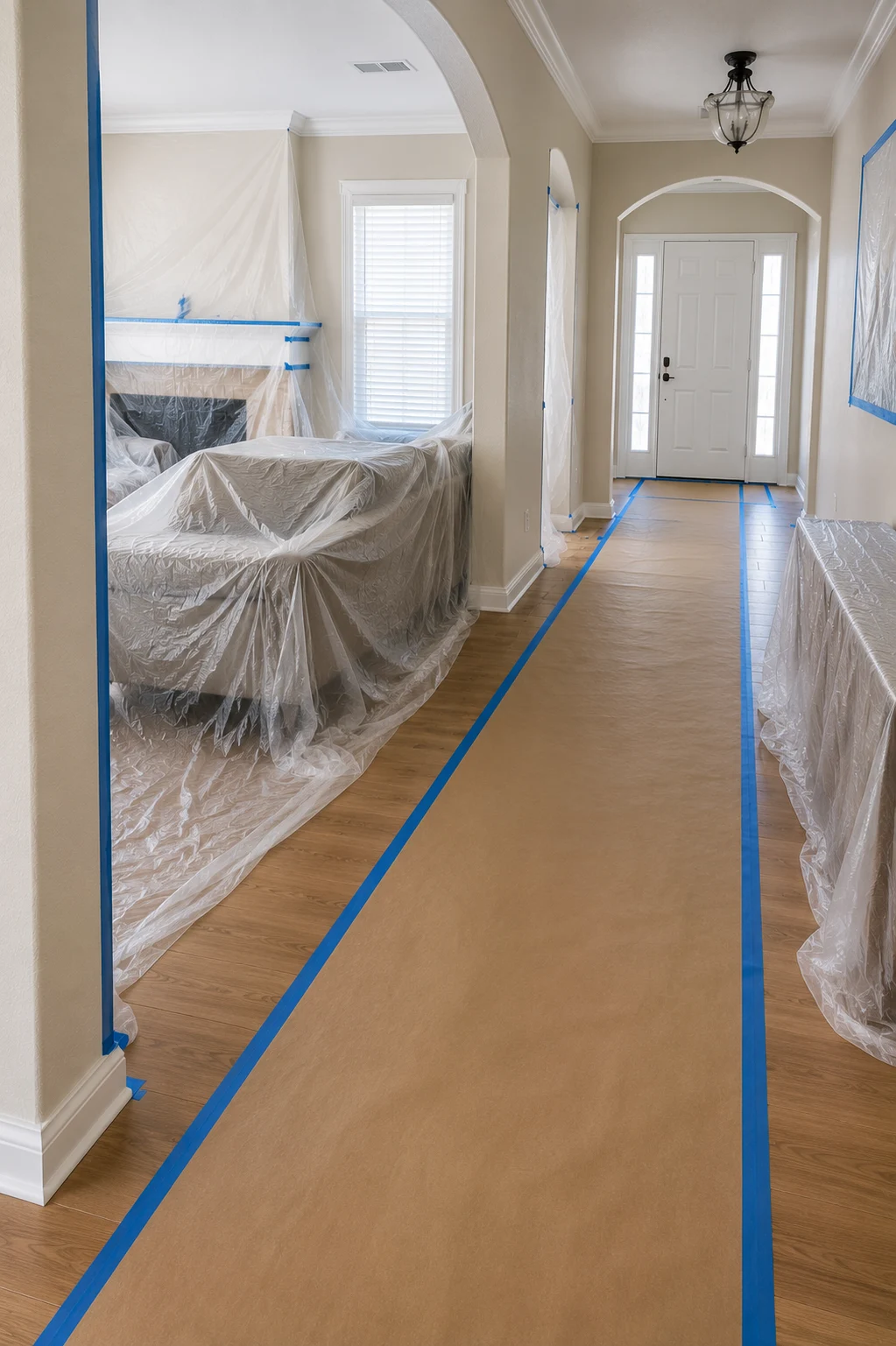
- Protect the pool, coping, screens and landscaping from dust and overspray.
Skipping steps is the most common reason a freshly coated deck starts peeling within a season or two.
Peeling From Moisture Below
Coatings can lose adhesion when water reaches them from underneath or behind: through cracks, at joints, from poor drainage that keeps the slab wet, or from water moving through the concrete. Peeling that appears in patches, sometimes with white residue, often signals moisture rather than wear.
Recoating over that problem repeats the failure. Improving drainage, sealing cracks and joints, and letting the slab dry before coating are part of the fix. If the slab itself is sinking, heaving or holding water, it needs repair before any surface goes on.
Salt System Effects
Saltwater pools use a chlorine generator, and splash water leaves salt on the deck as it evaporates. Salt deposits can build up on and in porous surfaces. One major cool deck manufacturer’s care guide notes that with a saltwater chlorinator, it is essential to rinse and clean the deck frequently. Regular rinsing with fresh water, especially near the pool edge, helps both coatings and the concrete underneath.
Coping and Waterline Detail
The coping, the cap around the pool edge, and the joint between coping and deck take the most water and movement. That joint usually needs a flexible sealant, not a rigid coating, so the deck and pool shell can move independently. Coatings should stop neatly at the coping edge unless the coping is part of the coating system. When coping stones are loose or the joint has failed, repairing them before recoating the deck avoids water getting under the new coating. If the pool interior is also due for work, the two projects are often coordinated, as discussed in the guide to pool resurfacing.
Recoat Timing in Florida Sun
There is no fixed recoat interval for pool decks. How long a coating looks good depends on the product, color, sun exposure, foot traffic, pool chemistry, cleaning habits and how well it was applied. Signs a deck is due for attention include fading, worn traffic paths, chalking, small areas of peeling, and loss of texture where people walk most.
Regular cleaning and prompt rinsing of chemical spills extend a coating’s life. The manufacturer of one common cool deck system advises owners to clean with soap and water, rinse spills immediately and avoid acid washing the deck themselves. Recoating before the coating fails, while it is still bonded, usually needs less preparation than waiting until large areas are peeling.
Caring for a Coated Deck
A coated deck lasts longer with simple routines. Rinse the deck with fresh water regularly, and more often around a saltwater pool. Clean with a mild detergent and a soft or medium brush rather than aggressive pressure. Rinse spilled pool chemicals, fertilizer and drinks promptly. Store chemicals off the deck and away from the coating. Use pads or feet on heavy furniture and planters, and move them occasionally so the surface under them weathers evenly. Keep sprinklers and roof runoff from soaking the same area constantly. Small cracks and chips are easier and cheaper to repair early than after water has worked under the coating around them.
Cost per Square Foot
For resurfacing a pool deck, HomeGuide’s 2026 figures run from roughly $3 to $12 per square foot, and a cool deck coating sits around $4 per square foot. Those are general figures; the actual cost depends on the deck’s condition, how much old coating must be removed, the amount of crack repair, the system chosen, deck size and access around a screen enclosure. Those are national per-square-foot references; deck condition, crack repair and the coating system chosen decide where a real quote lands.
A deck recoat is often combined with other outdoor work, such as repainting the pool cage or screening, cleaning pavers, or planning a new pool interior. When a deck mainly needs cleaning, repair and a new coat of a compatible deck coating, it fits within exterior and outdoor painting work.
Replacing the deck surface entirely, or rebuilding the area around the pool, belongs to a broader pool project.
Share this article