The short answer
For most Central Florida homes that want to swim through the cooler months, an electric heat pump is the default choice: it costs the least to run because it moves heat from the air instead of generating it, but it heats slowly and works less efficiently on cold nights. A gas heater, natural gas or propane, heats fastest and suits spas and occasional use, at a higher operating cost. Solar collectors cost the least to operate and can carry much of the load when the roof has enough suitable area.
Whichever you choose, a cover used at night has more effect on the heating bill than the heater itself, because evaporation is where a heated pool loses most of its heat.
Key takeaways
- Heat pumps win on running cost for regular use. Gas wins on speed. Solar wins on fuel cost when there is roof space.
- A heat pump is sized for your pool's surface area and the temperature rise you want, not the gallons.
- Cold snaps are where heat pumps struggle, which is why many spas and some rentals pair them with gas.
- A pool cover can cut heating costs dramatically. Without one, size the heater for an uncovered pool.
- Plan the heater with the pool. Gas lines, electrical capacity and space at the equipment pad are cheapest before the deck goes down.
Do You Actually Need Heat in Central Florida
For a large part of the year, no. From late spring into fall, most pools in the region are warm enough without help, and in the hottest months the complaint is the opposite.
The heating question is really about the months when nights turn cool. Water that feels fine on a warm afternoon can be too cold for children, older family members or anyone who swims in the evening, and a cold front can drop it quickly. If the pool is mostly for summer, a heater may never pay its way. If it is meant for year-round use, for a spa, or for rental guests in winter, it becomes part of the pool’s basic equipment.
A useful test is to ask who will use the pool between December and March, and when. The answer usually points to one of three systems.
How Each System Works
A heat pump pool heater uses electricity to move heat from the outside air into the pool water, the same principle as an air conditioner working in reverse. It does not burn anything, which is why it is efficient, and it depends on the air being reasonably warm.
It also needs space to breathe. A heat pump draws in air and blows out colder air, so it needs clearance around it at the equipment pad, and it makes a fan and compressor noise similar to an outdoor air conditioning unit. Placing it away from bedroom windows and a neighbor’s patio is a design decision, not an afterthought.
A gas pool heater burns natural gas or propane to heat water passing through it. It works regardless of air temperature and heats quickly, which is its main advantage. Where the street has no natural gas service, propane means a tank on the property, and fire codes set how far that tank must sit from the house, openings and property lines.
A solar pool heating system circulates pool water through collectors, usually on the roof, where the sun warms it. The pump that already runs the pool does most of the work, so the fuel is free, but output depends on sun, collector area and orientation.
Running Cost Comparison
The efficiency of a heat pump is expressed as a coefficient of performance, or COP. The U.S. Department of Energy notes that heat pump pool heaters typically have COPs between about 3 and 7, meaning they deliver three to seven units of heat for each unit of electricity used. That rating is measured in warm conditions, and it falls as the air cools.
Gas heaters convert fuel into heat directly, so their operating cost follows the local price of natural gas or propane and the heater’s efficiency. Solar has almost no fuel cost, but its heat is limited to what the collectors capture that day.
| Heat pump | Gas (natural gas or propane) | Solar | |
|---|---|---|---|
| Operating cost | Low for regular use | Highest per degree | Lowest |
| Heating speed | Slow | Fast | Slow, sun-dependent |
| Performance on cold nights | Reduced | Unaffected by air temperature | Little to none |
| Installation needs | Dedicated electrical circuit, space for airflow | Gas supply, venting clearances | Roof area, plumbing to the roof |
| Best fit | Steady heat over the season | Spas and quick, occasional heat | Extending the season with low running cost |
The comparison has a clear shape. For a pool heated steadily for months, the heat pump’s efficiency dominates. For heat that is needed fast and rarely, gas makes sense despite its cost. Solar lowers the bill in any scenario where the roof can hold enough collector area, and it pairs well with either of the others.
Sizing for Your Pool and How You Use It
Heat leaves a pool mostly through its surface, so heaters are sized by surface area and by the temperature rise you want over the average air temperature in the coldest month you plan to swim, not by the number of gallons. A larger or more exposed surface, a windy site and a higher target temperature all call for more capacity.
Undersizing is the common mistake. A heat pump that is too small runs for long hours and still falls behind during a cold week. An experienced installer will size it from your pool’s surface area, whether it is screened, whether you will use a cover, and the months you want to swim.
Solar Panel Roof Requirements
Solar works when there is enough collector area facing the sun. The Florida Solar Energy Center at the University of Central Florida sizes collectors as a percentage of the pool’s surface area, and for central Florida it cites about 80 percent as a typical ratio, with more needed for longer seasons or less favorable conditions.
That means a real amount of roof. The collectors work best on roof planes facing south or west with little shade, and the roof has to be able to carry them and be in good condition, since removing collectors to replace a roof adds cost later. Plumbing runs from the equipment pad to the roof and back, and a controller diverts water to the collectors only when they are warmer than the pool.
Homeowners associations cannot simply say no. Section 163.04 of the Florida Statutes prevents deed restrictions and covenants from prohibiting solar collectors on a home. An association may decide where on the roof they go, but only within an orientation to the south or within 45 degrees east or west of due south, and only if that placement does not impair how the system works. Expect to submit the plan for review, not to be refused outright.
Pairing Heat With a Cover or Enclosure
Evaporation is the largest source of heat loss from a pool, and a cover stops most of it. The Department of Energy estimates that covering a pool when it is not in use can reduce heating costs by about 50 to 70 percent. No heater upgrade comes close.
Covers only work if they are used. For a family pool, a cover on a reel or an automatic cover makes nightly use realistic. For a rental, assume the cover will not be used and size the heater accordingly.
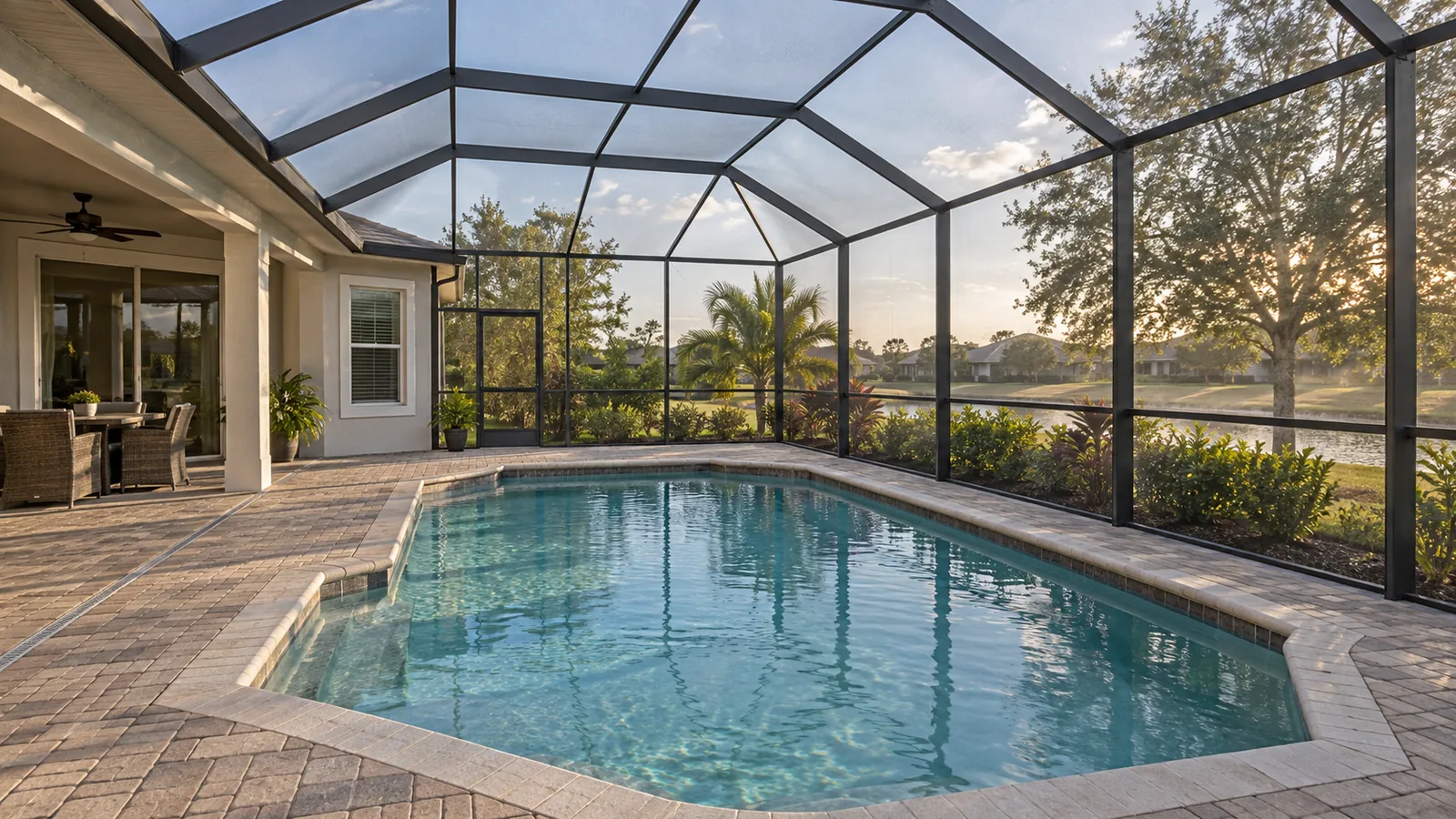
A screen enclosure does not hold heat the way a cover does, but it reduces wind across the water, which slows evaporation somewhat, and it keeps leaves out of the pool that would otherwise foul a cover. Choosing the mesh and frame for an enclosure involves its own trade-offs, including how much sun reaches the water.
Best Choice by Use Case
The right heater depends on the pattern of use more than on the pool.
Year-Round Family Use
A heat pump, sized for the coldest month you plan to swim, with a cover used at night. If the roof allows, adding solar reduces the electricity the heat pump uses on sunny days.
Vacation Rental Use
Guests arrive expecting a warm pool, often after the heater has been off between stays. A heat pump handles steady heat through the season; gas helps when a cold pool has to be ready quickly or when there is a spa. The rental-specific trade-offs, including heat fees, are covered in adding a pool to a vacation rental.
Occasional Winter Use
If the pool is mostly a summer pool with a few warm-water weekends in winter, a gas heater’s higher cost per degree matters less than its speed, and it may cost less to install than a large heat pump. For a spa used year-round, gas is often the practical choice.
Budget both the equipment and the running cost when comparing options. Installation costs differ as much as operating costs: a heat pump needs an electrical circuit sized for it, gas needs a supply line and venting clearances, and solar needs roof plumbing and a controller. The heater is one line in the overall pool budget, but it is the line that keeps costing money every winter.
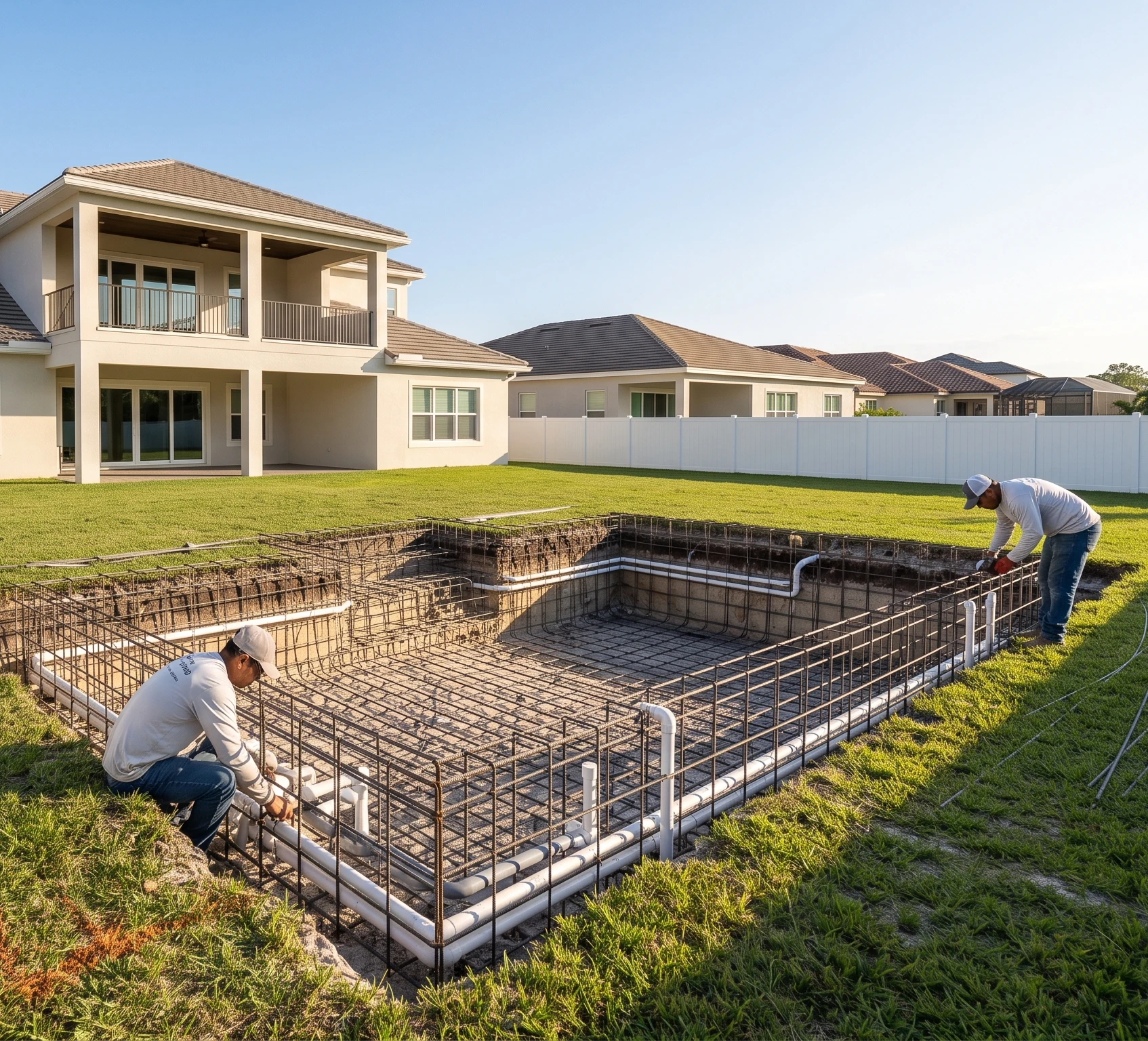
On a new pool, the heating decision is cheapest when it is made before construction: the gas line, the electrical circuit and the space at the equipment pad are then built once. Bring your answer to the December-to-March question to the first design meeting for your custom pool, and the heater can be sized for the way you will actually use it.
Share this article