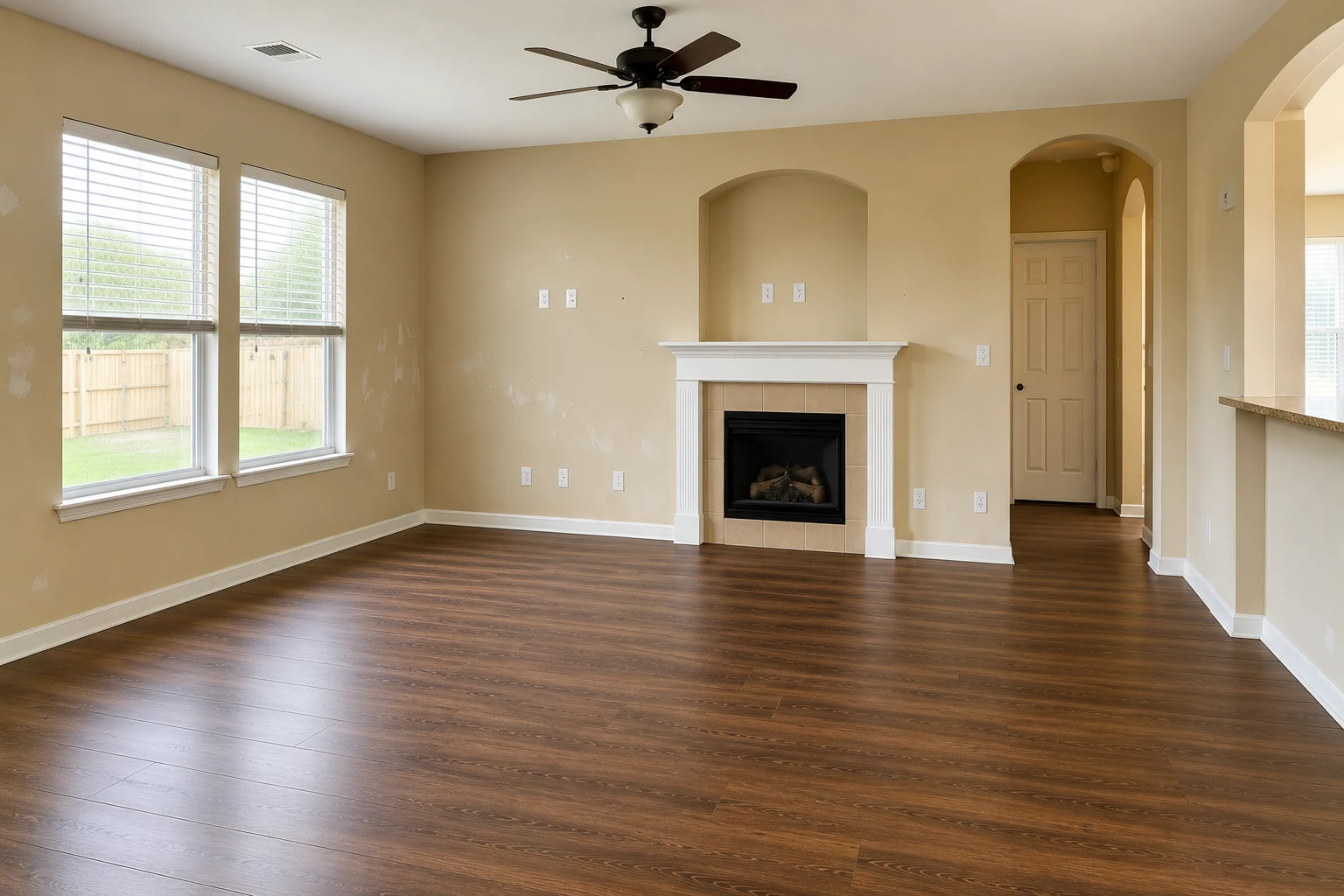
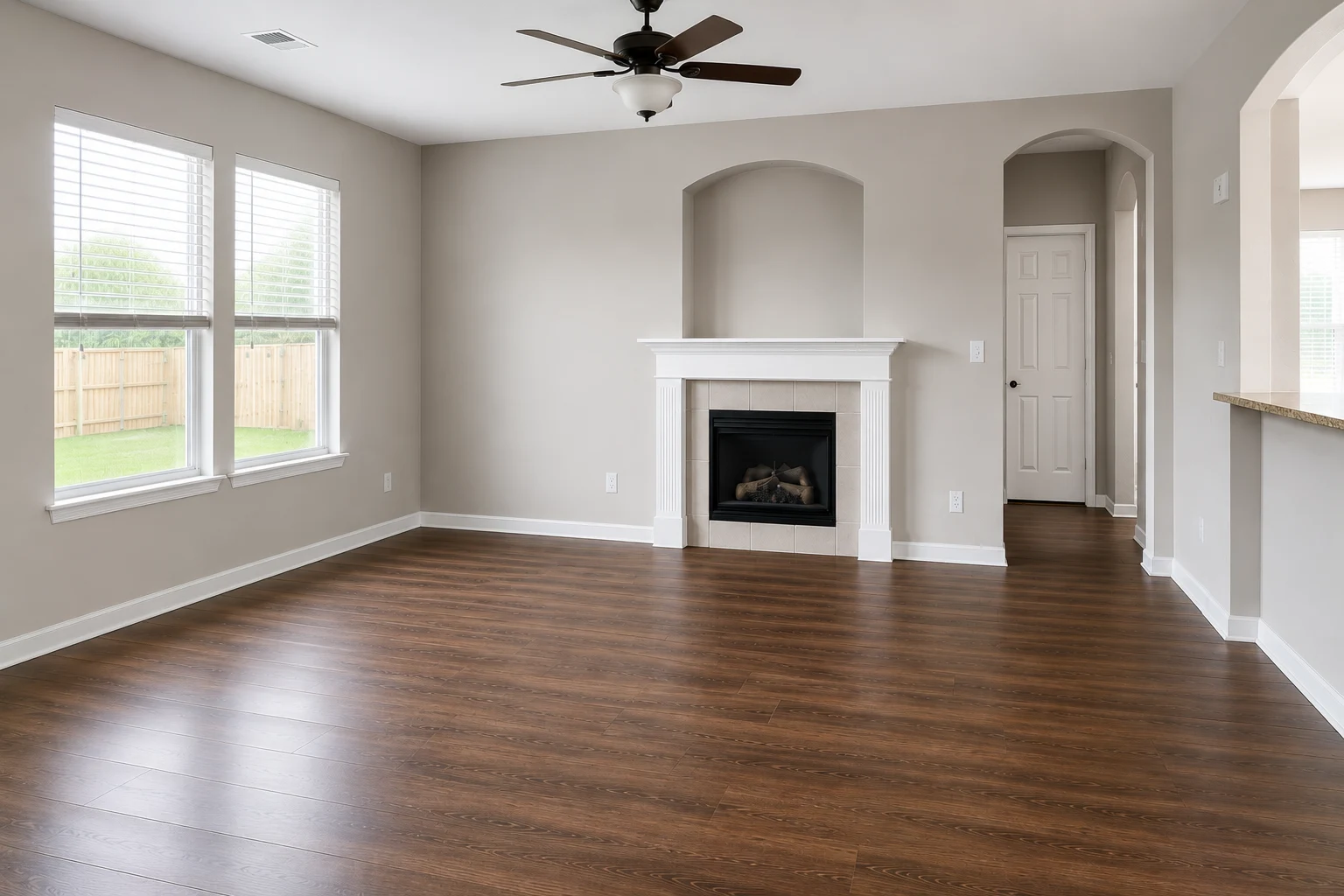
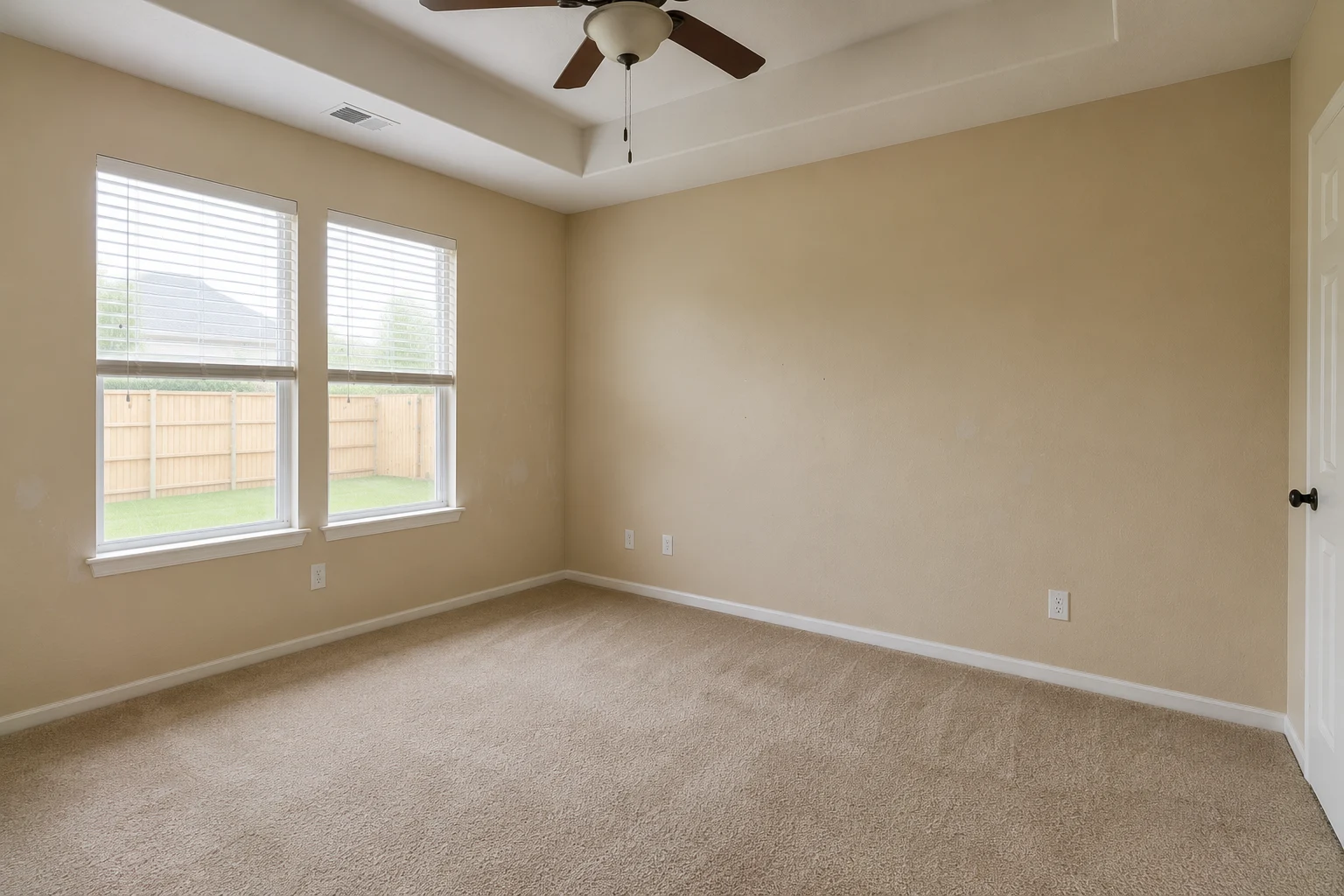
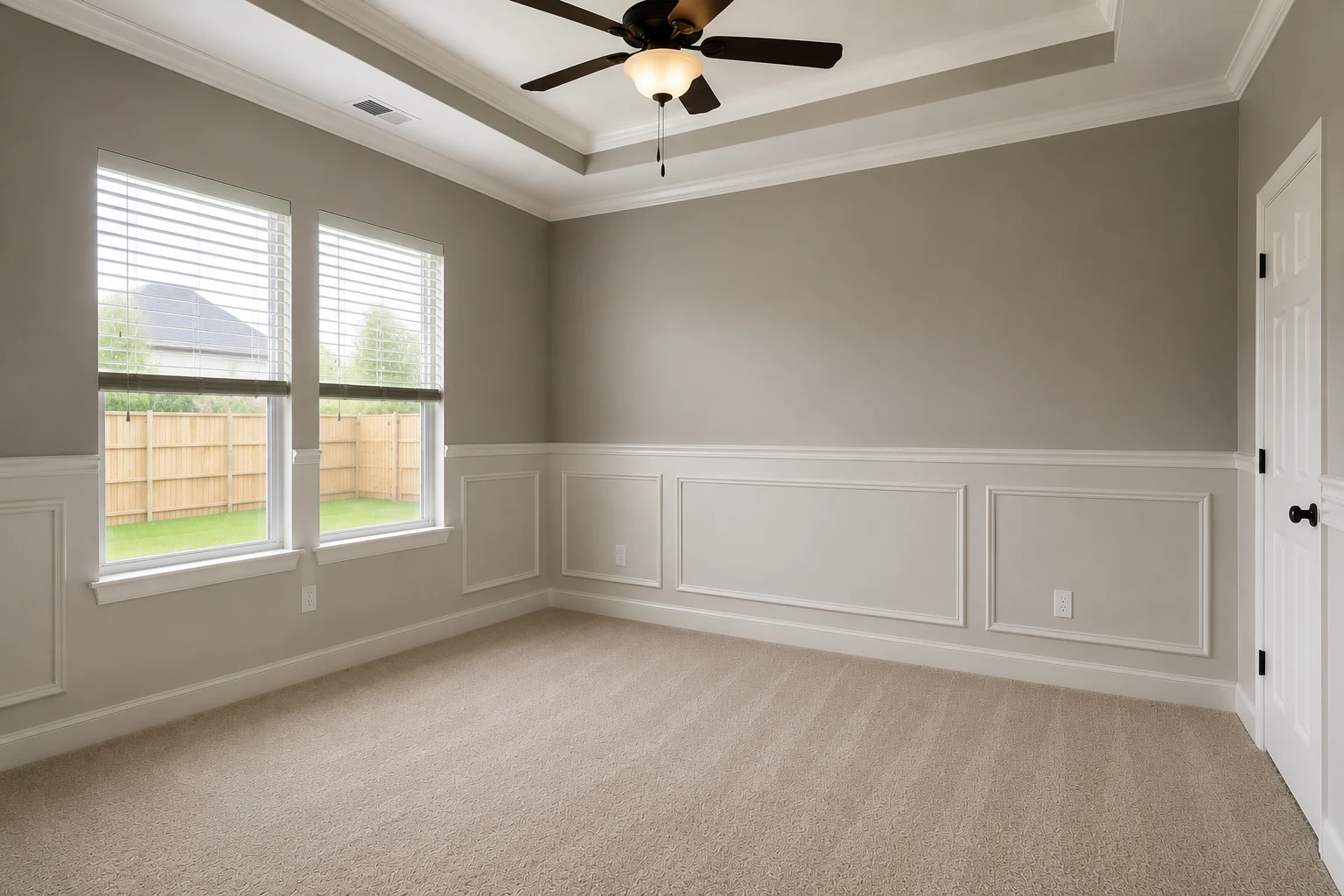
 Current Service
Painting
Refresh interior and exterior surfaces with professional, detail-oriented painting.
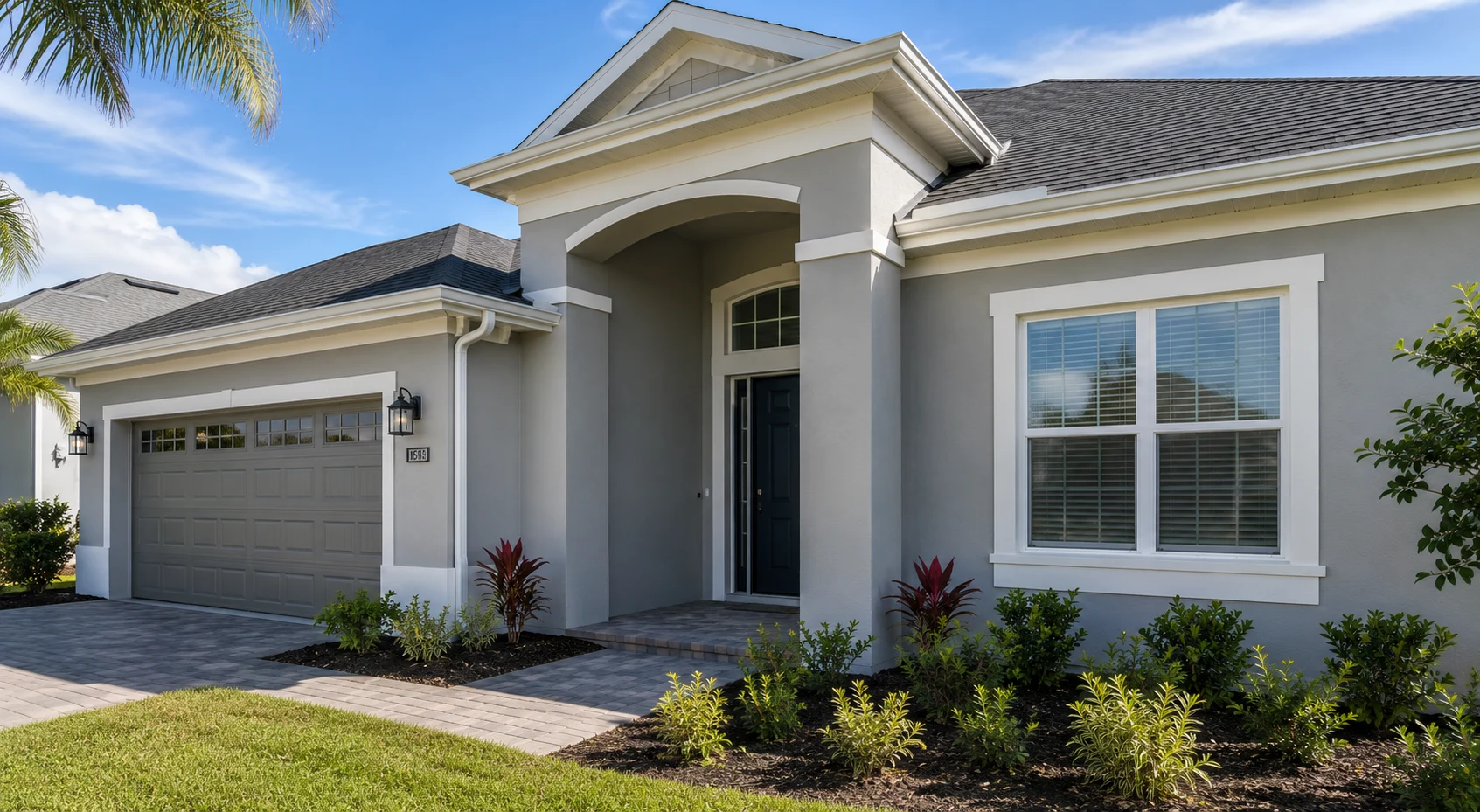
Residential Painting Serving Horizon West
Serving homeowners throughout Horizon West, where entire villages went up in the same few years with the same thin factory coat. We replace it with a system that holds its color across a two-story elevation, wipes clean in a hallway that sees real traffic, and stays comfortably inside your community’s approved palette.
Get Your Free EstimateFree In-Home Consultation
Organized Process
Every project follows a clear, structured process from first contact to final walkthrough.
Quality Craftsmanship
We pay attention to the details that make a remodel feel finished and durable.
Clear Communication
You'll always know what's happening with your project and what comes next.
Commitment to Your Home
We treat every property with the same care and respect as if it were our own.
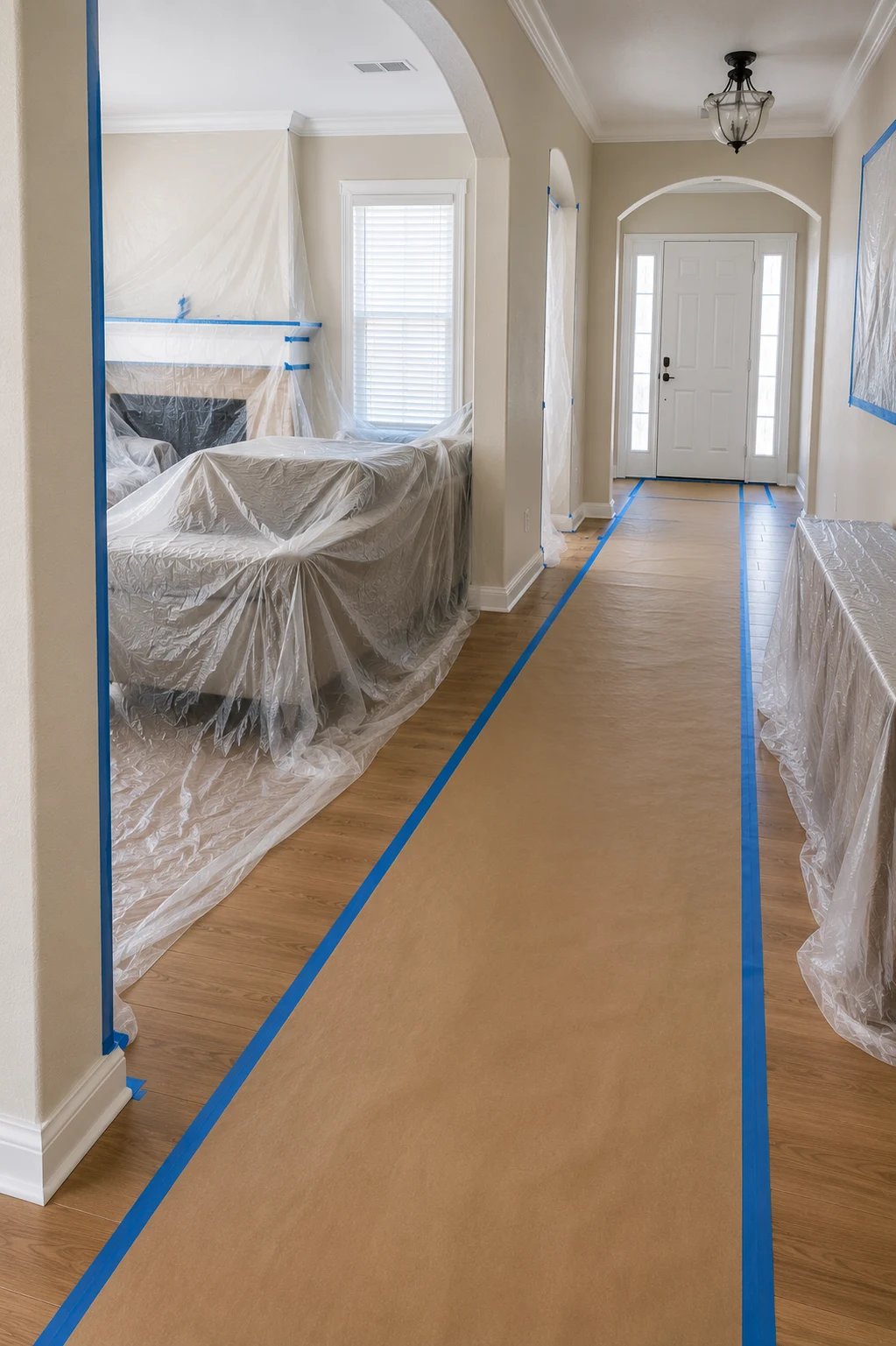 Setting Up
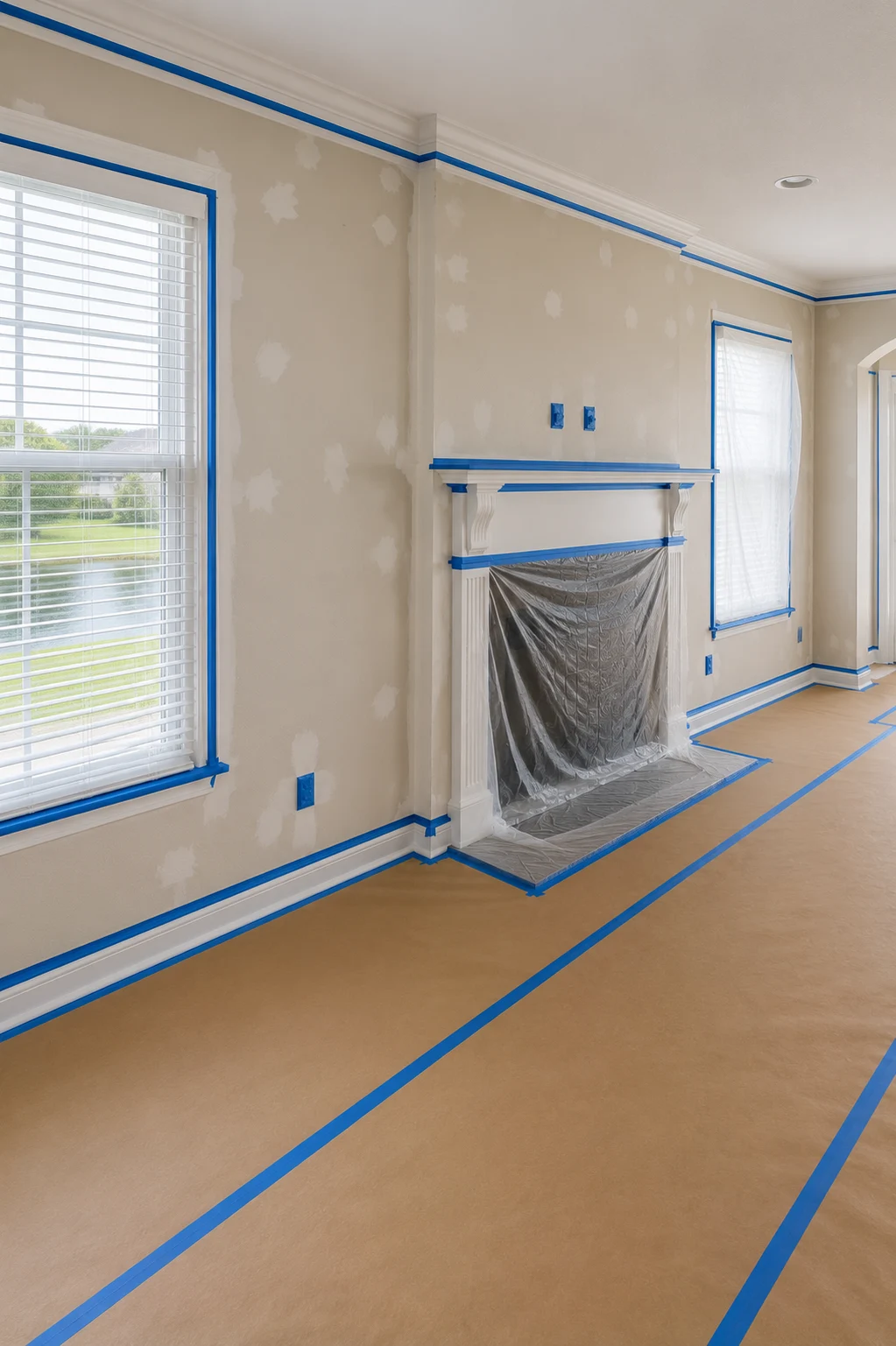 Getting the Surface Right
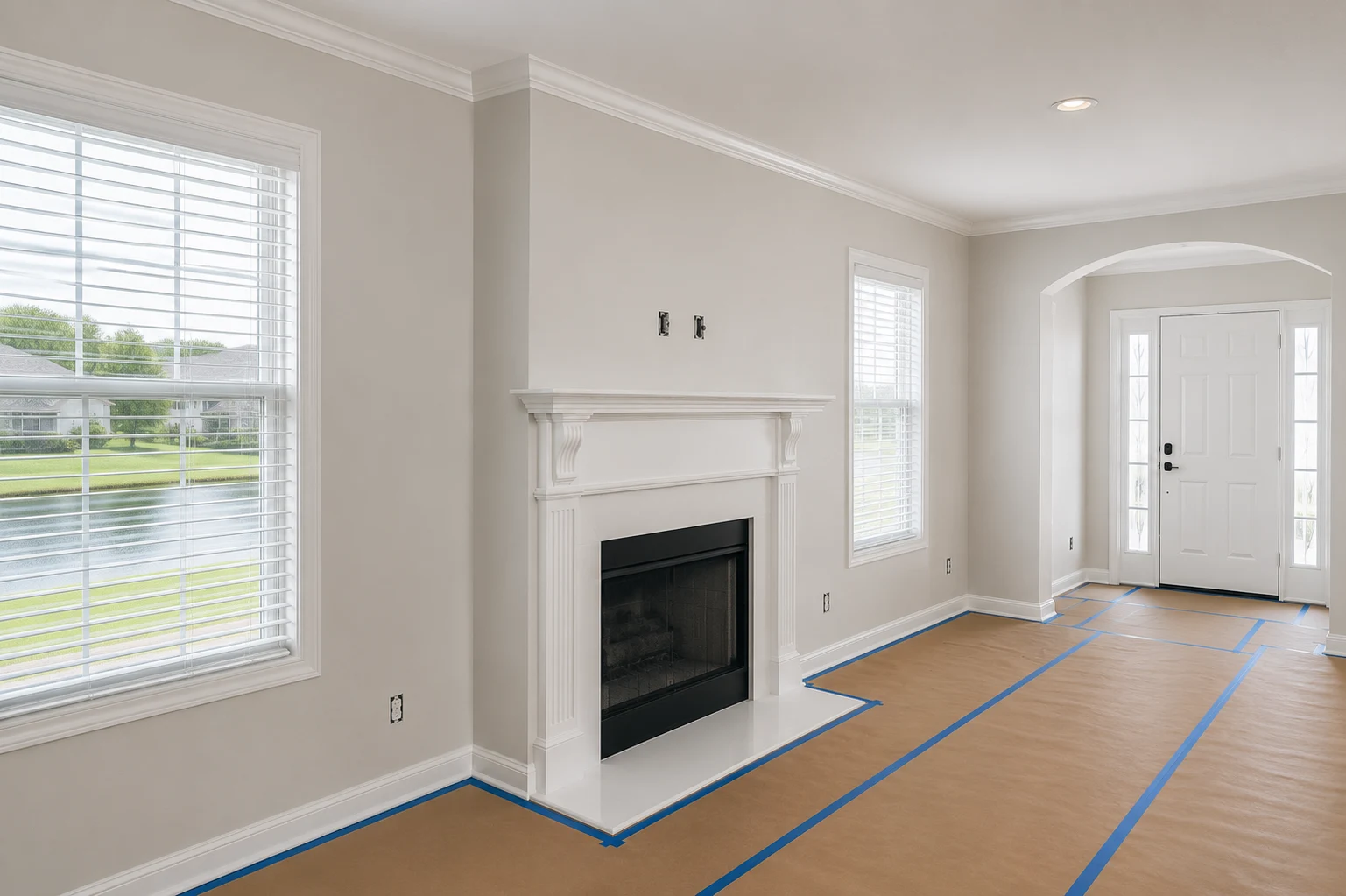 Coating
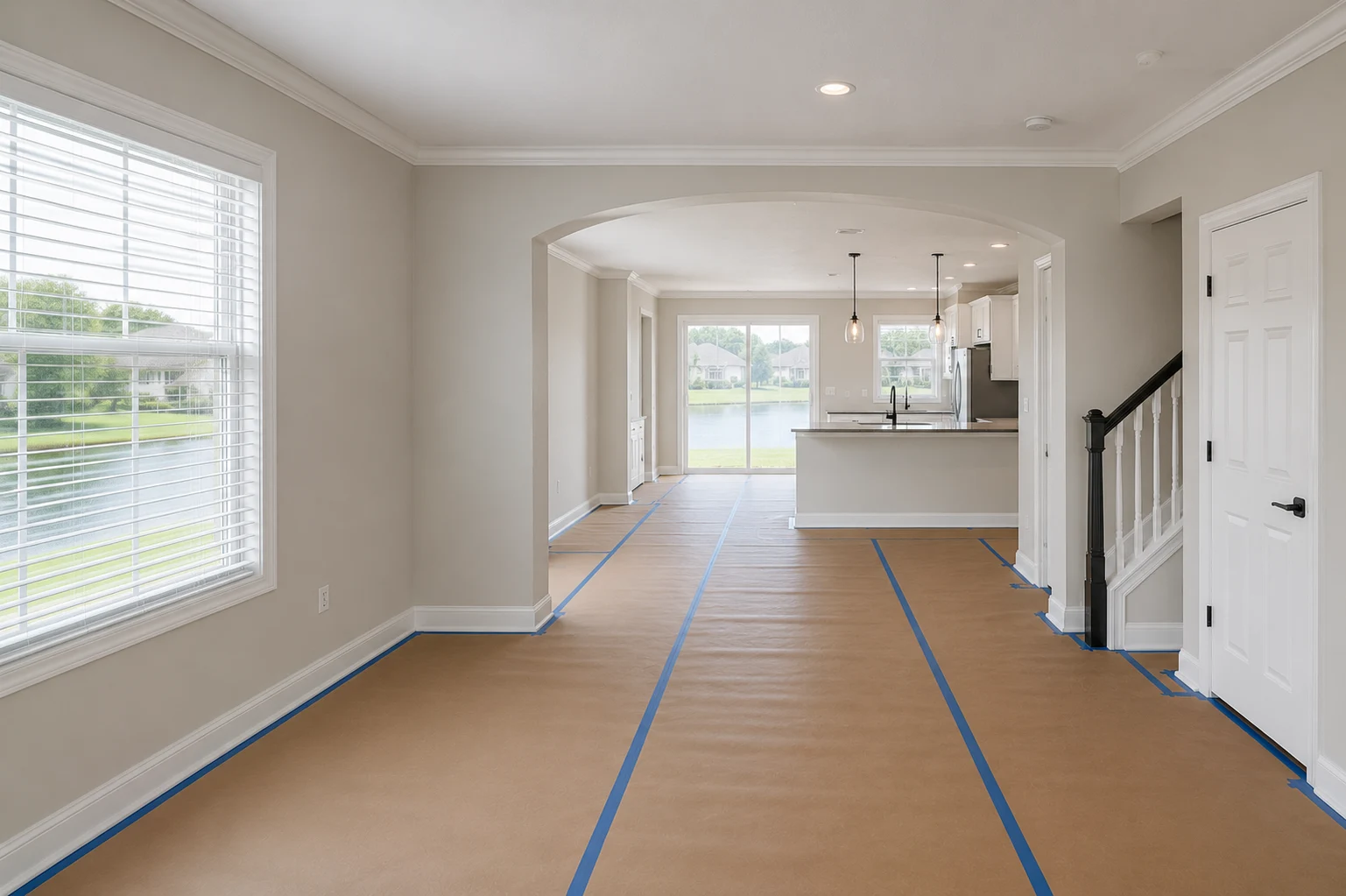 Putting It Back
Working With Us
We're not focused on being the biggest — we're focused on being organized, communicative, and easy to work with.
Your project starts with a clear plan, not guesswork.
You'll hear from a real person about the status of your project.
We treat the small details as seriously as the big decisions.
How It Works
We start by understanding your goals, your home, and the scope of your project.
We translate your vision into a clear, organized plan before any work begins.
You choose finishes and materials with guidance from our team.
Our team executes the project with attention to detail and clear communication.
We review the finished work together to make sure everything meets your expectations.
Real Results
There’s a particular moment when a newer home stops looking new — the exterior goes slightly flat, the walls stop coming clean, the cabinets read a little dated. None of it is dramatic on its own, and all of it lifts at once when the surfaces are finally given a proper coat.
The Benefits
A builder finish is one thin coat chosen on cost. What replaces it can be chosen on how long you intend to live there.
What Else to Consider
A painting project puts a crew, drop cloths, and access to every surface in your house all at once. A few things are far simpler to do inside that window than after it closes.
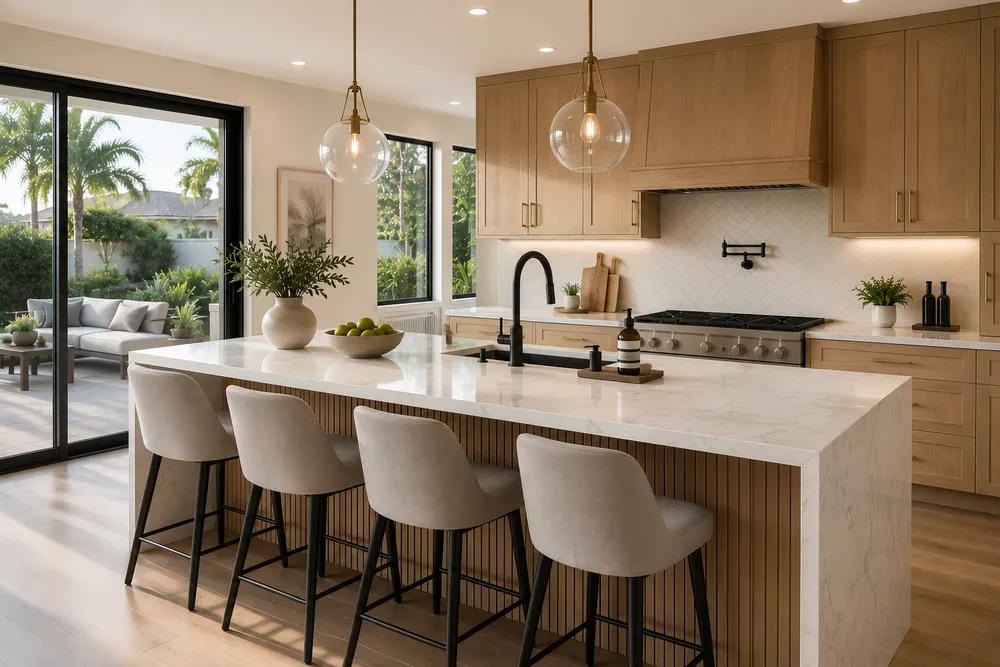
Transform the heart of your home with a kitchen that blends functionality, craftsmanship, and modern design.
Learn More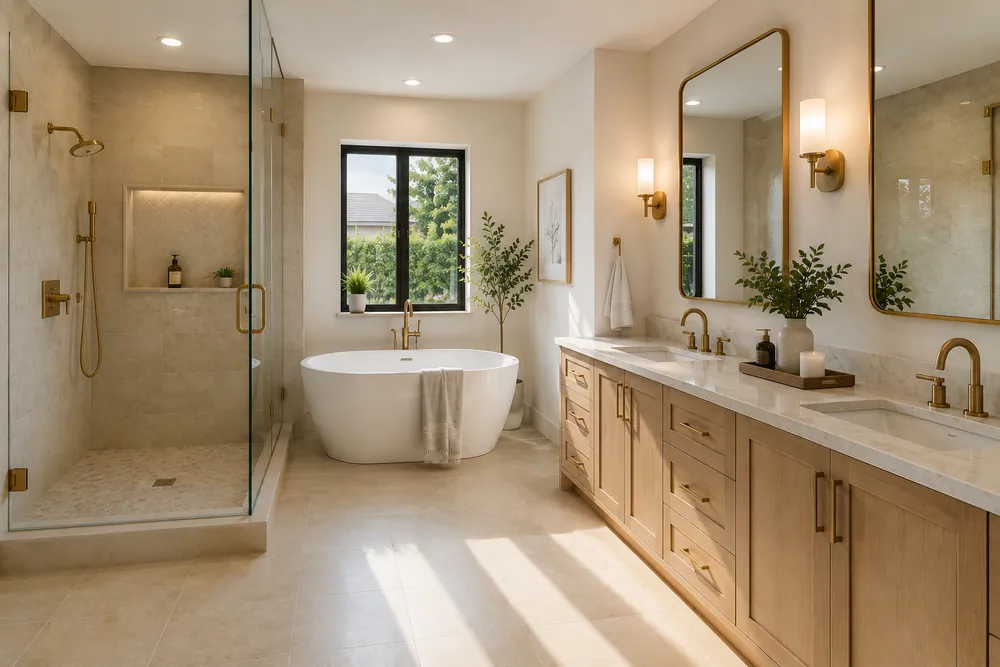
Modernize your bathroom with thoughtful layouts, quality finishes, and lasting comfort.
Learn More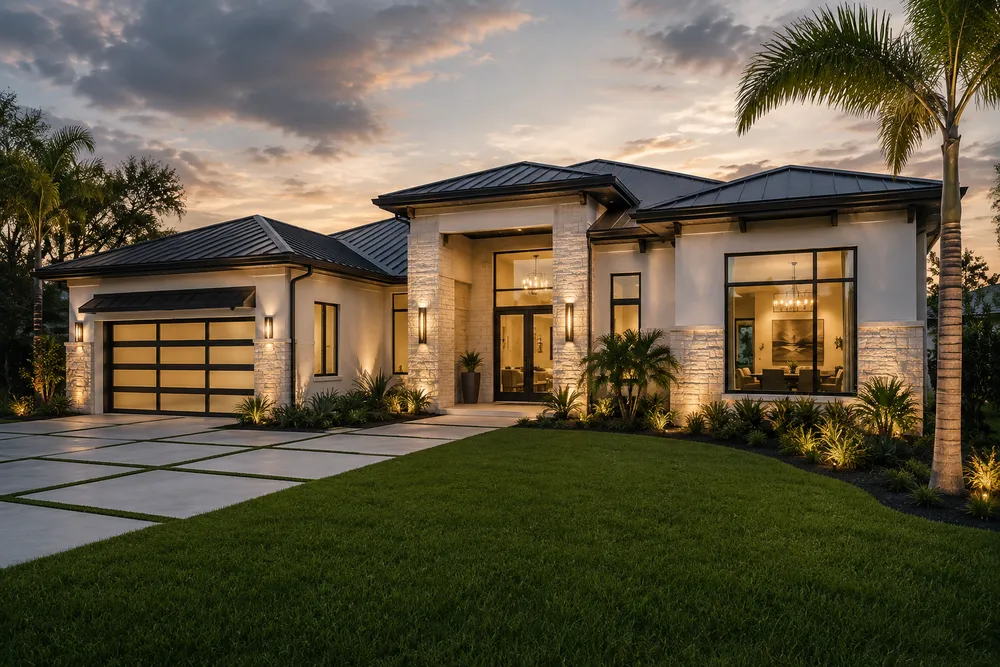
Coordinate a complete transformation of your home, from layout to finishing details.
Learn More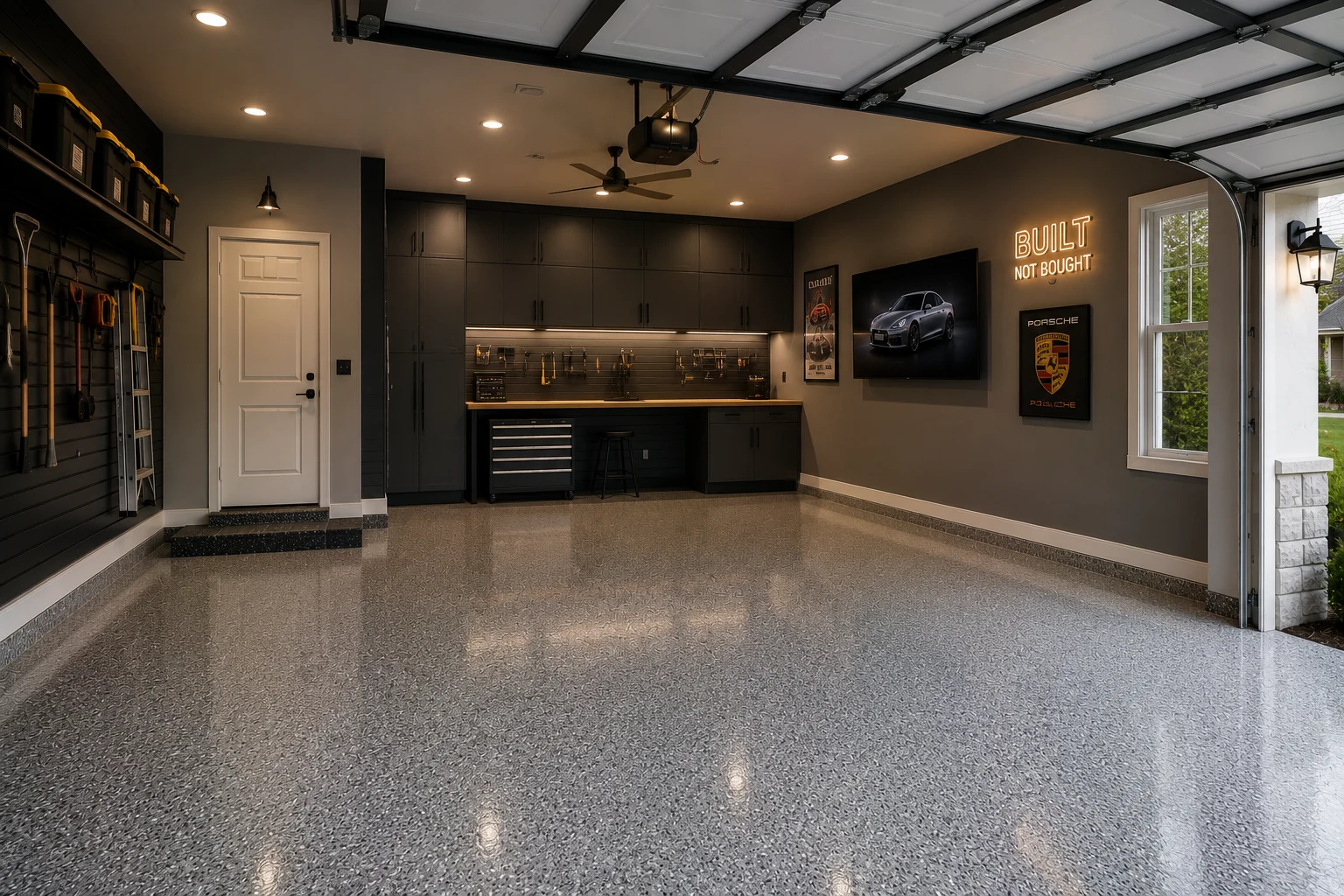
Turn your garage into an organized, durable, and functional extension of your home.
Learn More
Install and refresh flooring throughout your home with materials built to last.
Learn MoreCurrent ServiceRefresh interior and exterior surfaces with professional, detail-oriented painting.
Create outdoor spaces designed for everyday living and relaxed entertaining.
Learn More
Design and build a custom pool tailored to your home and lifestyle.
Learn More
Handle everyday repairs and improvements with the same attention to detail as larger projects.
Learn MoreGet Started
Tell us about your project and our team will reach out to discuss the next steps.
Get your free estimate in less than 2 minutes
Prefer to talk it through first? Call or email us directly.
Working With Us
Horizon West grew fast, which means a great many homes here share a birthday, a builder, and a paint spec. That spec was chosen to look right on handover day rather than to last a decade, and it tends to give out on the same schedule across an entire street — first the exterior color losing its depth, then the interior walls refusing to wipe clean, then a kitchen that suddenly feels older than the house.
Homeowners usually come to us at that point with a fairly grounded question: what would it take to have this done properly, once. So we walk the house with you, point out what genuinely needs attention and what can wait another season, and lay out the sequence and the days involved before anything is priced. Here’s how a project takes shape from there.
Planning Ahead
Four conversations worth having early — they shape the schedule, the budget, and how the finished job holds up.
A builder coat is usually a single thin application over minimal preparation, which is why it wears out evenly and early rather than in patches. The first proper repaint is where that gets corrected — the surface is finally cleaned, sealed, and given real film thickness. Do it well and the next interval is measured in many years; do it cheaply and you’ve simply bought another builder finish at a homeowner’s price.
In master-planned communities the color decision isn’t only yours, and the association’s process rarely moves at the speed of a project schedule. Submissions have windows, boards have meeting dates, and approvals sometimes come back with conditions. Start that conversation while you are still narrowing colors, not once you have chosen one — it costs nothing early and costs weeks late.
Two-story elevations, gables, and high entry walls are where preparation quietly gets skipped, because everything above the first floor takes real access to reach properly. It’s worth asking any contractor how they intend to work at height — the answer tends to predict how the upper half of the house will look three years on, when the lower half still looks fine.
Repainting one elevation or a few rooms is entirely reasonable, but a color drawn from the original spec sheet will not match what the sun has been doing to it since. Faded exterior color, aged interior sheen, and a decade of light all shift the target. We match to the surface as it exists now, and we’ll tell you honestly when a boundary is going to show no matter how good the match is.
Why SAVAM House
Every project follows a clear, structured process from first contact to final walkthrough.
We pay attention to the details that make a remodel feel finished and durable.
You'll always know what's happening with your project and what comes next.
We treat every property with the same care and respect as if it were our own.
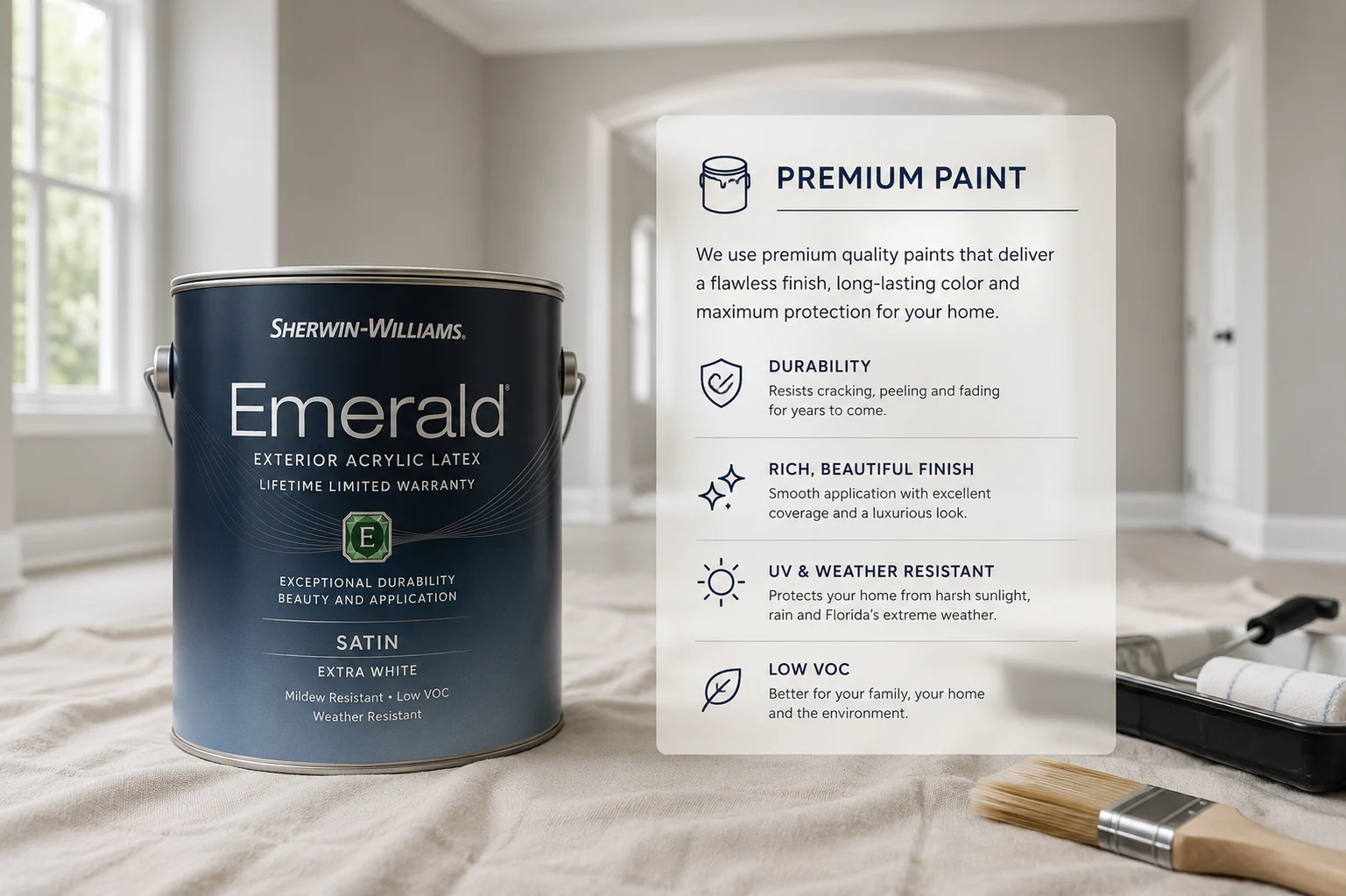 Premium Paint SystemsSpecified as a system — primer and topcoat designed to work together — rather than as a single product chosen off a shelf.
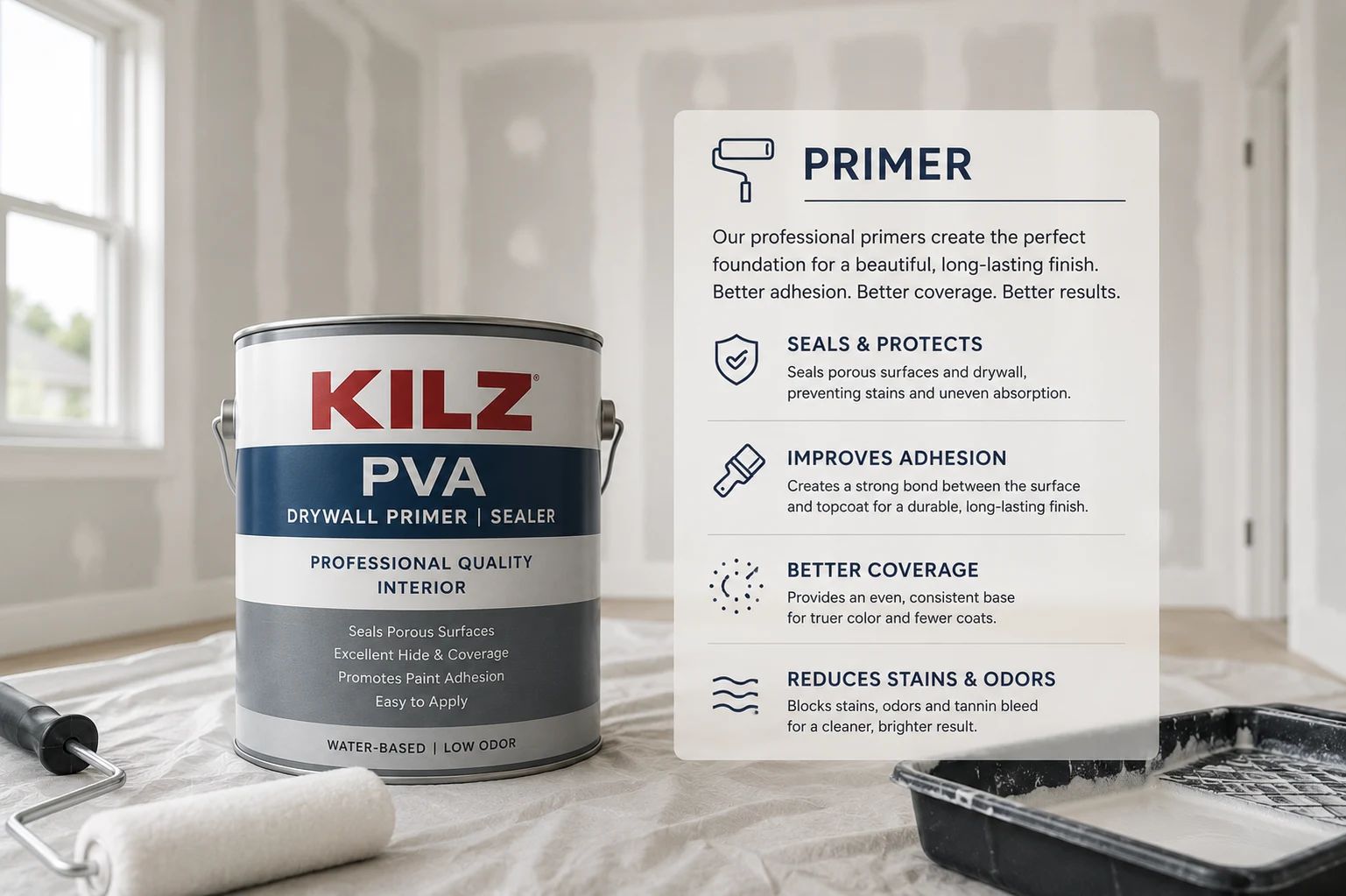 Bonding & Sealing PrimersThe layer that decides whether a coating grips or simply sits there, matched to whatever the surface happens to be underneath.
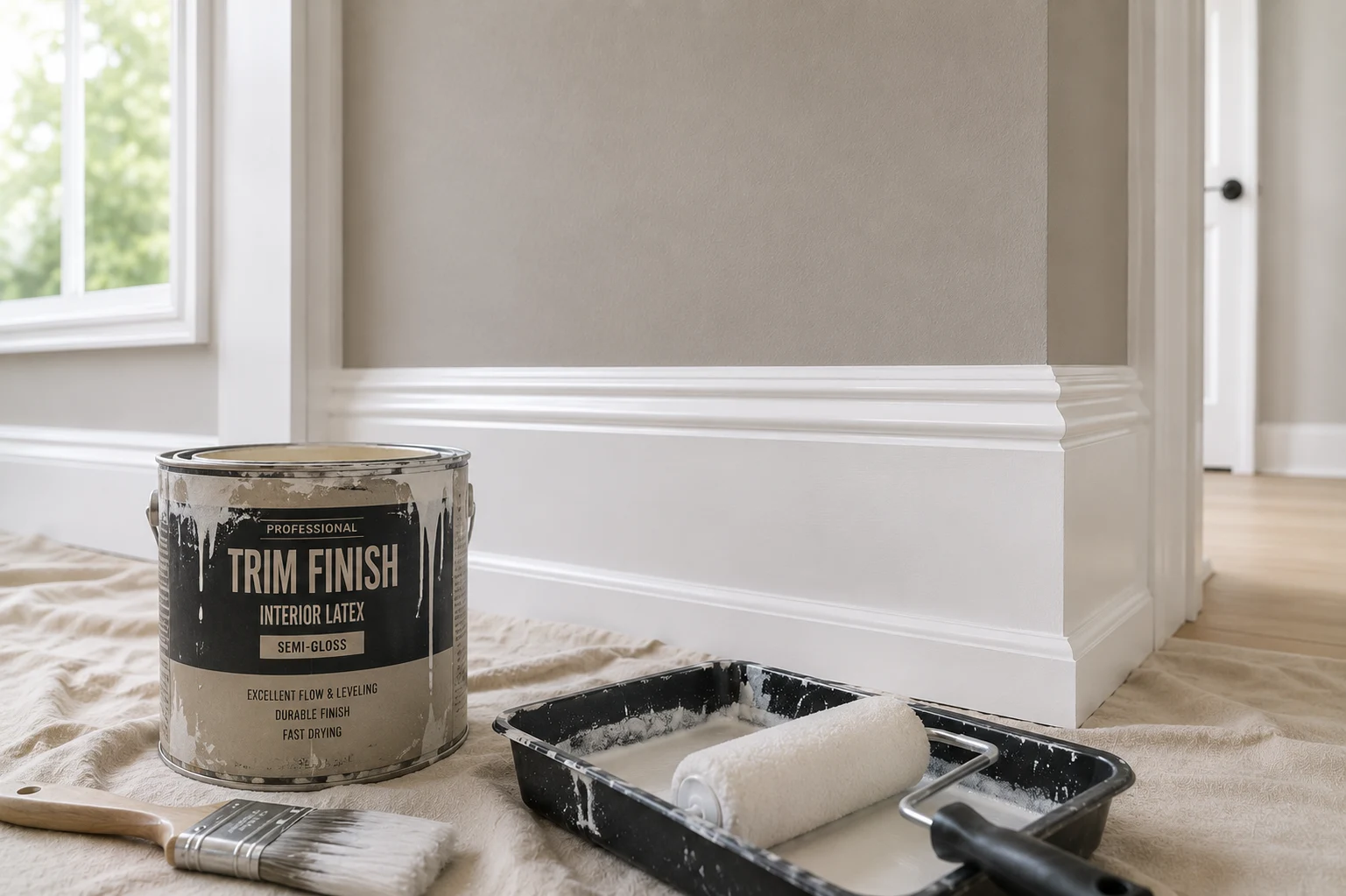 Trim, Door & Cabinet FinishesHarder, tighter finishes for the surfaces people actually touch, where ordinary wall paint would show wear within a year.
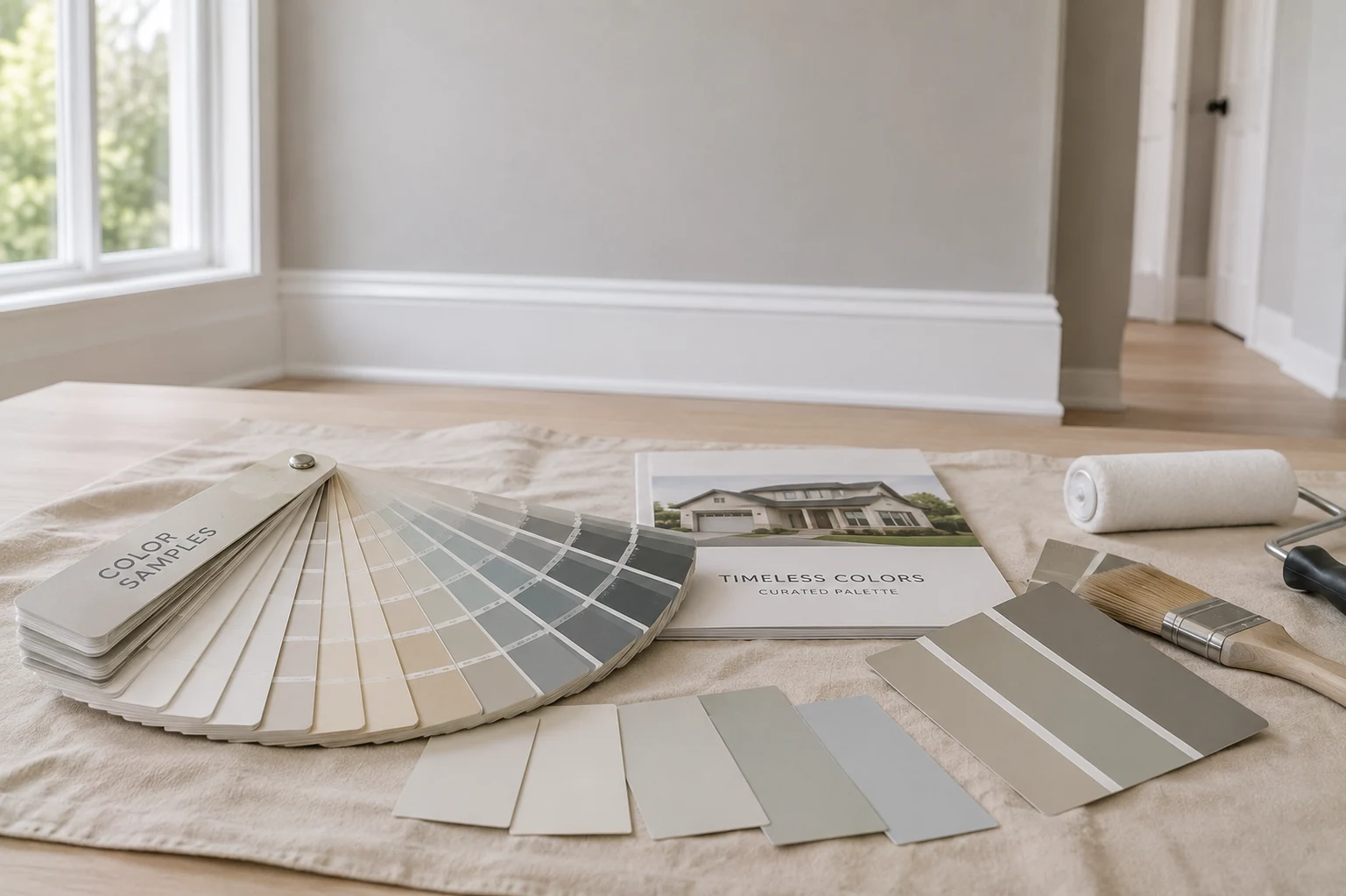 Color GuidanceOptions narrowed against your light, your fixed finishes, and whatever palette your community allows — before anything is committed to.
Get Inspired
Three routes that suit newer construction — updating an interior, resetting an exterior, or bringing the whole house onto one palette.
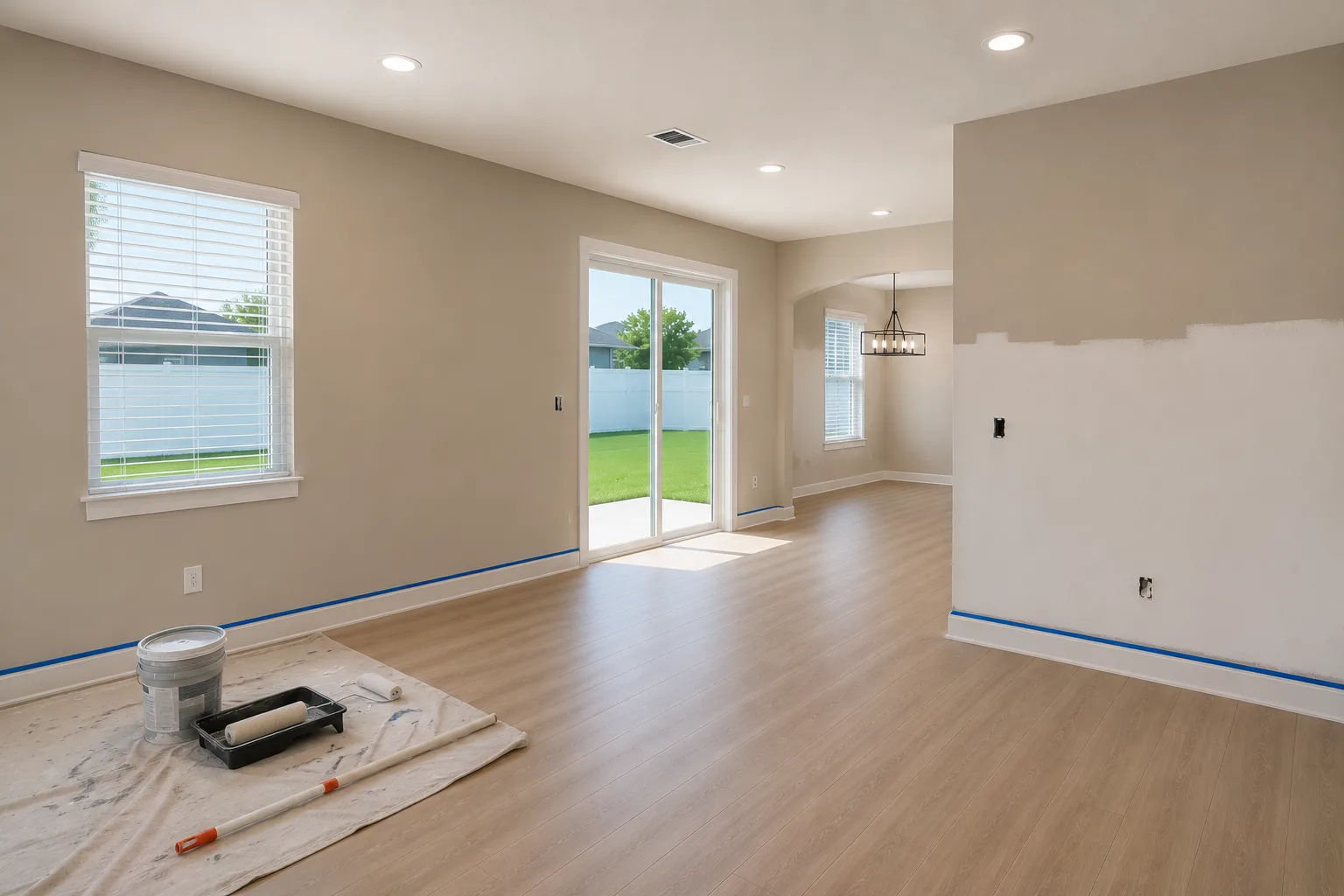
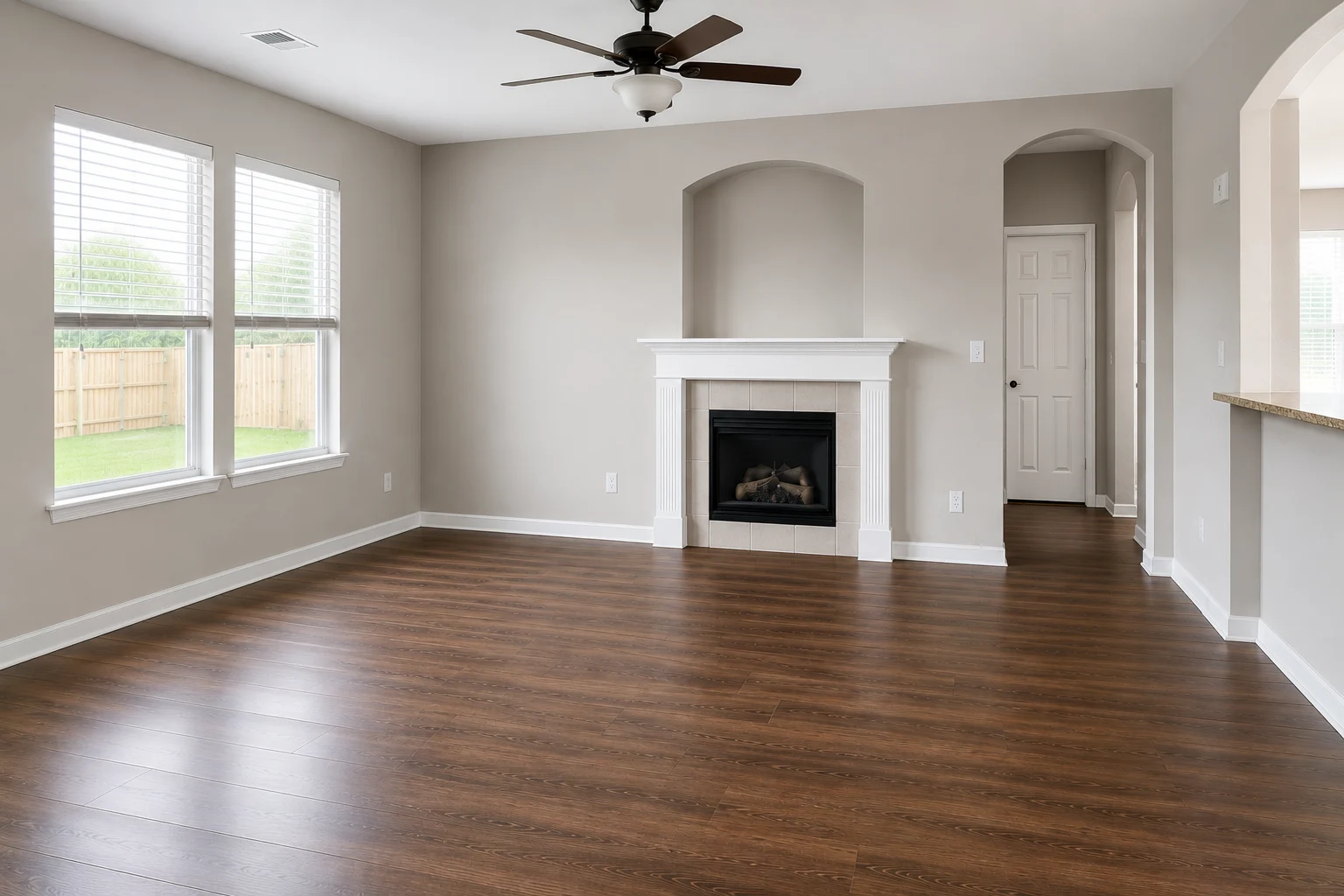 ConceptPaintingSoft Neutral Interior Concept
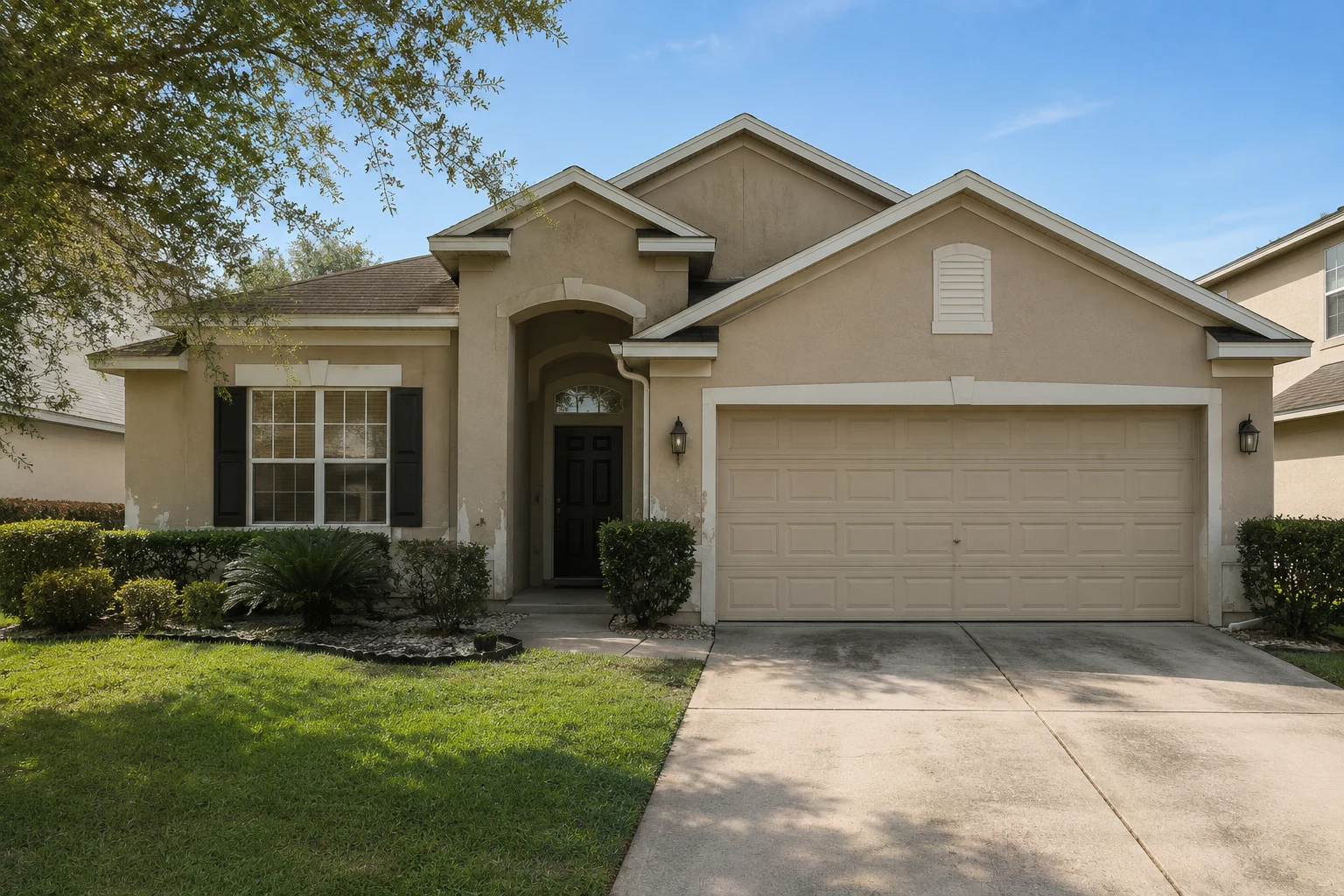
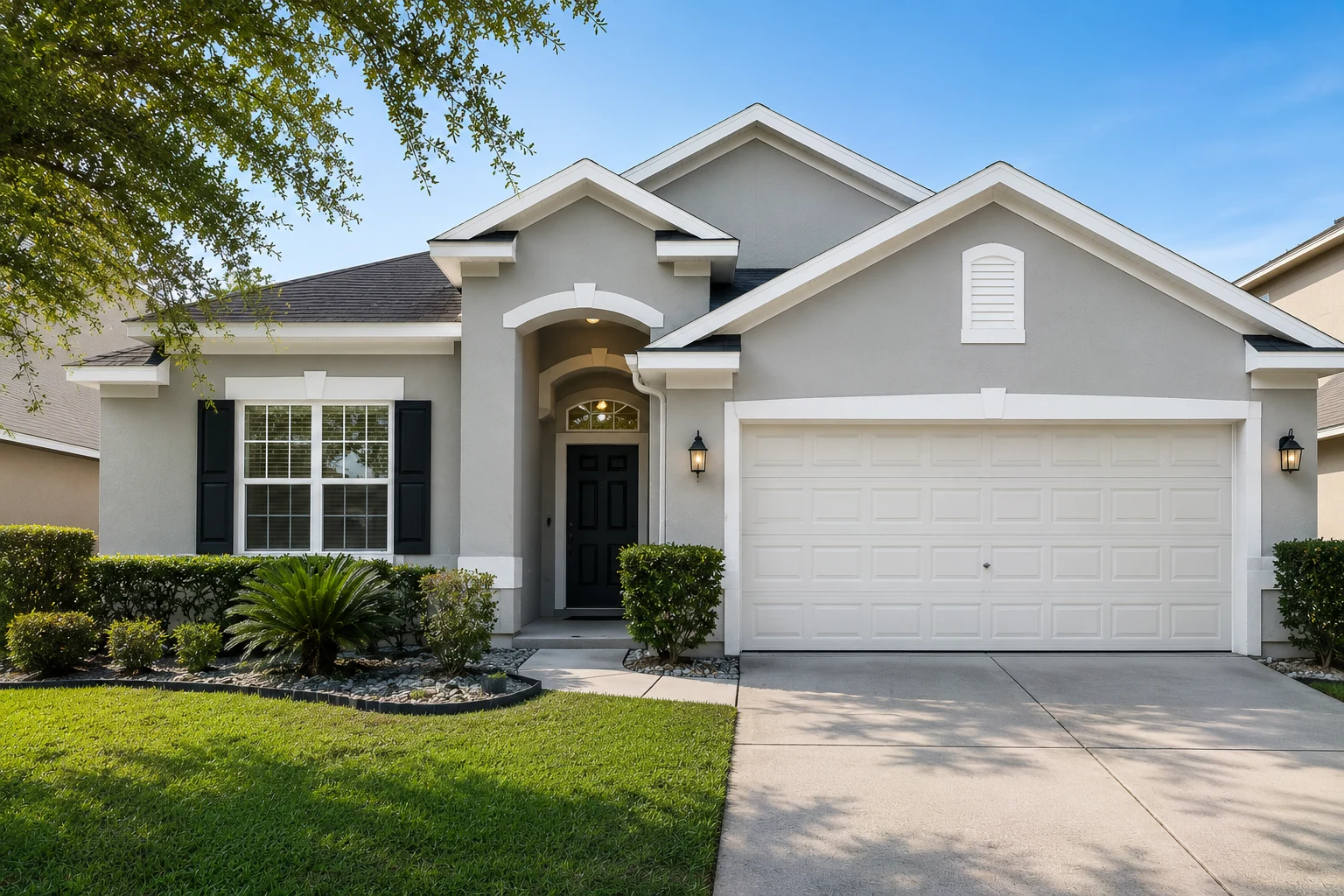
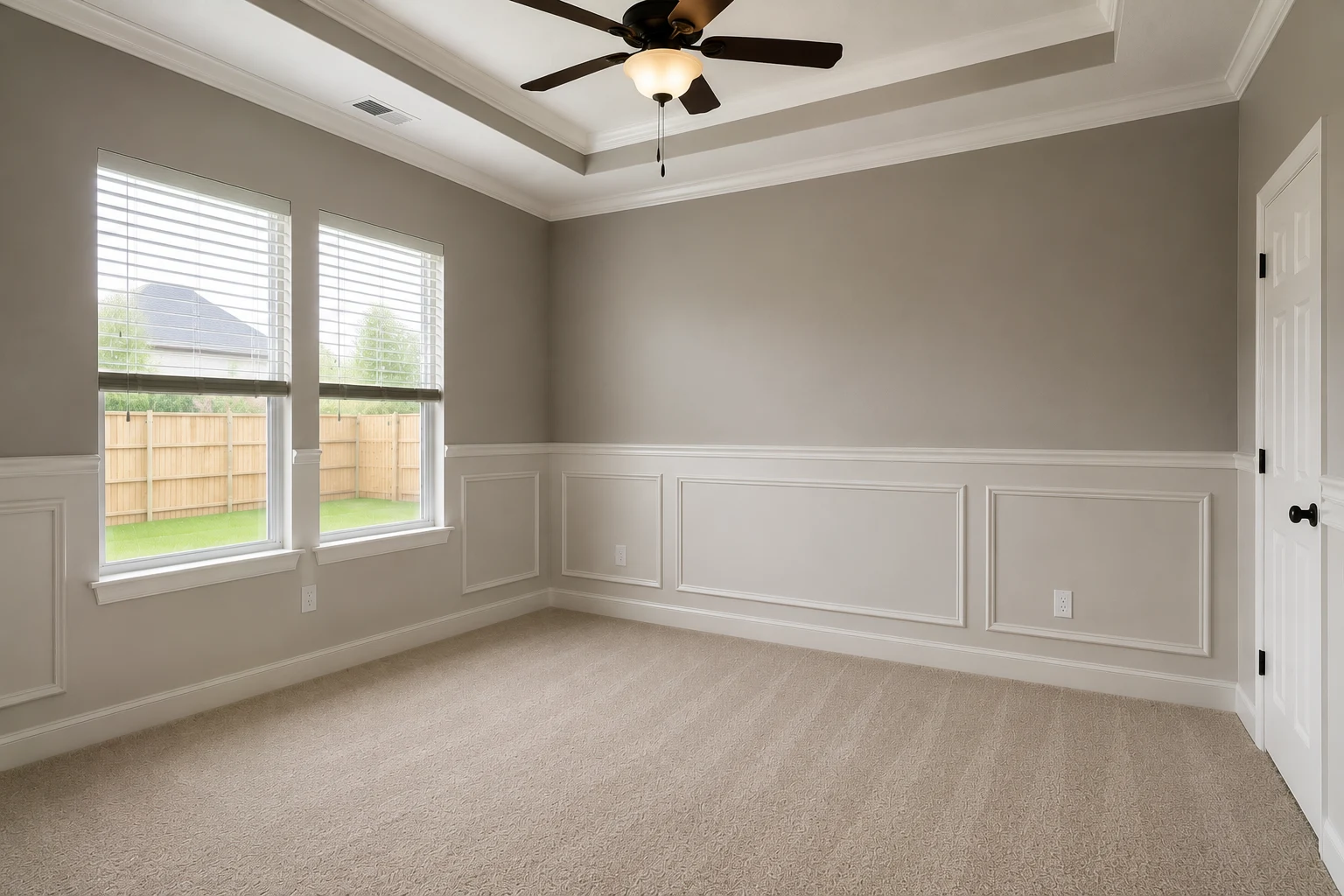 ConceptPaintingRefreshed Stucco Exterior Concept
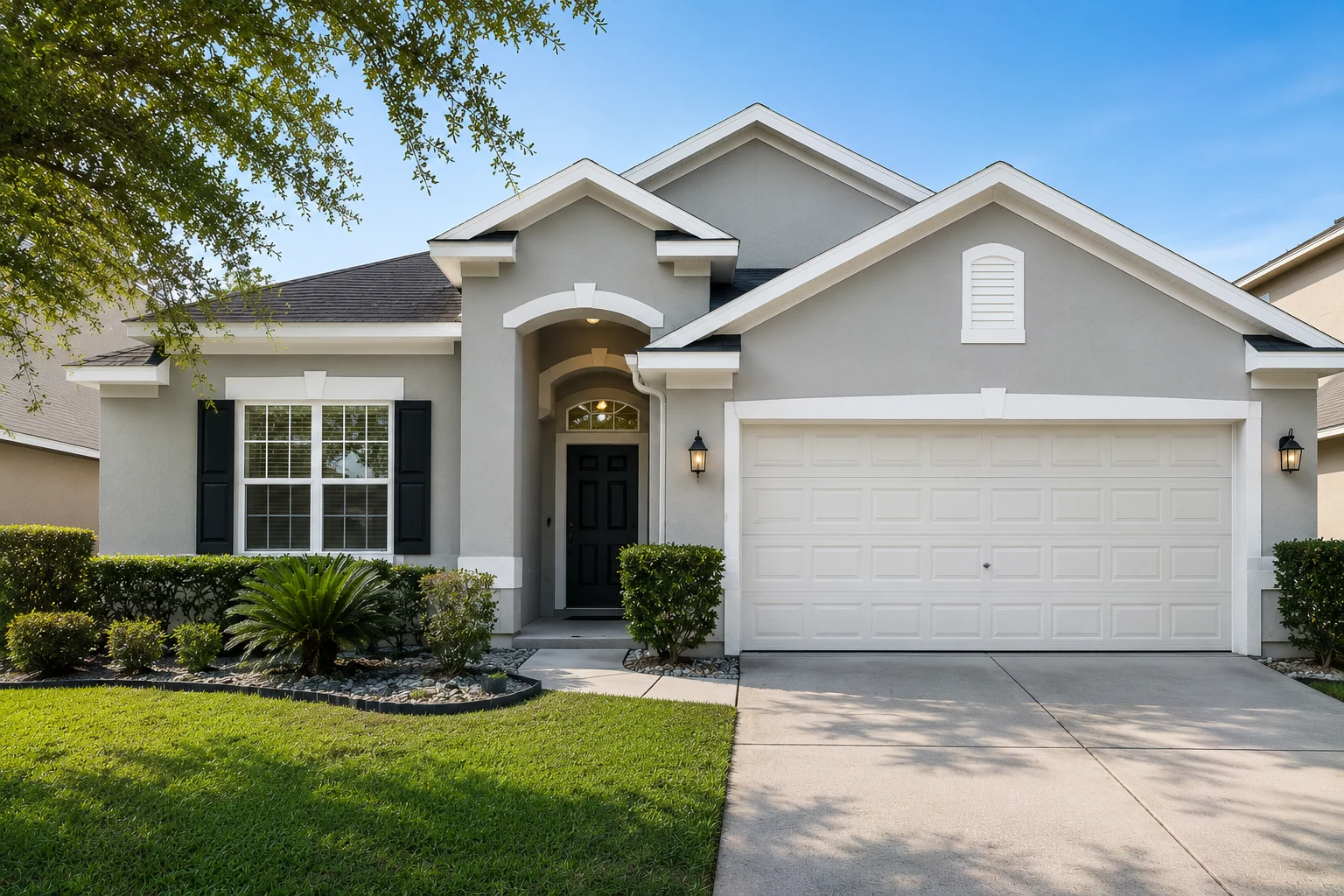 ConceptPaintingCoordinated Whole-Home Palette Concept
These images are conceptual visualizations meant to illustrate the style and quality SAVAM House can deliver — not photographs of projects completed by our team.
Questions
Probably not, and that surprises people. Builder exteriors are specified to look right at closing, not to run for fifteen years, so in this climate they commonly start giving out somewhere in that range. Run your hand along a sunny wall — if it comes away powdery, the coating is breaking down at the surface, and that’s the point at which repainting is maintenance rather than decoration.
Because it was all applied the same way, on the same day, at the same thickness. There’s no variation to stagger the wear, so a whole elevation reaches the end of its life together. It’s also why the fix tends to feel dramatic — you’re not touching up a few tired spots, you’re replacing a coat that had been holding on evenly across the entire house.
Usually yes, within limits. Most communities out here approve a defined range rather than a single scheme, and there’s often more room in the trim, front door, and accent elements than in the body color. That’s where a house can look genuinely distinct while staying entirely compliant — and it’s the first place we look when someone wants a change that won’t get turned down.
It varies by community, but the pattern is similar: you submit the proposed colors, sometimes with samples, and wait on a review cycle that runs on the board’s calendar rather than yours. The practical advice is simply to start early. We’re happy to prepare what you need for the submission and to schedule the work around the approval instead of ahead of it.
Yes, and it’s one of the most satisfying changes we make in newer homes. That marking is burnishing — a flat builder paint polishing where it’s rubbed. A quality washable finish in the right sheen behaves completely differently: fingerprints in a stairwell and scuffs along a hallway come off with a damp cloth instead of leaving a shiny patch behind.
It affects it differently. Outside, humidity and sun break coatings down over years. Inside, the issue is mostly during the work itself — damp air slows how quickly each coat releases moisture, so recoat times stretch and rushing them leaves soft, streaky walls. We give coats the time conditions actually require rather than the time we’d prefer.
Not necessarily — it’s a reasonable way to spread cost, and the front elevation is what everyone sees. The honest caveat is that the sides have been fading alongside it, so a boundary at the corner can be visible in certain light even with careful matching. We’ll show you where that line would fall and let you decide whether it bothers you.
Newer cabinets are usually the best candidates, not the worst. The boxes and doors are sound, so nothing structural needs solving — the issue is a color that was picked from a builder’s shortlist and now dates the room. Painting them is a preparation exercise: degrease, scuff, bond, finish. Done in that order, it holds up remarkably well.
We do, and they’re worth considering together. Trim and doors carry a harder finish than walls, and once the walls are fresh, tired baseboards and a sun-beaten garage door start doing a lot of the talking on how the house reads. We price those separately so you can see exactly what each element contributes.
Most of it, most of the time. We work in defined zones so your family always has rooms that are off-limits to the project rather than the other way around, keep the active area contained and ventilated, and reset the house at the end of each day. Tell us about work-from-home hours, nap schedules, or pets early and we’ll build the sequence around them.
It tends to matter more there, not less. When buyers are comparing houses built to the same plans, condition is one of the few variables left, and a current, well-applied finish reads as a home that has been maintained. The part that isn’t cosmetic is the protection underneath — stucco and trim that have stayed sealed don’t generate the kind of findings that come up in an inspection.
Send us the basics through the form on this page — which rooms or elevations you’re thinking about and what’s prompting it. We’ll get in touch to talk it through properly, and if it makes sense, come out and look at the house before putting any numbers to it.
Tell us what you’re looking at — one elevation, one floor, or the whole house — and we’ll come out, look at it honestly, and put a plan and a schedule behind it.